helpline:+92 21 99332615 | +92 21 99332617

International Commission on Human Rights
A New Chapter for Pakistan’s Judiciary
Inside the oath taking of Chief Justice Qazi Faez Isa at Aiwan e Sadr, and why the conversations on its sidelines mattered as much as the ceremony itself
Aiwan e Sadr, Islamabad | September 17, 2023 | By Ajlal Haider, Staff Reporter
ISLAMABAD. Some ceremonies are remembered for the words spoken from a podium. Others are remembered for the quiet handshakes, the unhurried corridor conversations and the small gestures that reveal what a country truly values. The oath taking of Justice Qazi Faez Isa as the 29th Chief Justice of Pakistan belonged to both categories. It was a formal constitutional moment, and it was also a gathering where the worlds of law, governance and human rights met under one roof.
On the morning of September 17, 2023, the ornate halls of Aiwan e Sadr filled with judges, ministers, lawyers and public figures. Outside, the country waited with the mixture of hope and scrutiny that has always accompanied the arrival of a new head of the judiciary. Inside, the ceremony unfolded with the measured dignity that a constitutional transition demands.
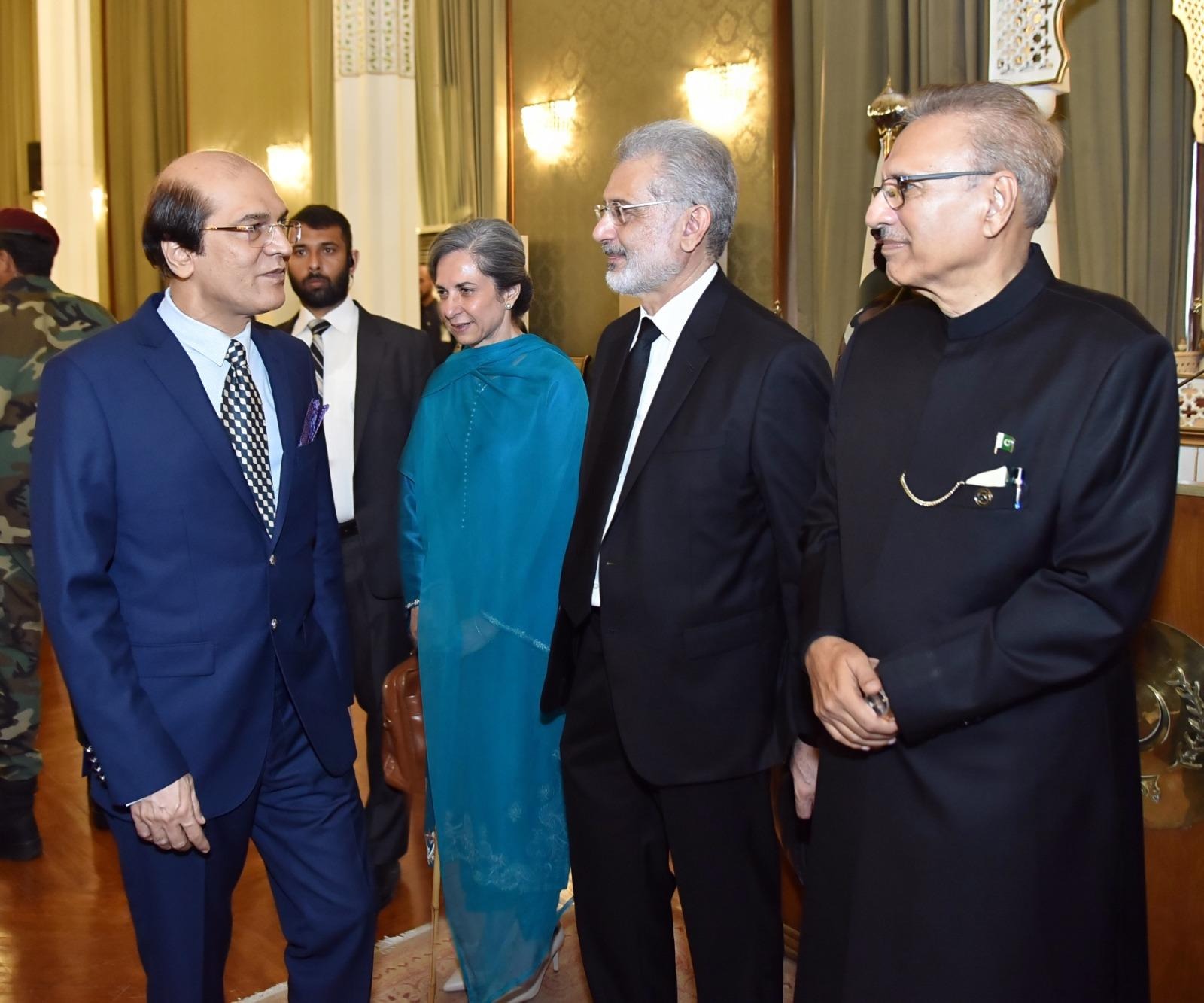
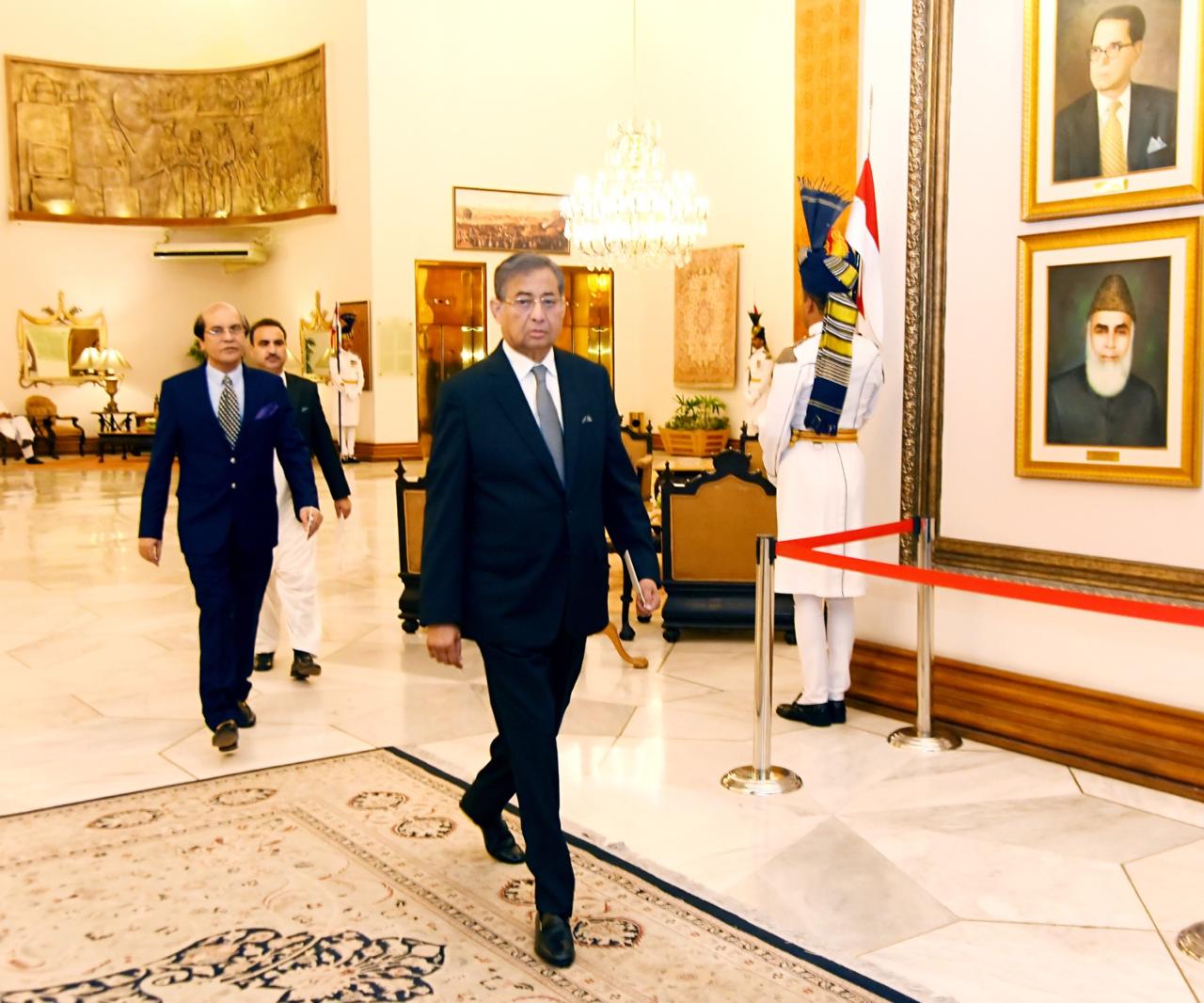
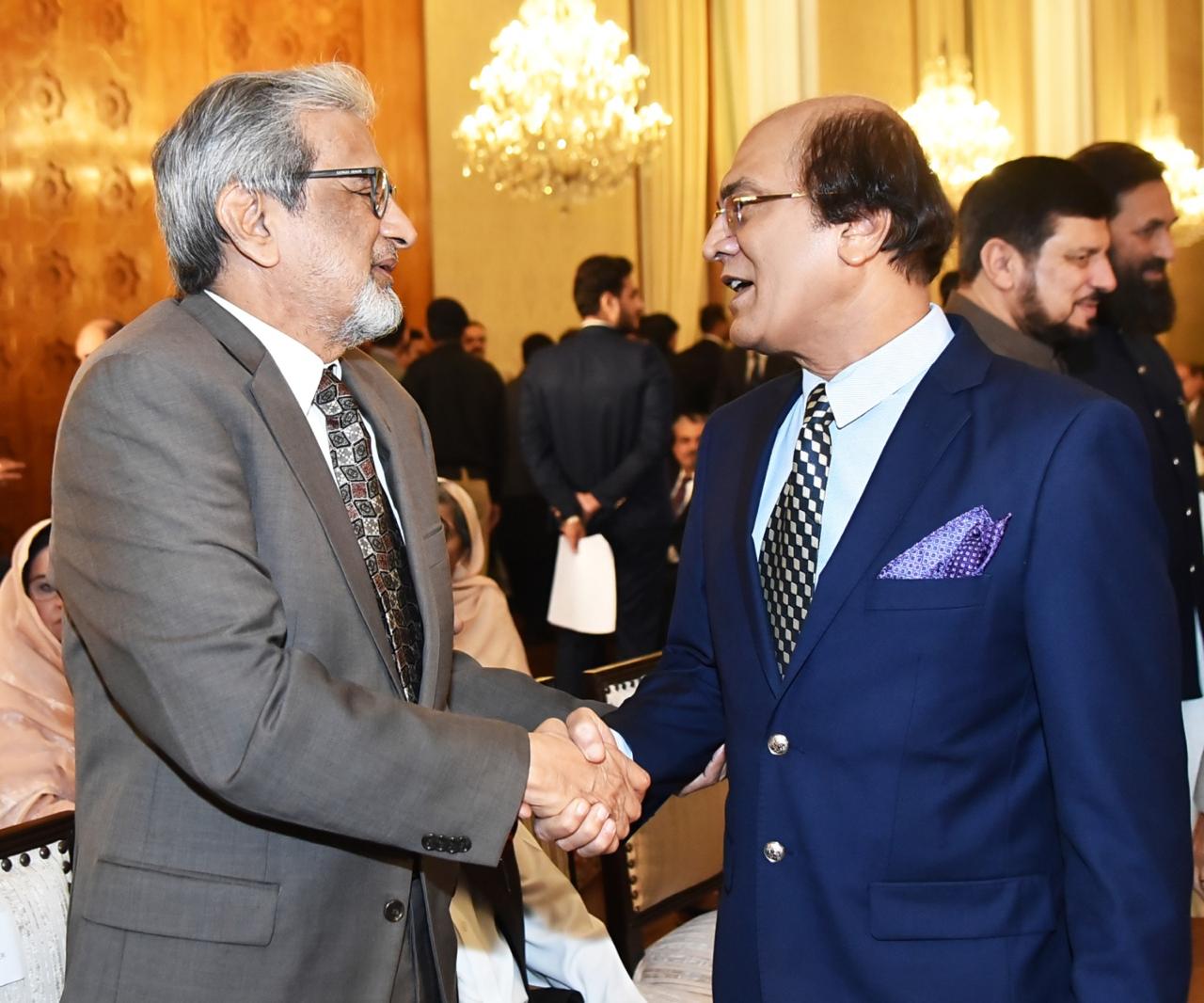
Photo 1. Dignitaries exchange greetings inside the hall at Aiwan e Sadr before the ceremony.
Pakistan’s Chief Justice is not merely the senior most judge of the land. The office carries the weight of the final word on disputes between citizens and the state, between institutions and between competing readings of the Constitution. When a new Chief Justice takes the oath, the ceremony is therefore closer to a public renewal of a promise than a routine administrative event.
President Dr. Arif Alvi administered the oath at Aiwan e Sadr, the President House, formally installing Justice Isa as the 29th Chief Justice of Pakistan. His wife, Sarina Isa, stood at his side as the oath was taken, a personal detail that softened an otherwise solemn occasion and reminded observers that behind every high office stands a family that shares its burdens.
“Injustice anywhere is a threat to justice everywhere.”
Martin Luther King Jr., Letter from Birmingham Jail
That sentiment, written for another country and another struggle, echoes in any hall where a judge swears to uphold the law without fear or favour. It is the standard by which citizens measure their courts, and it is the standard that the new Chief Justice inherited on that Sunday morning.
The guest list read like a cross section of the republic. Government and military leaders, the full bench of Supreme Court judges, former Chief Justices, senior lawyers and representatives of civil society were present. Foreign diplomats were largely absent, with one notable exception: the Ambassador of Spain, José Antonio de Ory, whose presence carried a personal resonance because Sarina Isa hails from Spain.
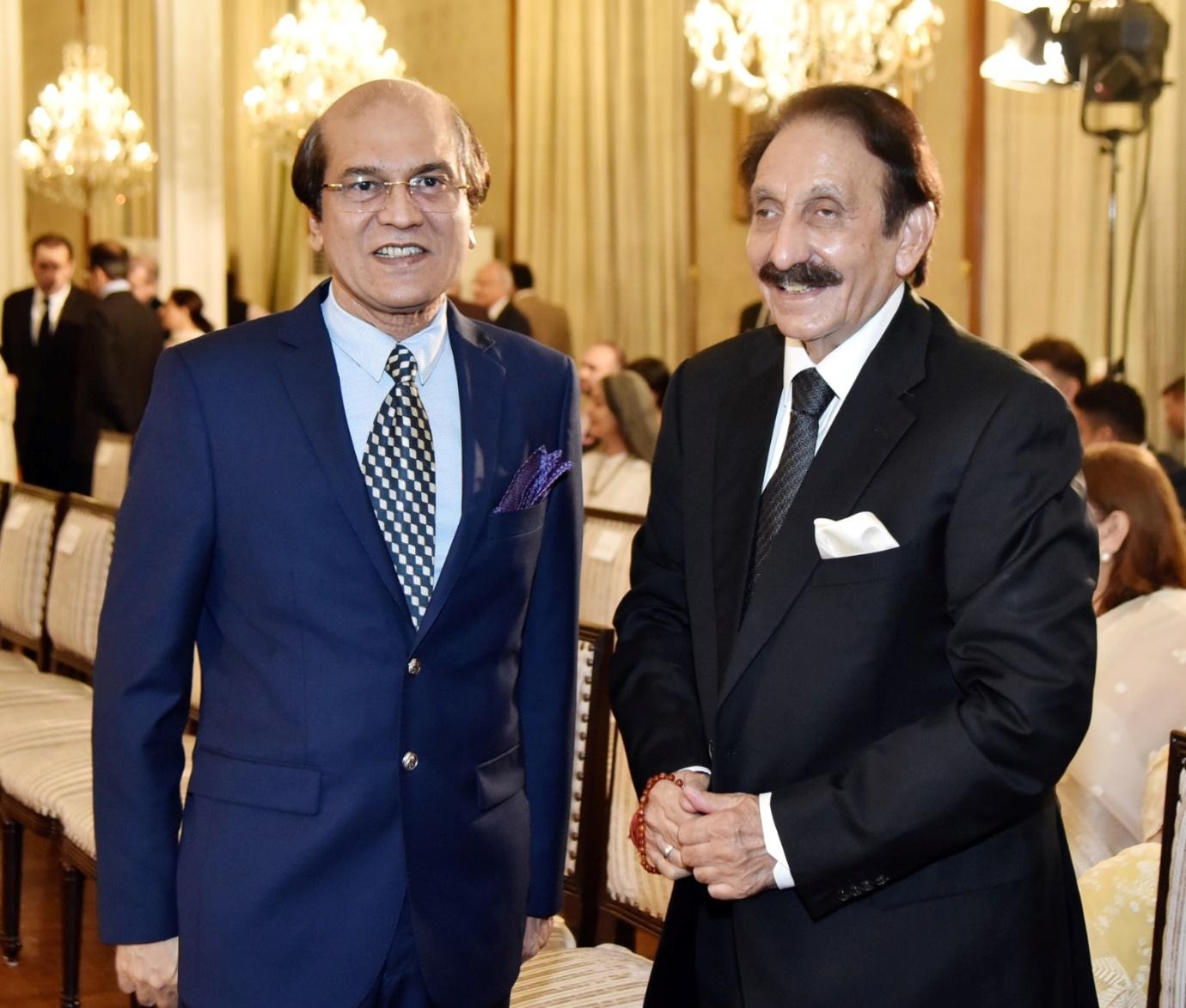
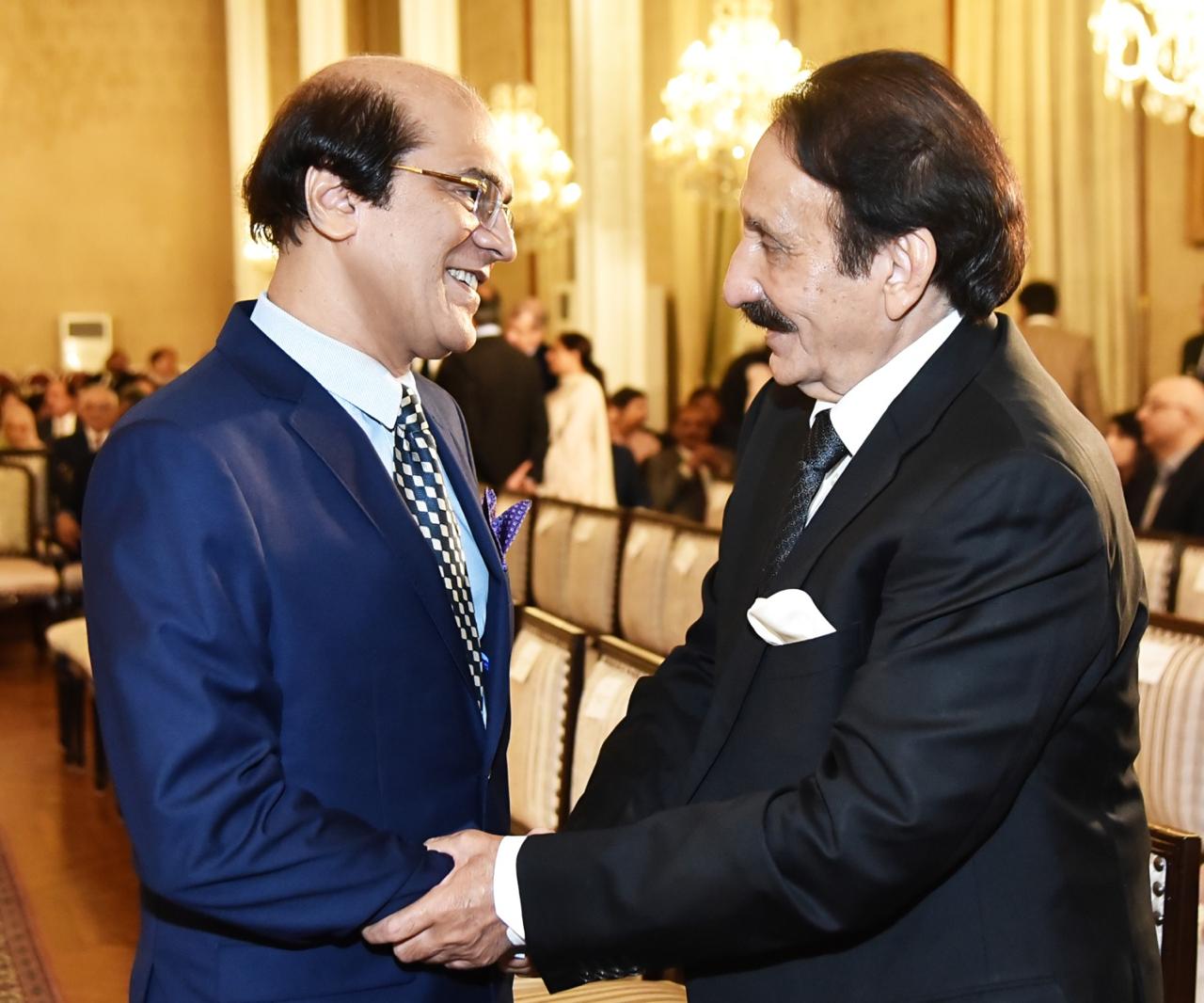
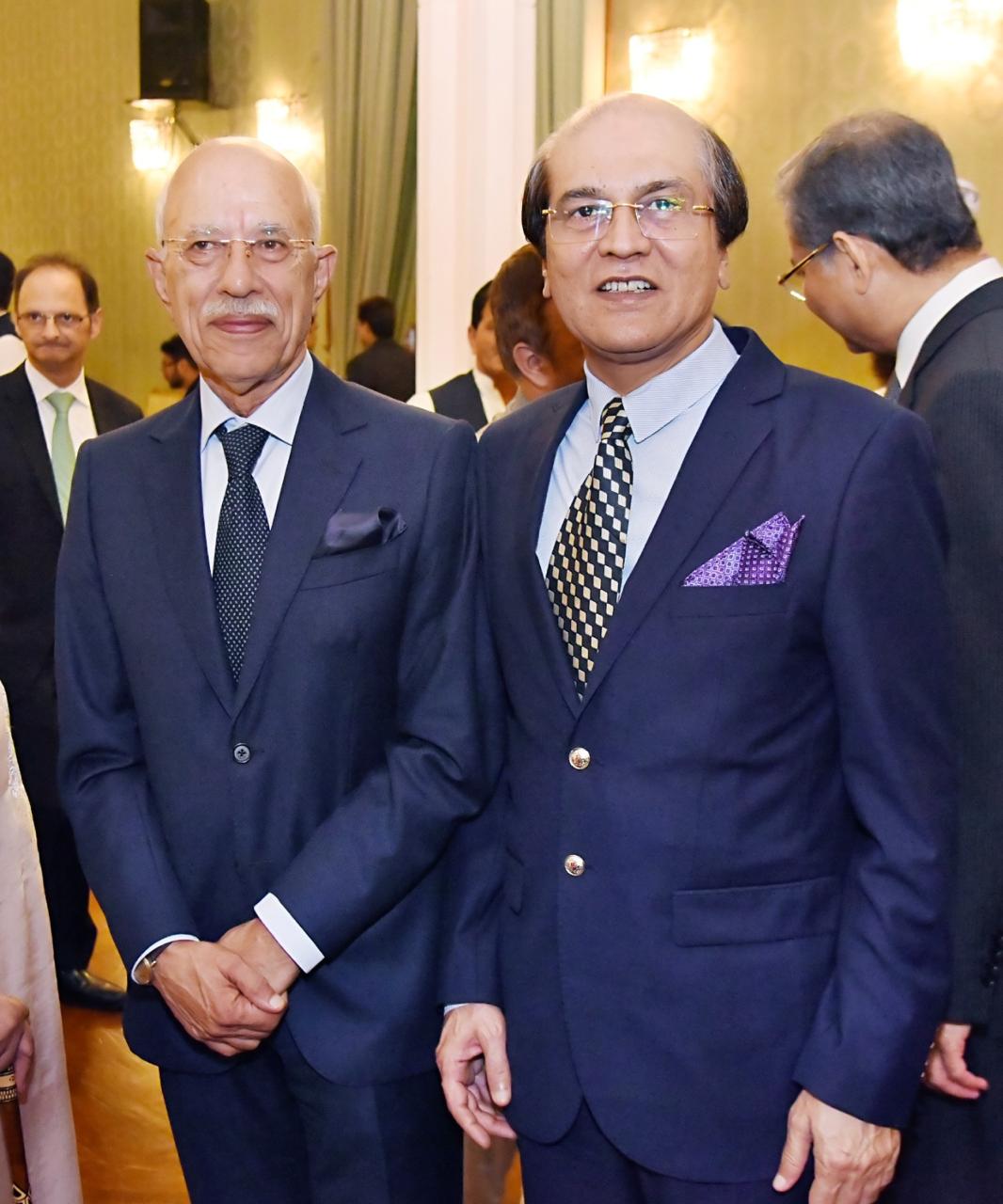
A relaxed exchange with ex CJP Iftikhar Muhammad Chaudhry.
.
For those who follow Pakistan’s legal history, Justice Isa’s arrival at the top of the judiciary was the culmination of a long and often turbulent professional journey. Born into a family with deep roots in Balochistan, he trained as a lawyer in London, built a distinguished practice, and rose to become Chief Justice of the Balochistan High Court before his elevation to the Supreme Court in 2014. His name became widely associated with independent minded judgments, among them the 2019 verdict on the Faizabad sit in, which drew both strong praise and strong criticism across the political spectrum.
Supporters describe him as a judge who reads the Constitution as a binding text rather than a suggestion. Critics have questioned some of his positions. What few dispute is that his tenure opened with an unusually high level of public attention, and that the expectations placed on him were as large as the office itself.
“Justice delayed is justice denied.”
Legal maxim commonly attributed to William Gladstone
For a judiciary carrying a heavy backlog of cases, the old maxim is not a slogan but a daily challenge. It is why the conversations held on the margins of the ceremony, about strengthening the justice delivery system, carried a practical urgency.
While the cameras followed the oath itself, another storyline was quietly unfolding among the guests. Muhammad Aslam Ellahi, Chairman of the International Commission on Human Rights (ICOHR), was among the distinguished attendees at Aiwan e Sadr, and his presence became one of the more meaningful threads of the day.
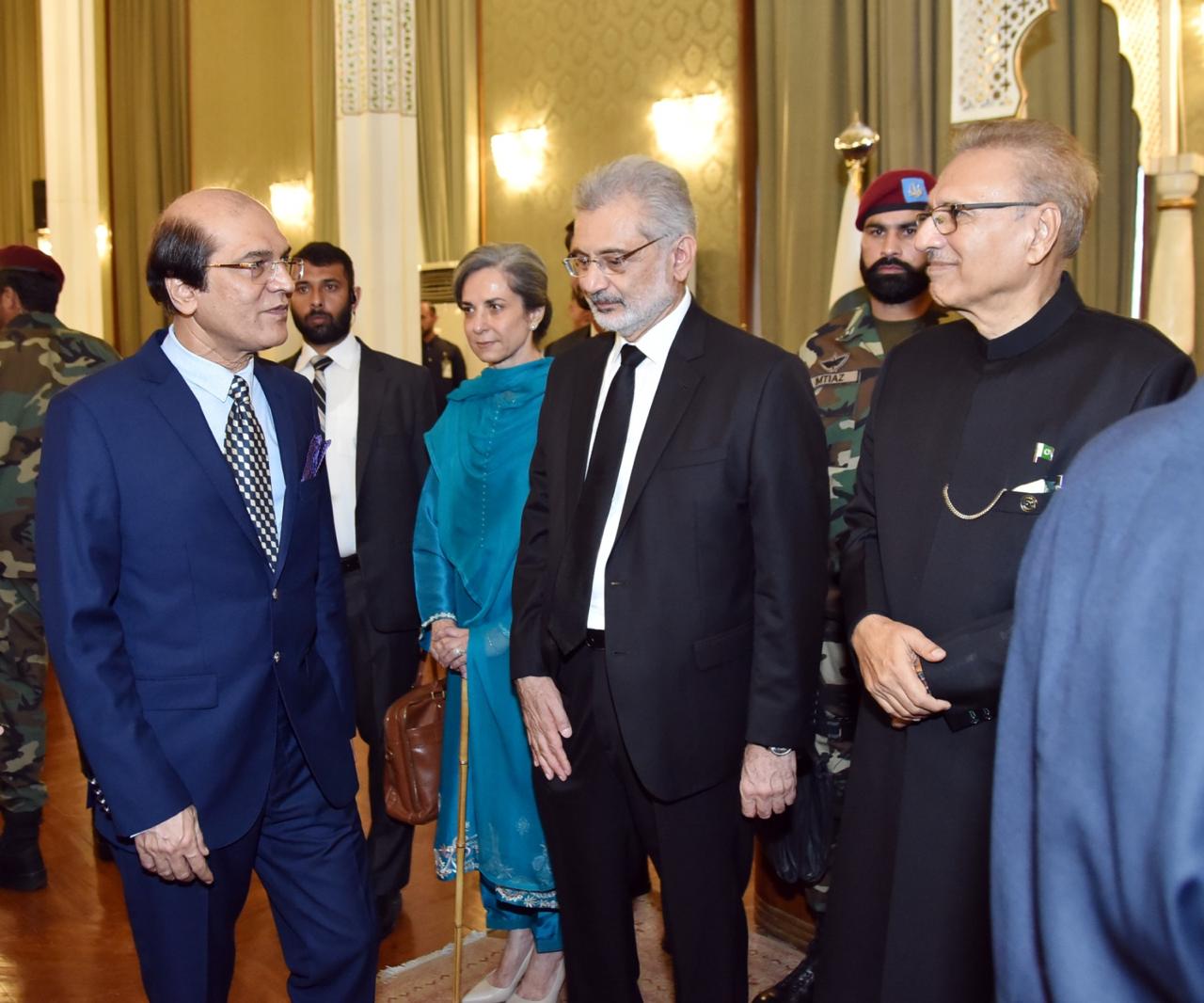
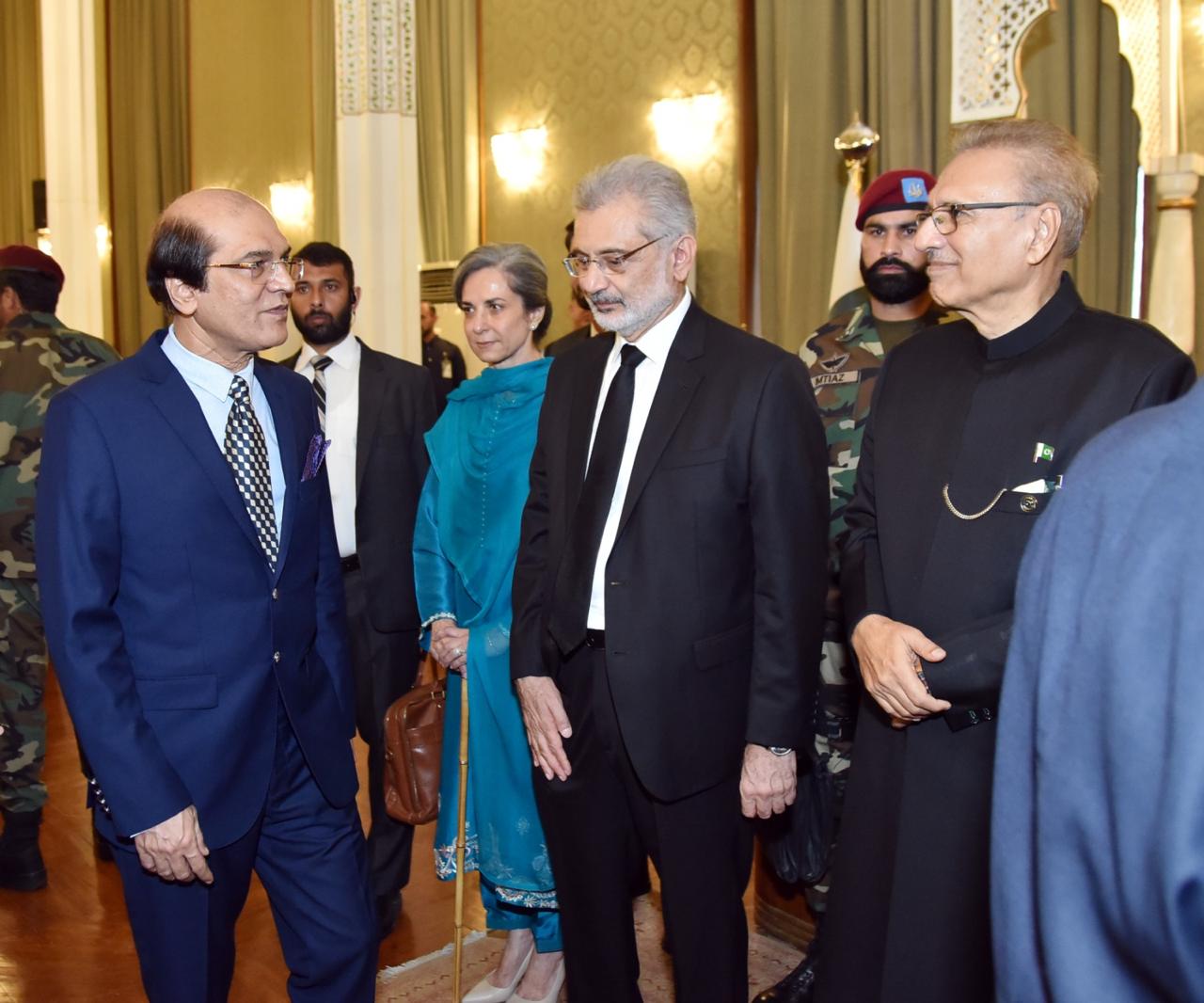
According to the ICOHR News Desk, the Chairman met the President of Pakistan, the newly sworn in Chief Justice, a former Chief Justice of Pakistan, the Federal Minister for Human Rights and several other important personalities on the sidelines of the ceremony. In the language of protocol these are brief encounters. In the language of institutional life, they are the moments where working relationships begin and shared agendas take shape.
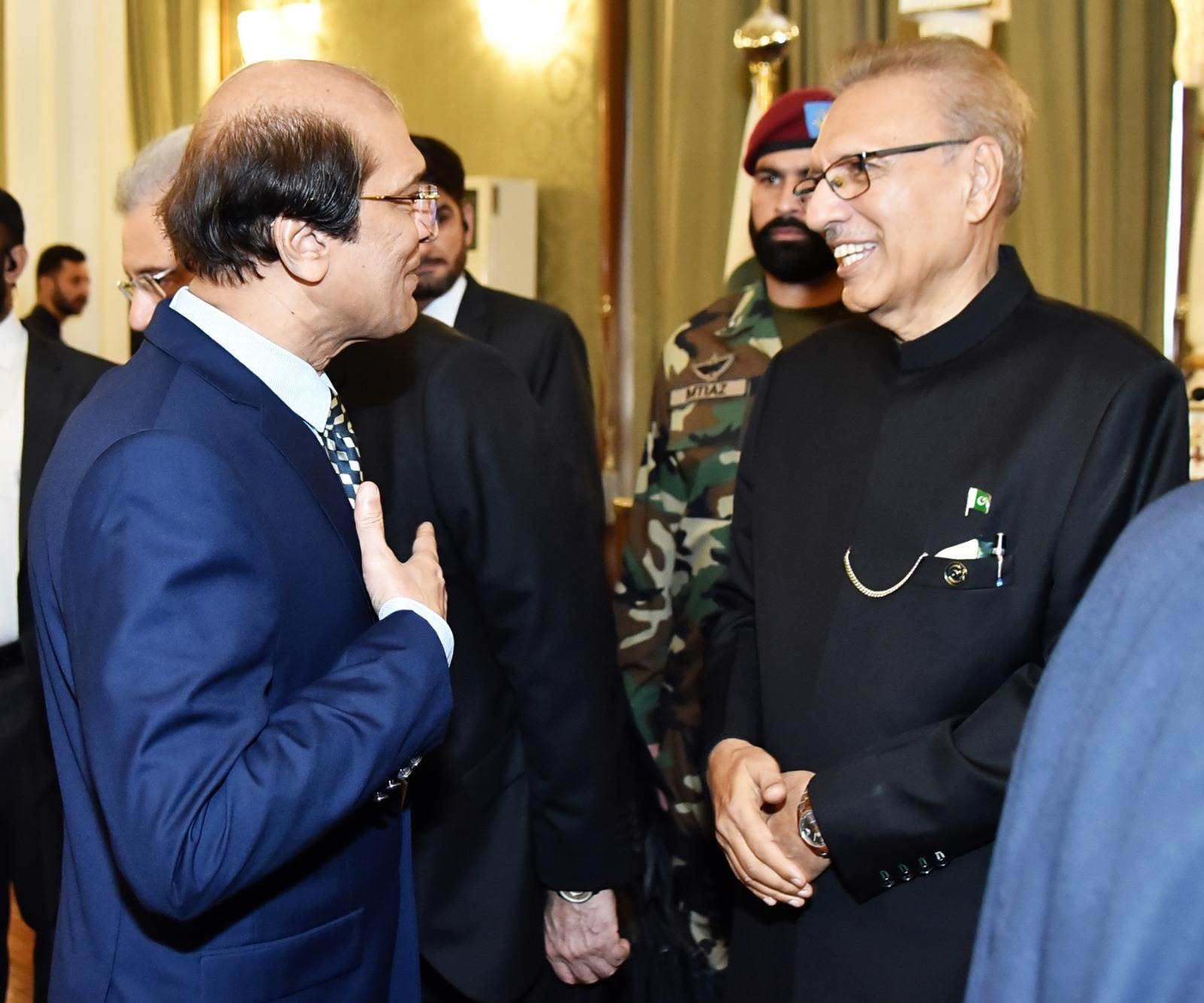
Photo 2. The Chairman ICOHR exchanges warm greetings with President of Pakistan dr Arif Alvi on the sidelines of the ceremony.
What stood out to those present was the tone of the conversations. Each of the personalities the Chairman met reportedly acknowledged the continuous efforts and services of ICOHR in the field of human rights. They described the dedication with which the commission works for the protection of human rights as commendable, a word that carries weight when it comes from officials who see the sector’s work from very different vantage points.
“The dedication with which ICOHR is working for the protection of human rights is commendable.”
Sentiment conveyed by personalities who met the Chairman, as reported by the ICOHR News Desk
Human rights organisations rarely enjoy easy relationships with the institutions they hold to account. That a commission could earn appreciation from the executive, the judiciary and senior legal figures in a single afternoon is a notable signal. It suggests that ICOHR has built credibility not through confrontation alone, but through steady, patient and constructive engagement.
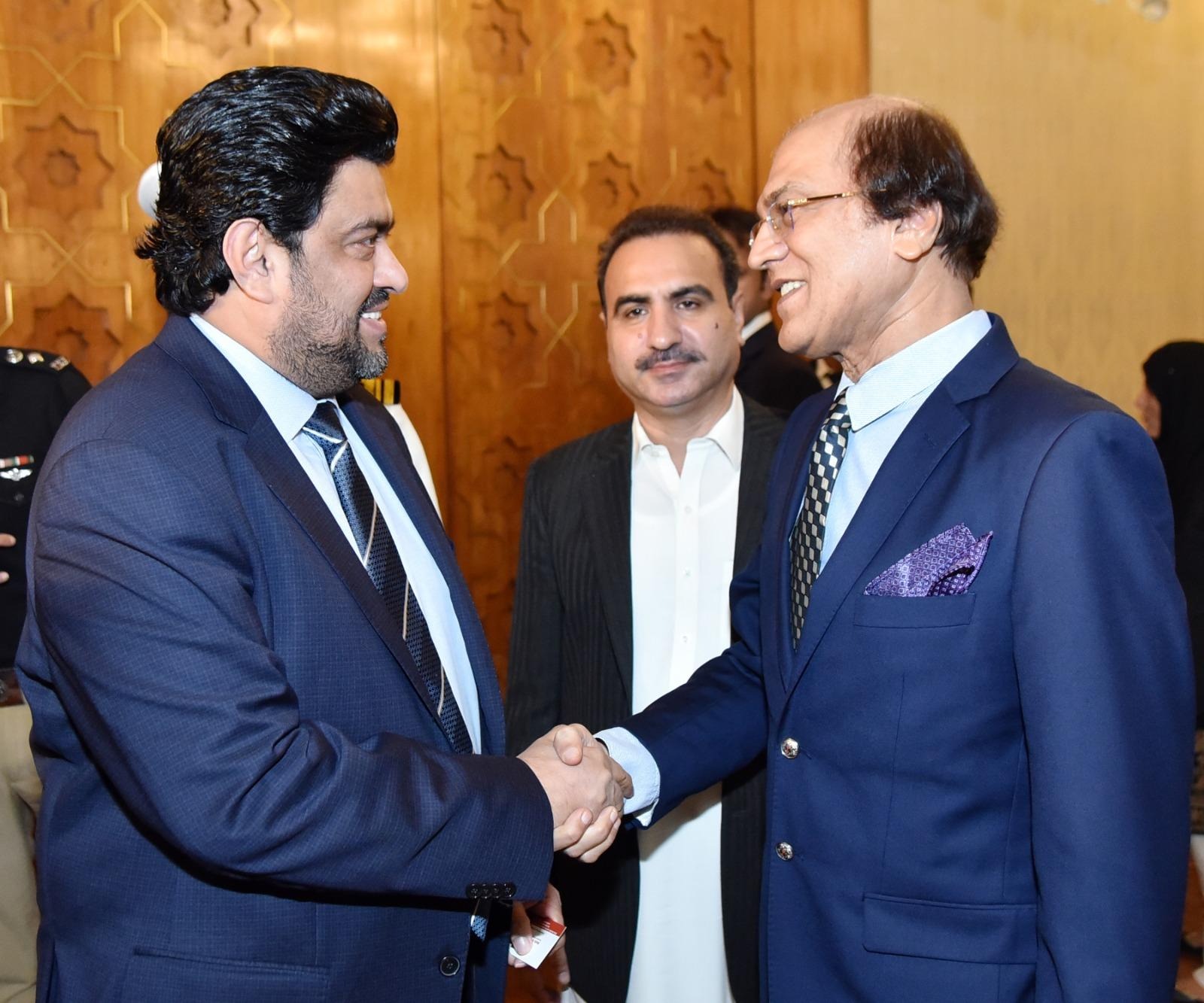
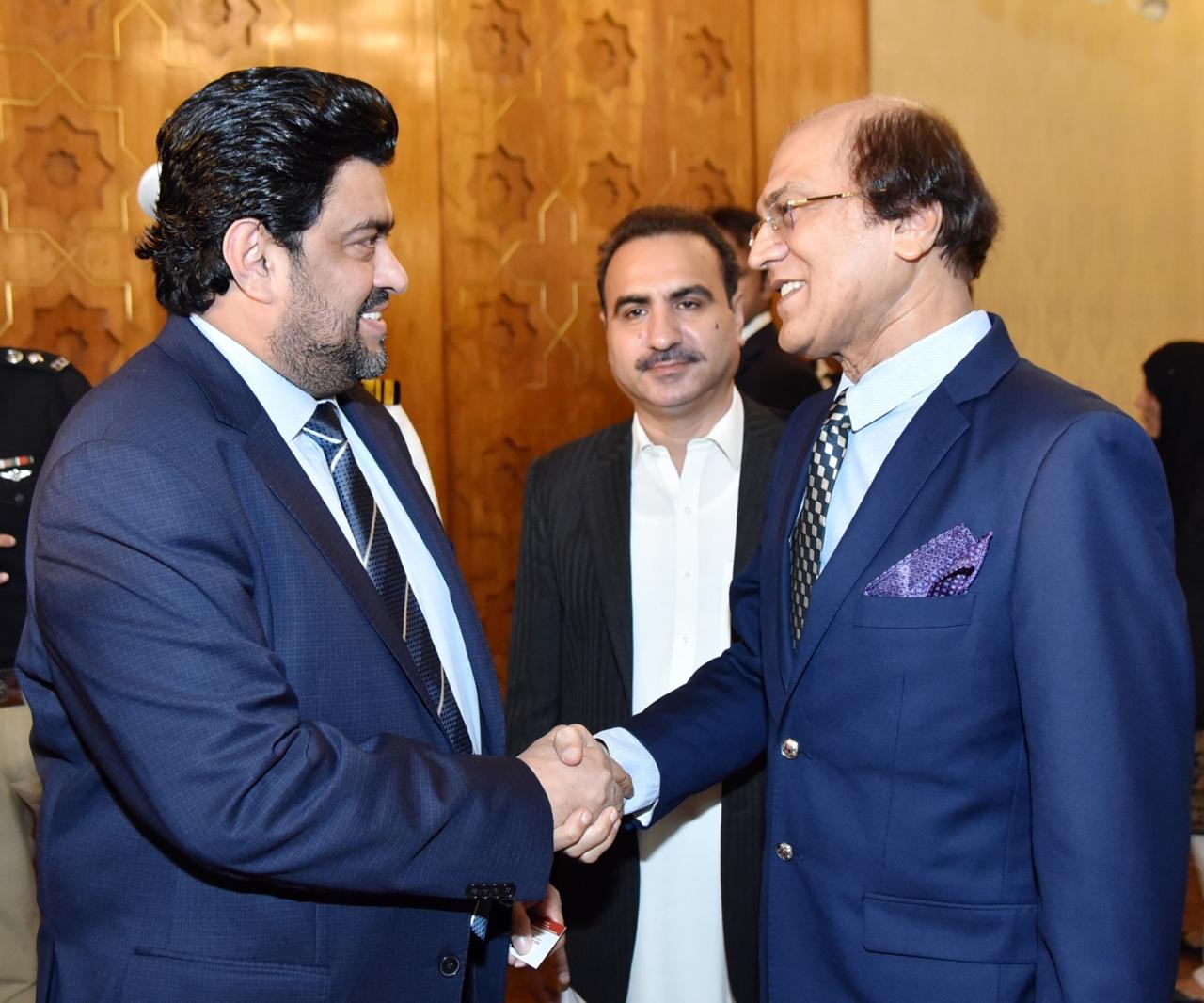
Photo 3. The Chairman ICOHR with Governor of Sindh Kamran Tessori at Aiwan e Sadr, in conversation before the oath taking.
Discussions on the sidelines were not limited to courtesies. The Chairman and his interlocutors spoke about promoting human rights across the country and about further strengthening the justice delivery system. The two themes are inseparable. A right that cannot be enforced in a courtroom is little more than an aspiration, and a court that cannot reach the vulnerable is a court that only half performs its function.
For a commission whose mandate rests on turning principle into protection, the timing was ideal. A new Chief Justice at the start of his tenure is, by nature, receptive to ideas about reform. A human rights body that arrives with credibility and a clear agenda is well placed to be heard.
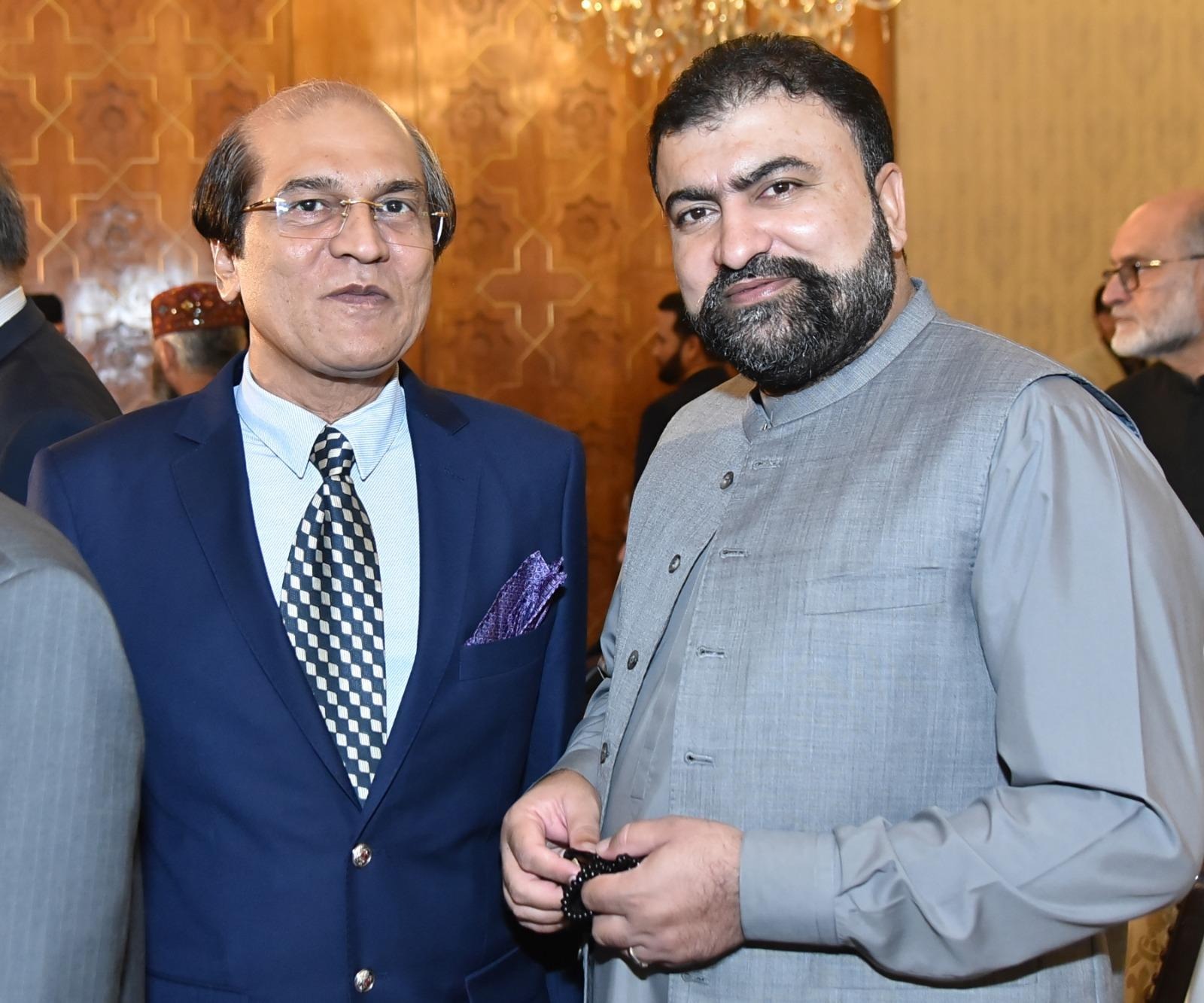
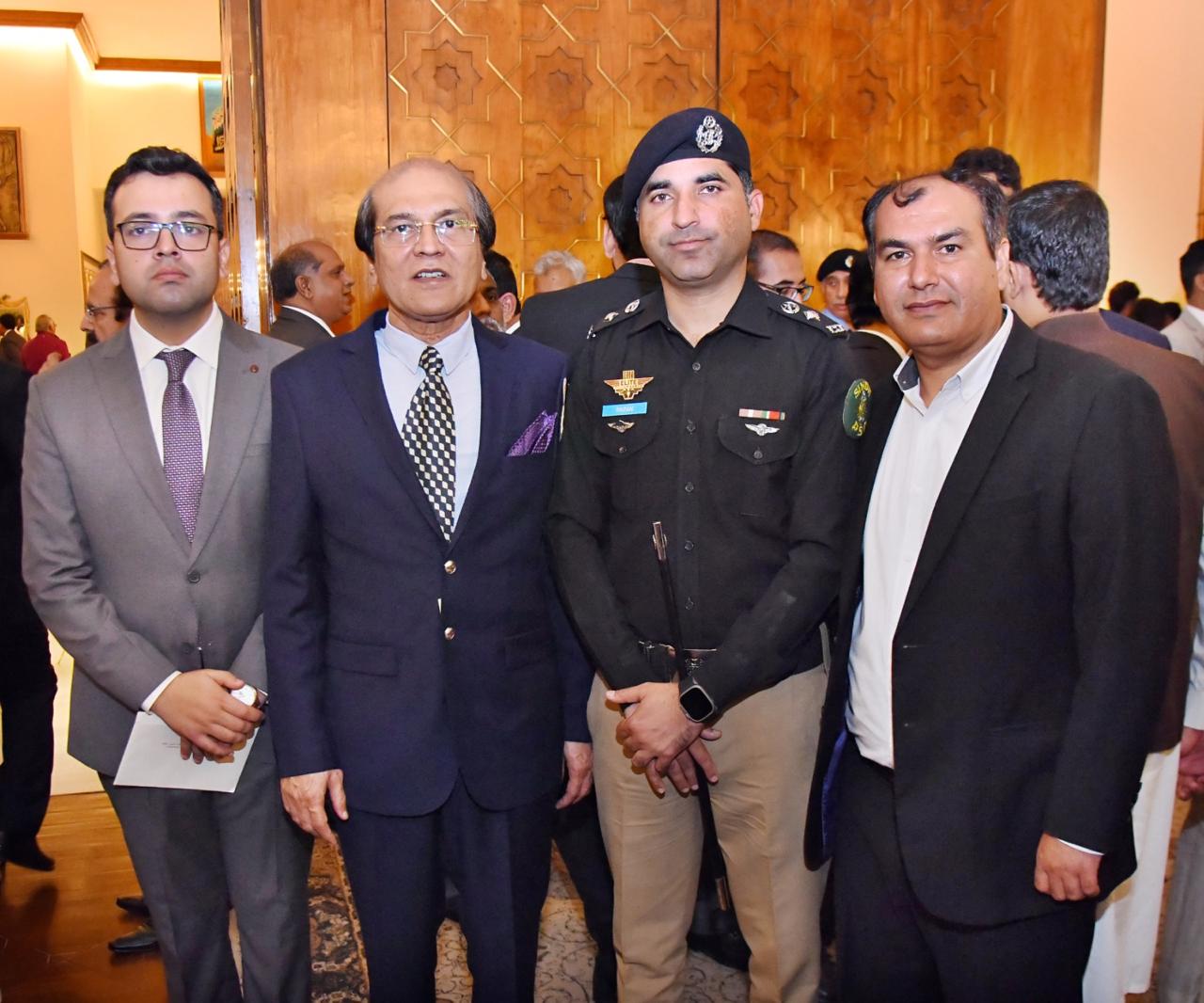
Photo 4. The Chairman ICOHR with Federal Interior Minister Mir Sarfraz Buggti at the reception hall, where informal meetings continued throughout the event.
One of the quieter but more encouraging aspects of the day was the breadth of representation. The ceremony drew senior lawyers from all provinces, including Balochistan, together with representatives of the business community and public office holders. For Balochistan in particular, whose legal community has long felt distant from the centre of national decision making, seeing its lawyers seated in Aiwan e Sadr for the oath of a Chief Justice with roots in the province carried a symbolism that was hard to miss.
That inclusiveness matters for a simple reason. Public confidence in the judiciary is not built by verdicts alone. It is built when every region, every profession and every community can see itself reflected in the institution. A ceremony that gathered such a wide cross section did a small but real part of that work.
The oath taking was covered extensively by national outlets and drew notice from international media, which followed the transition closely given Pakistan’s political climate at the time. Coverage generally framed the moment as one of institutional continuity, with a smooth handover and a well attended ceremony signalling stability in a period of uncertainty.
Within civil society and the legal fraternity, the mood was one of cautious optimism. Bar representatives, commentators and human rights advocates spoke of the hope that a new leadership would prioritise access to justice, judicial independence and the timely disposal of cases. Human rights forums, including ICOHR, viewed the occasion as an opportunity to open constructive dialogue with the top of the judiciary, and the meetings held on the sidelines were seen as a positive first step in that direction.
Editor’s note: Before publishing, add direct links or named quotes from the specific national and international outlets, bar associations and rights organisations you wish to cite, so that each statement of appreciation is fully attributed.
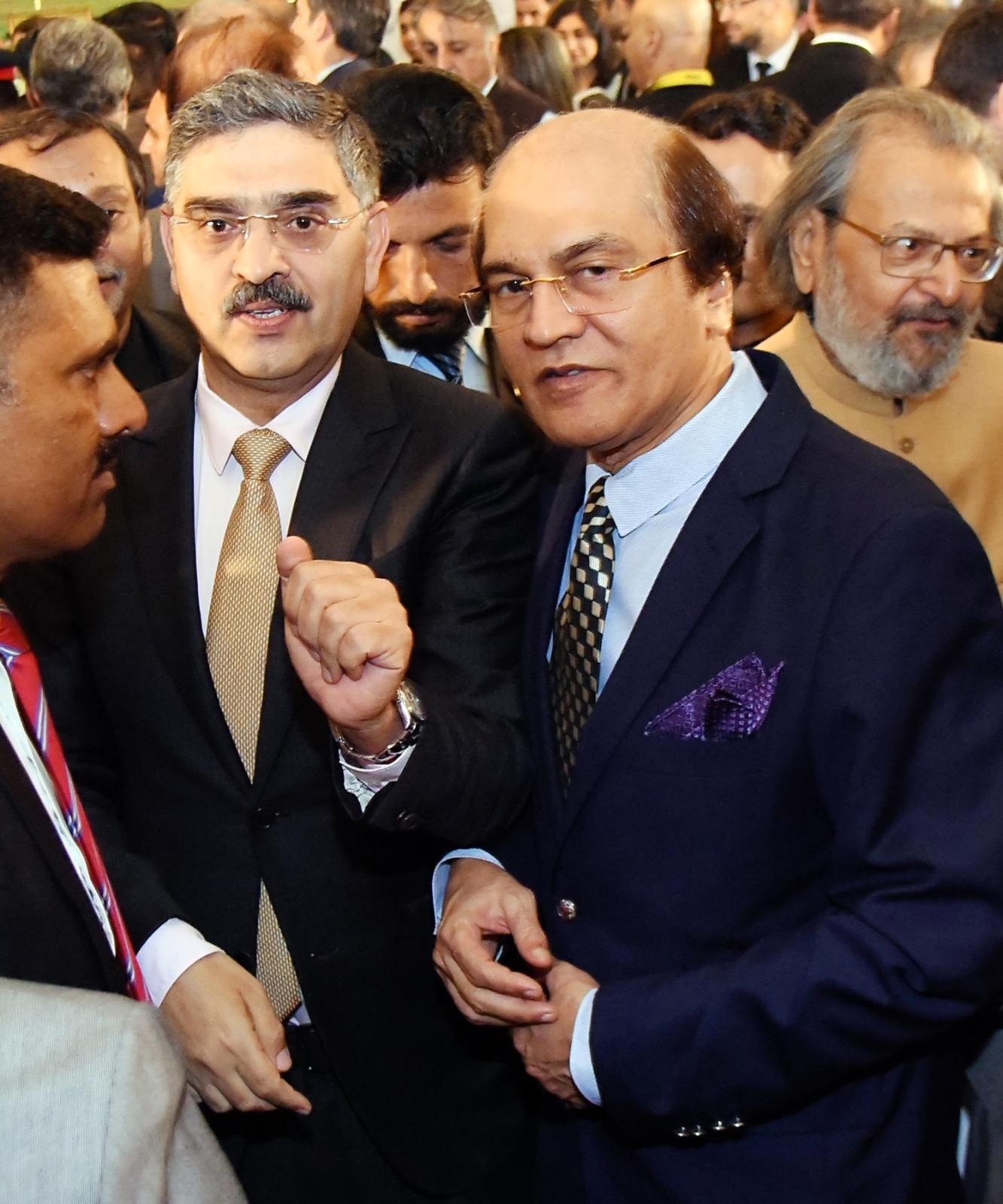
Photo 5. The Chairman ICOHR among senior guests and Caretaker Prime Minister of Pakistan
Anwaar ul Haq Kakar as the gathering moved through the venue.
Every new Chief Justice arrives with a mandate defined partly by law and partly by expectation. For Justice Isa, that expectation includes reducing delays, protecting the independence of the bench and restoring public trust in the courts. For civil society, it includes staying engaged, offering evidence and ideas, and holding institutions to their own standards.
It is in that space, between the courtroom and the community, that organisations such as ICOHR do their most important work. The presence of its Chairman at Aiwan e Sadr, and the warmth with which he was received, was a reminder that the protection of human rights is not the task of one institution alone. It is a shared responsibility of the judiciary, the government and the civil society bodies that keep them honest.
A ceremony ends when the guests leave. The work it promises begins the next morning.
As the halls of Aiwan e Sadr emptied and the day’s formalities gave way to the routines of office, one thing was clear. The oath had been taken, the conversations had begun, and the country now had a fresh opportunity to measure its institutions against the promises made that day. For Pakistan’s human rights community, and for the Chairman of ICOHR who was there to see it, the real story is only beginning. 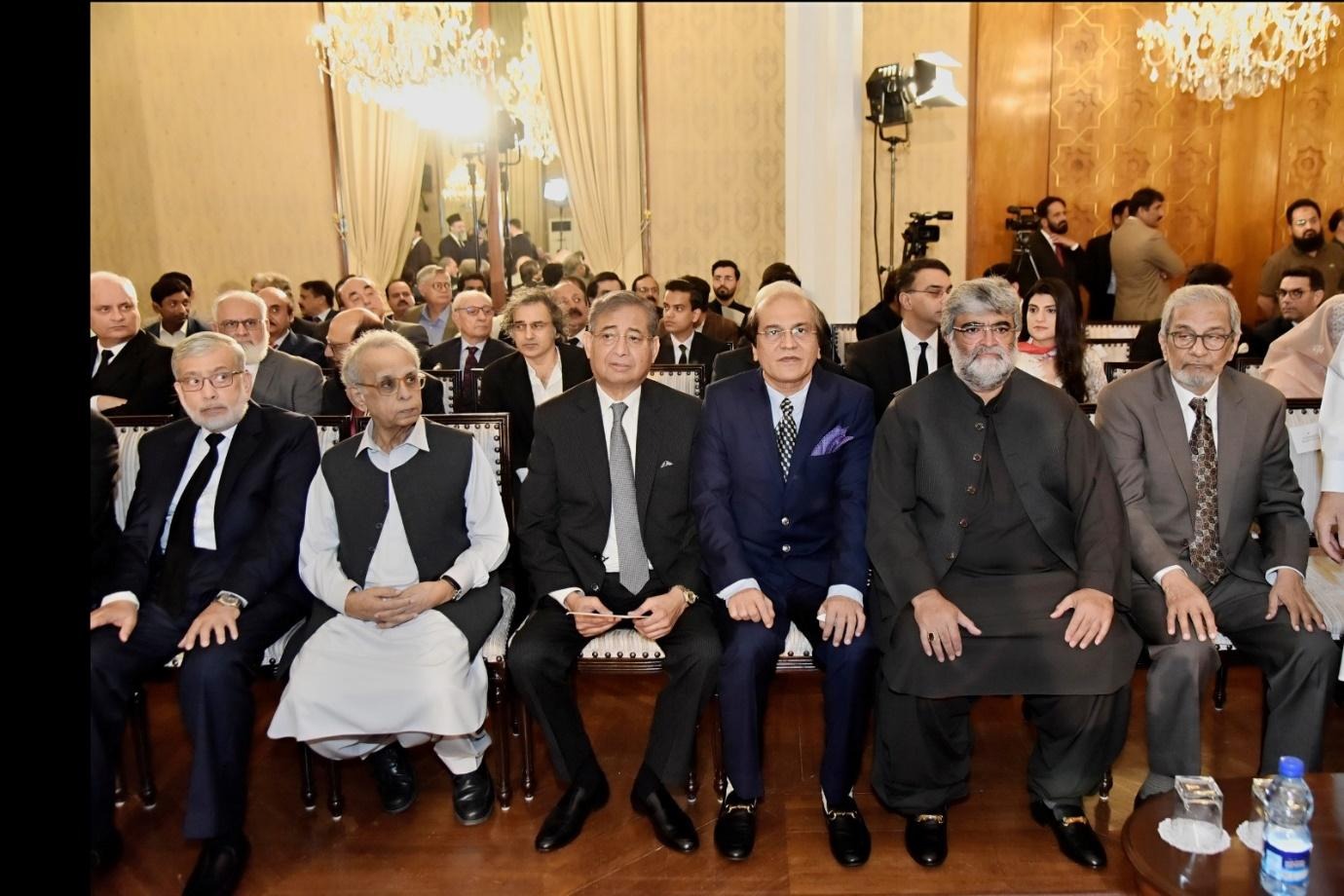
The ceremonial hall at Aiwan e Sadr, chandeliers glowing overhead.
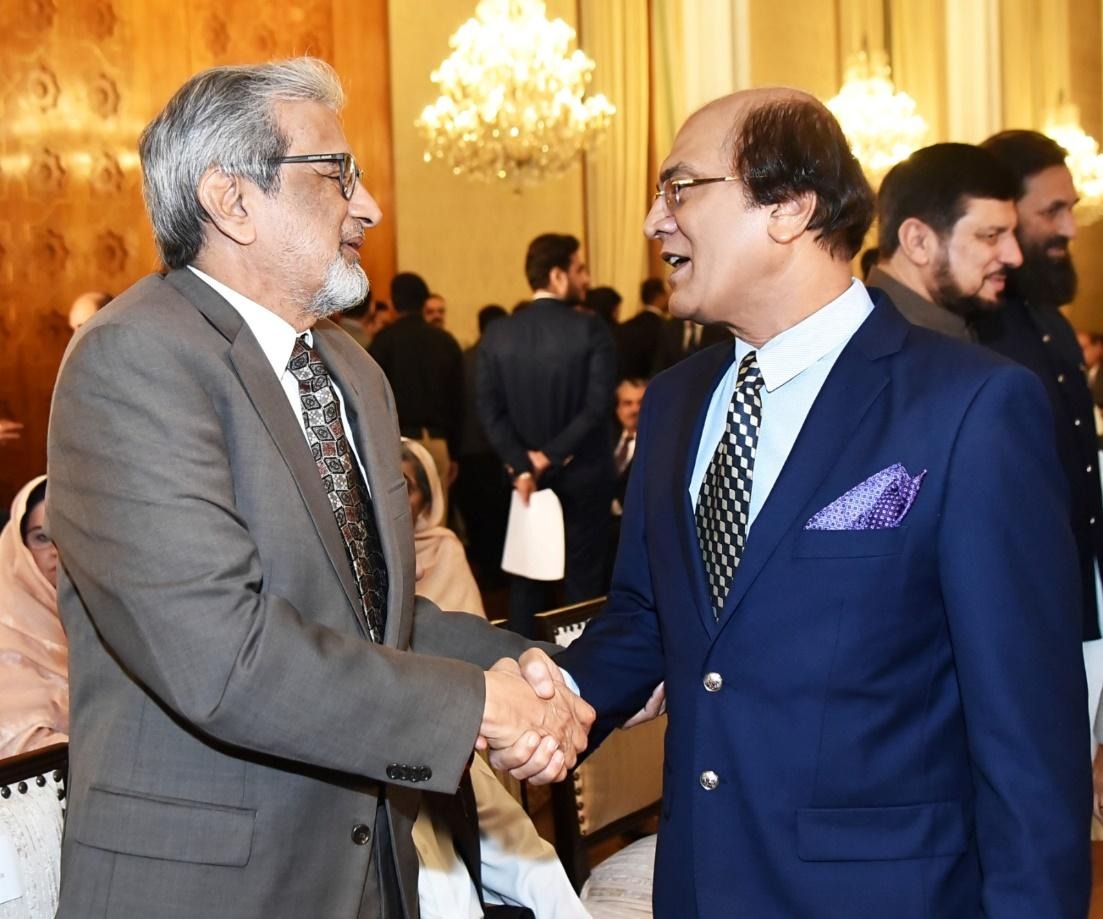
The Chairman ICOHR with Caretaker CM Sindh Chief Justice (Rtd) Mr. Justice Maqbool Baqar.
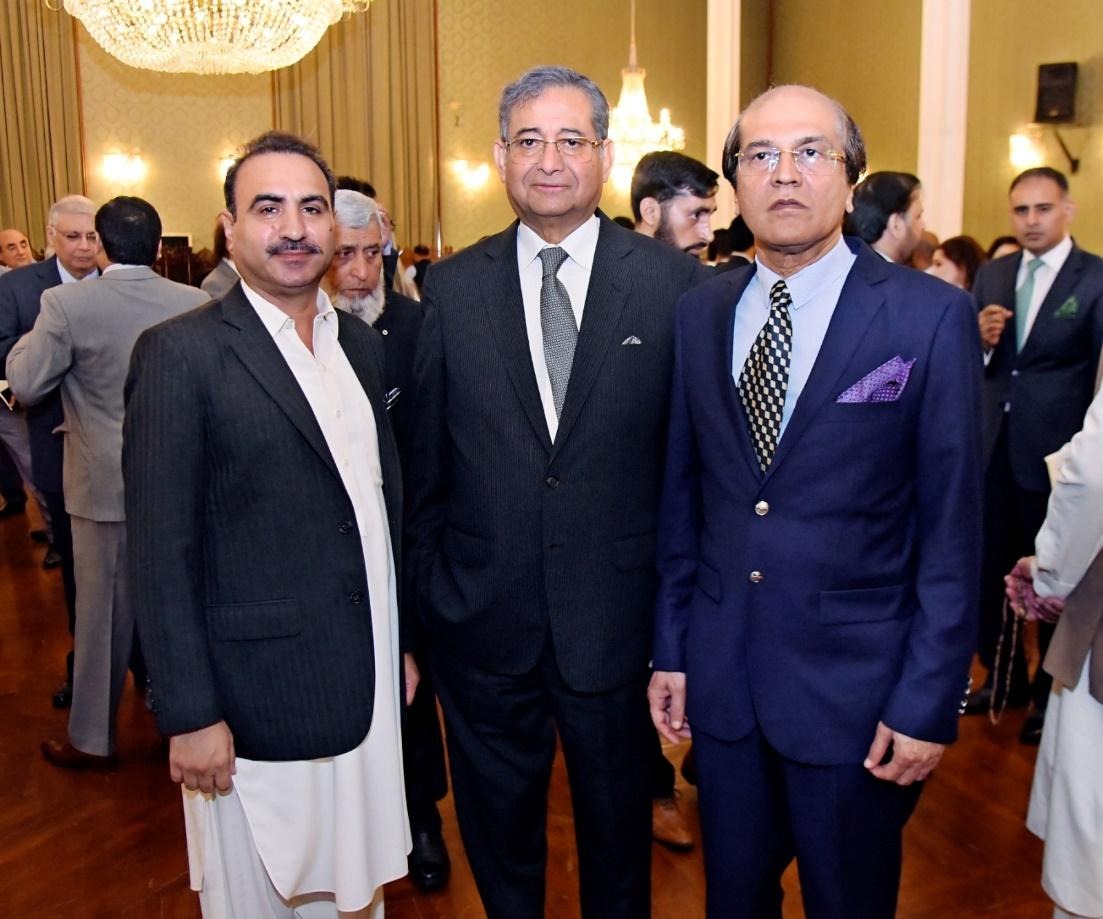
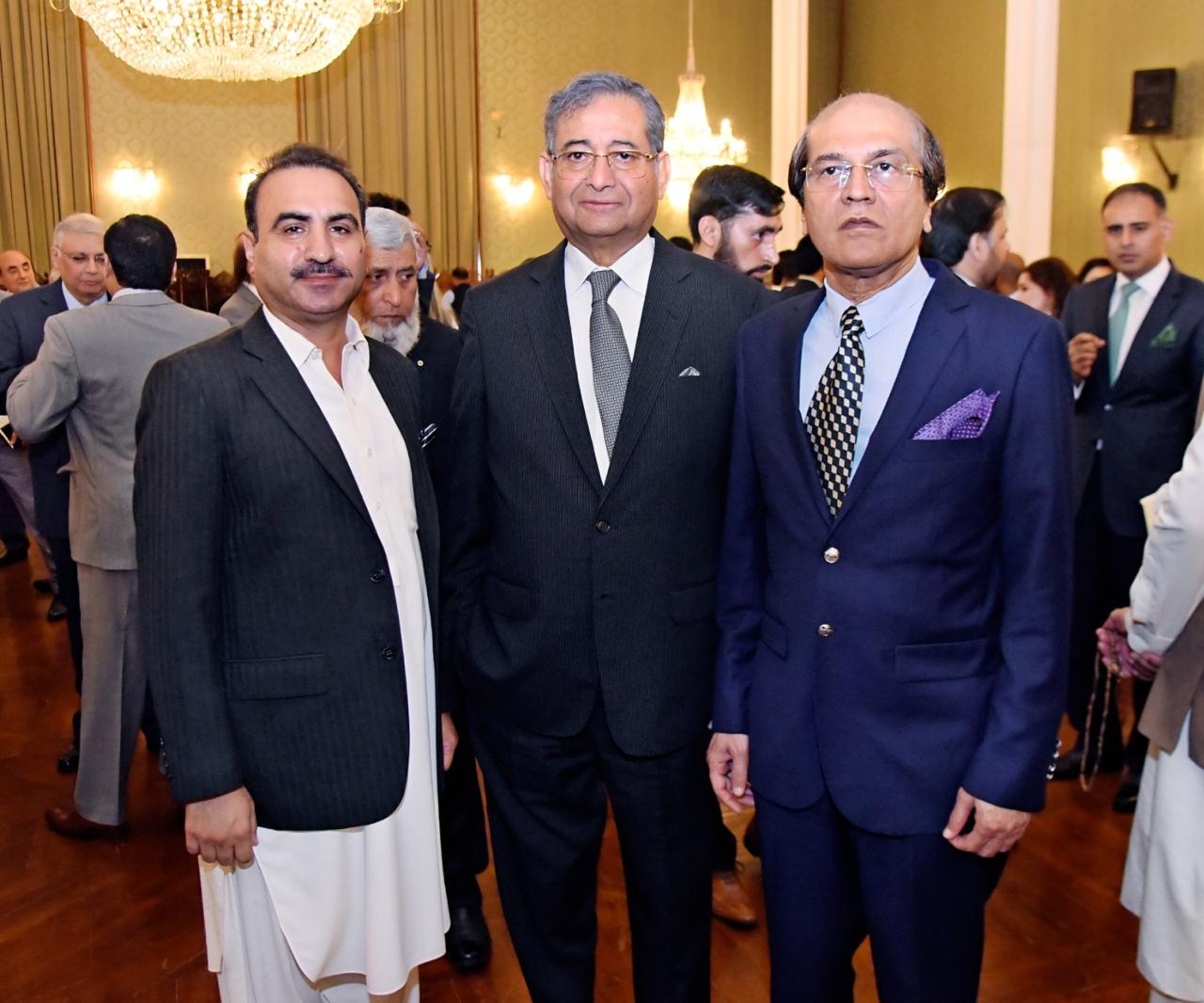
The Chairman ICOHR with Former Ambassador. Hameed Asghar Kidwai.
Reported from Aiwan e Sadr, Islamabad. Additional reporting by the ICOHR News Desk.

© 2026 International Commission On Human Rights. All rights reserved.
 DONATE