helpline:+92 21 99332615 | +92 21 99332617
International Commission on Human Rights
HUMAN RIGHTS | SOCIETY | EID SPECIAL
Dignity Over Charity: ICOHR’s “Eid of Equality & Humanity” Brings the Festival to Children Left Outside It
The International Commission on Human Rights distributed Eid clothing, gifts, and Eid to underprivileged children, pairing practical support with a public argument that a person’s worth is never set by circumstance.
By Ajlal Haider Malik | Karachi
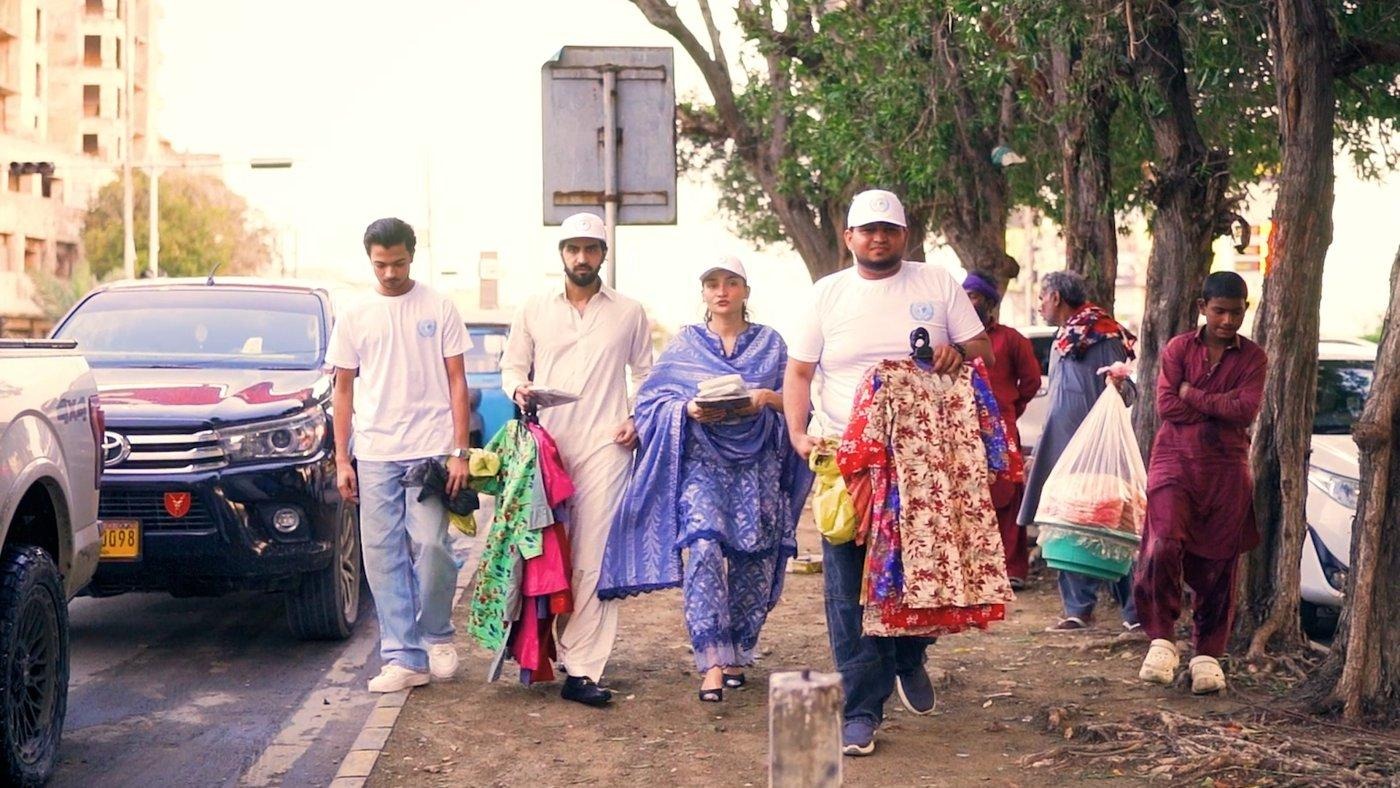
ICOHR President Yusra Ellahi alongside volunteers move along a city road carrying Eid clothing and gift packs for children and families.
Every year, in the final days of Ramadan, the same scene repeats itself across cities. Markets fill with new fabric, families shop for the occasion, and children look forward to the clothes they will wear on Eid morning. For a large number of families, however, the festival arrives without the means to mark it. The International Commission on Human Rights (ICOHR) set out to address that gap directly through its “Eid of Equality & Humanity” initiative.
Volunteers visited different communities across Karachi, met underprivileged children and their families, and distributed Eid clothes and gifts. Children also received Eidi, the traditional monetary gift that is central to the festival. The organisation described the programme as both a relief effort and an awareness campaign, built around the principle that every person deserves care, respect and equal human dignity.
ICOHR said the primary objective was to support underprivileged children and bring happiness to families who do not have the resources and opportunities available to others. The initiative was designed to encourage people to look beyond social and economic differences and to recognise that the true spirit of Eid is found in sharing happiness and helping others.
Its second objective was communication. Beyond providing gifts, clothing and Eidi, the organisation wanted to convey that every individual has value regardless of circumstances, colour, religion or social status. The campaign line, “Khud Ka Khayal Rakhein, Apne Ird Gird Ke Logon Ka Bhi,” which means take care of yourself, and of the people around you too, reflects that dual message of personal responsibility and social concern.
“Is Eid par apna bhi khayal rakhein aur apne ird gird rehne walay logon ka bhi.”
Chairman Muhammad Aslam Ellahi, ICOHR. In English: “On this Eid, take care of yourselves, and of the people who live around you as well.”
The distribution took place in public spaces at several points in Karachi, in the late afternoon and early evening. Volunteers wearing white ICOHR caps and T shirts carried children’s clothing on hangers and hand-held gift packs, moving on foot along roadsides and through neighbourhoods. A parked pickup truck served as a distribution point, from which volunteers passed packages down to the families gathered around it.
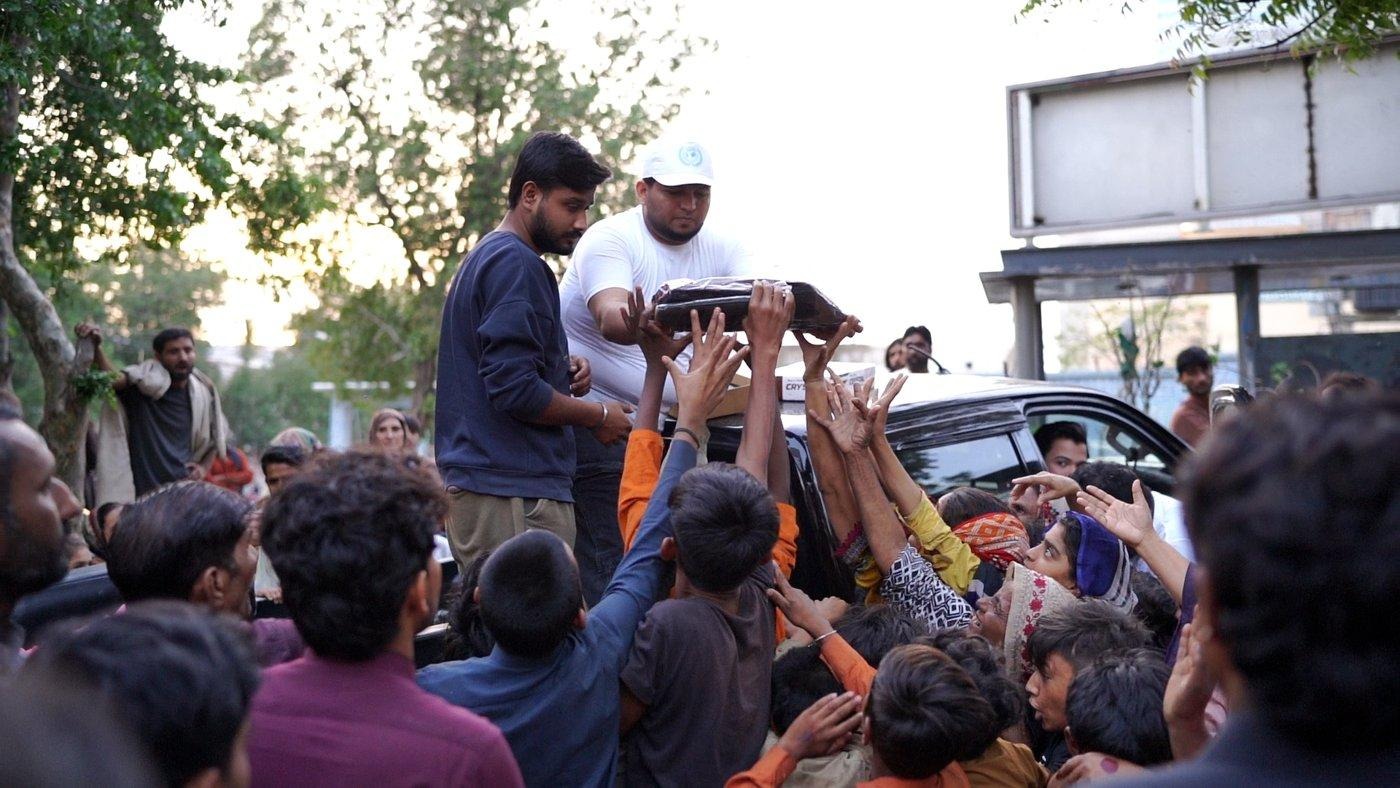
Volunteers pass gift packages from a vehicle to families gathered at a distribution point.
The demand was visible. Mothers holding infants, elderly women, teenagers and young children pressed forward, many with hands raised. Volunteers on the ground worked to keep the crowd orderly while those on the vehicle handed out packages one at a time. The scene underlined a point that ICOHR has stressed in its own account of the project: the need in these communities is immediate, and it is not hidden.
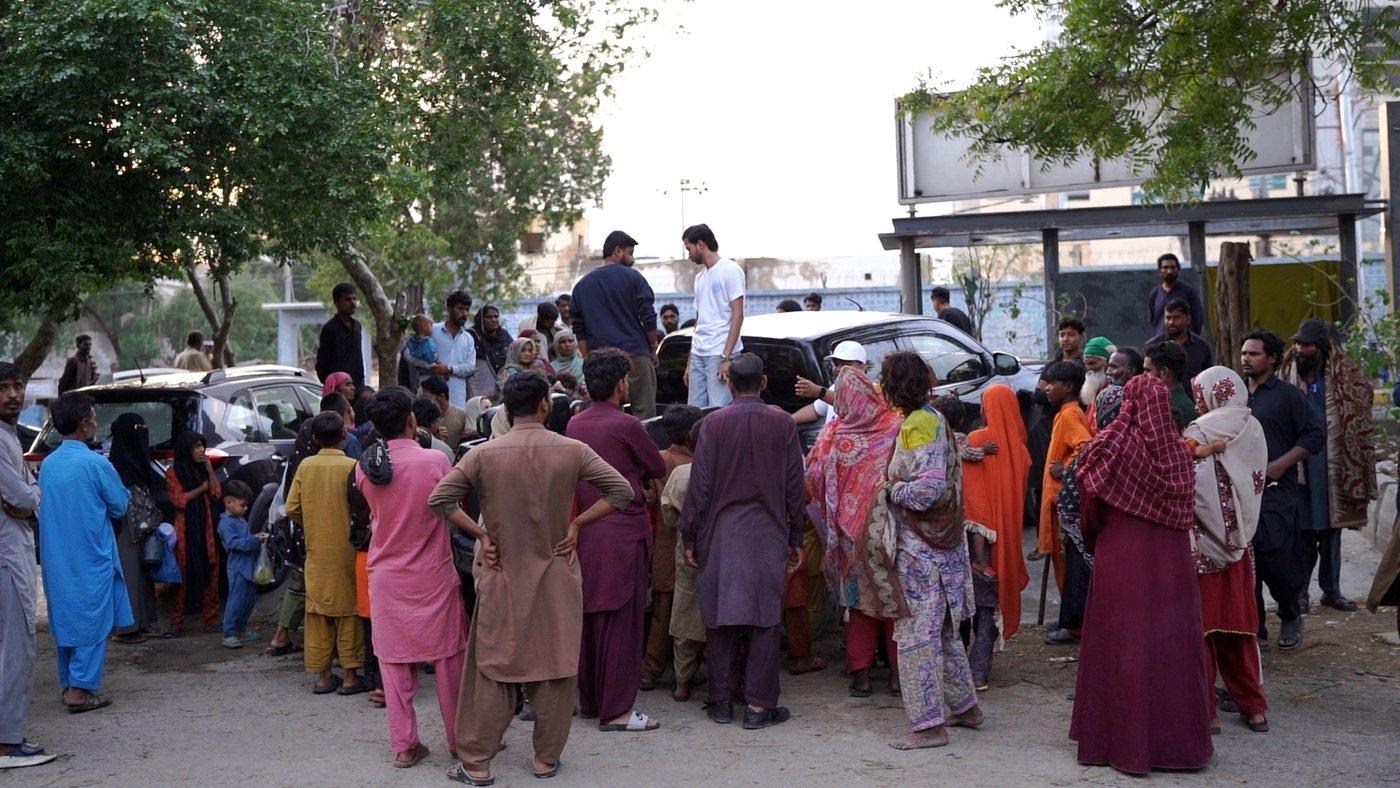
A large gathering of children, women and men around the distribution point as volunteers manage the flow.
The organisation stated that volunteers spent time with the children, listening to their stories, circumstances, hopes and dreams. That element separates the initiative from a routine handout. In one neighbourhood, a group of boys sat along a low wall beneath a large tree while a volunteer in an ICOHR T shirt stood facing them, there to talk before anything was given. Elsewhere, volunteers crouched beside seated families to hand over clothing and gifts personally, and a volunteer offered a young boy an embroidered outfit at eye level.
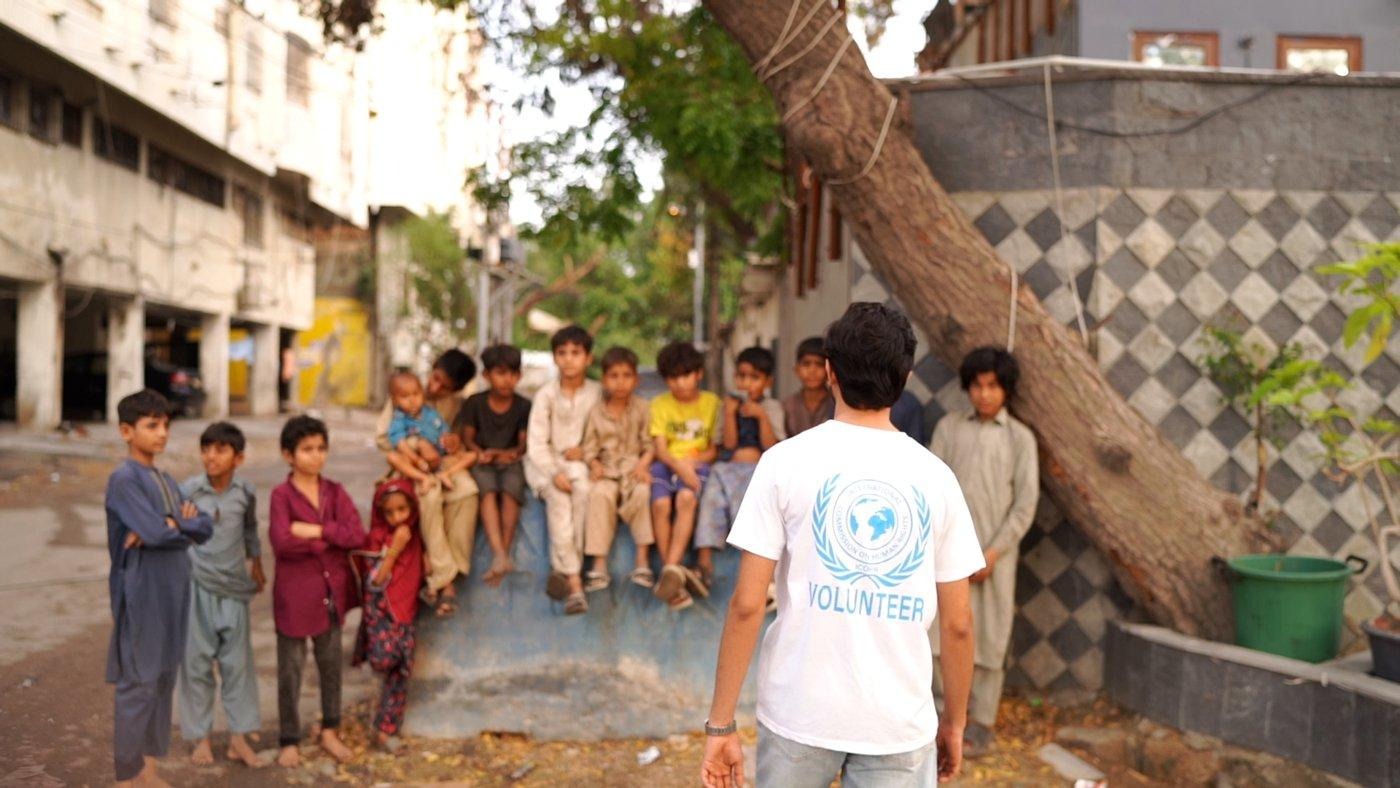
A volunteer in an ICOHR T shirt meets a group of children gathered along a wall.
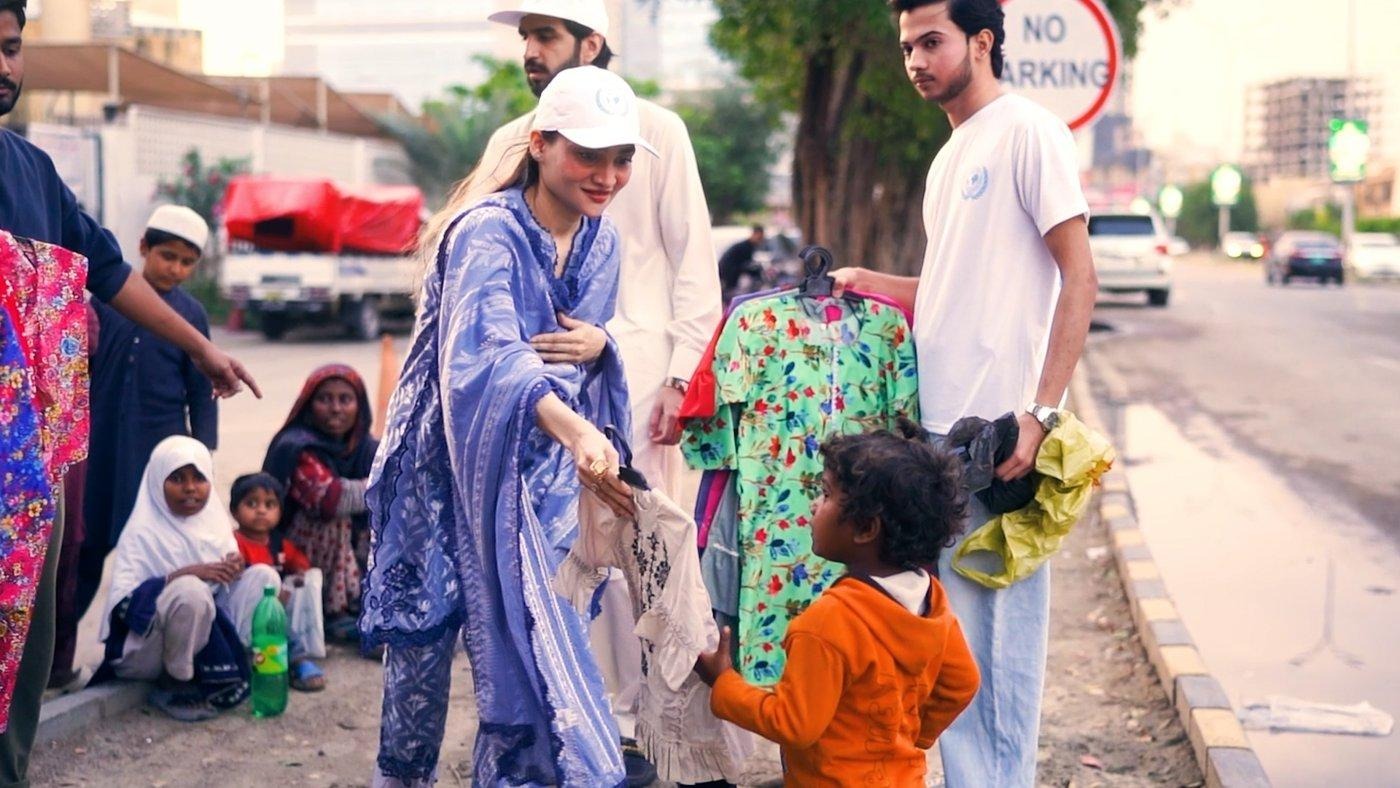
ICOHR President Yusra Ellahi hands an Eid outfit to a young boy as other families wait nearby.
“All human beings are born free and equal in dignity and rights.”
Article 1, Universal Declaration of Human Rights
ICOHR presented the initiative as an application of the values of equality, dignity, compassion and respect, consistent with the principles reflected in the United Nations Charter. The Charter’s preamble reaffirms faith in fundamental human rights and in the dignity and worth of the human person. The organisation’s stated aim was to move those ideas from declaration to practice by supporting children and encouraging responsible care for others.
The central message, according to the project brief, is that a person’s worth is not determined by circumstances. Every face carries a story, and every person deserves dignity, care and equal respect. Eid, the organisation argued, becomes more meaningful when happiness is shared and no one is made to feel forgotten.
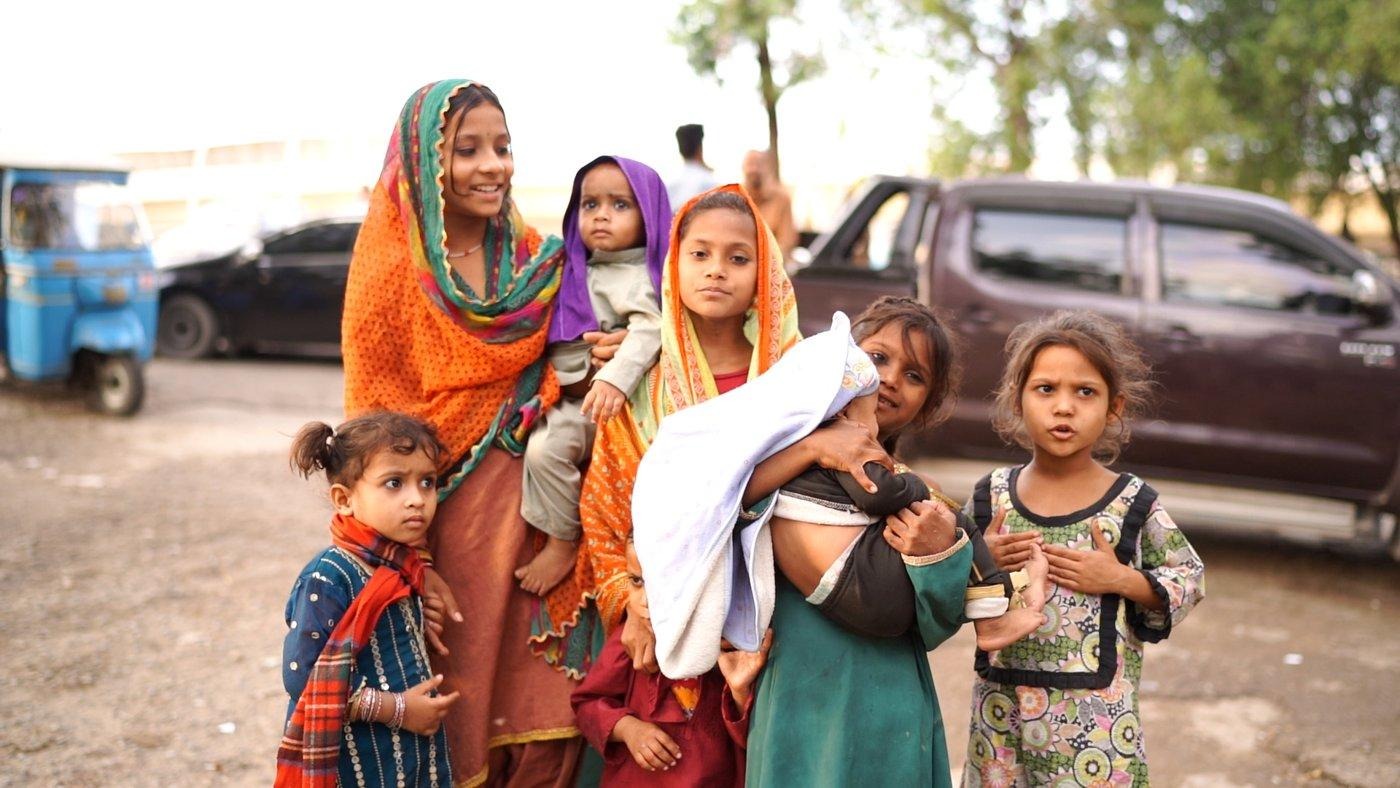
Children from the communities visited during the initiative.
The initiative was carried out at multiple locations in Karachi, with volunteer teams visiting communities on foot and by vehicle over the course of the campaign. The table below records each location, the date of the visit, and the number of children reached, so that the outcome of the project can be verified and reported accurately.
The immediate outcome was practical. Children received Eid clothing, gifts and Eidi, and many had the opportunity to be heard by adults who asked about their experiences and aspirations.
The wider objective was social. By combining humanitarian assistance with public awareness, ICOHR sought to encourage individuals and communities to treat helping others as a shared responsibility. The organisation urged the public to take practical steps in support of people in need, and to understand Eid as an opportunity to strengthen compassion, and not only as a personal celebration.
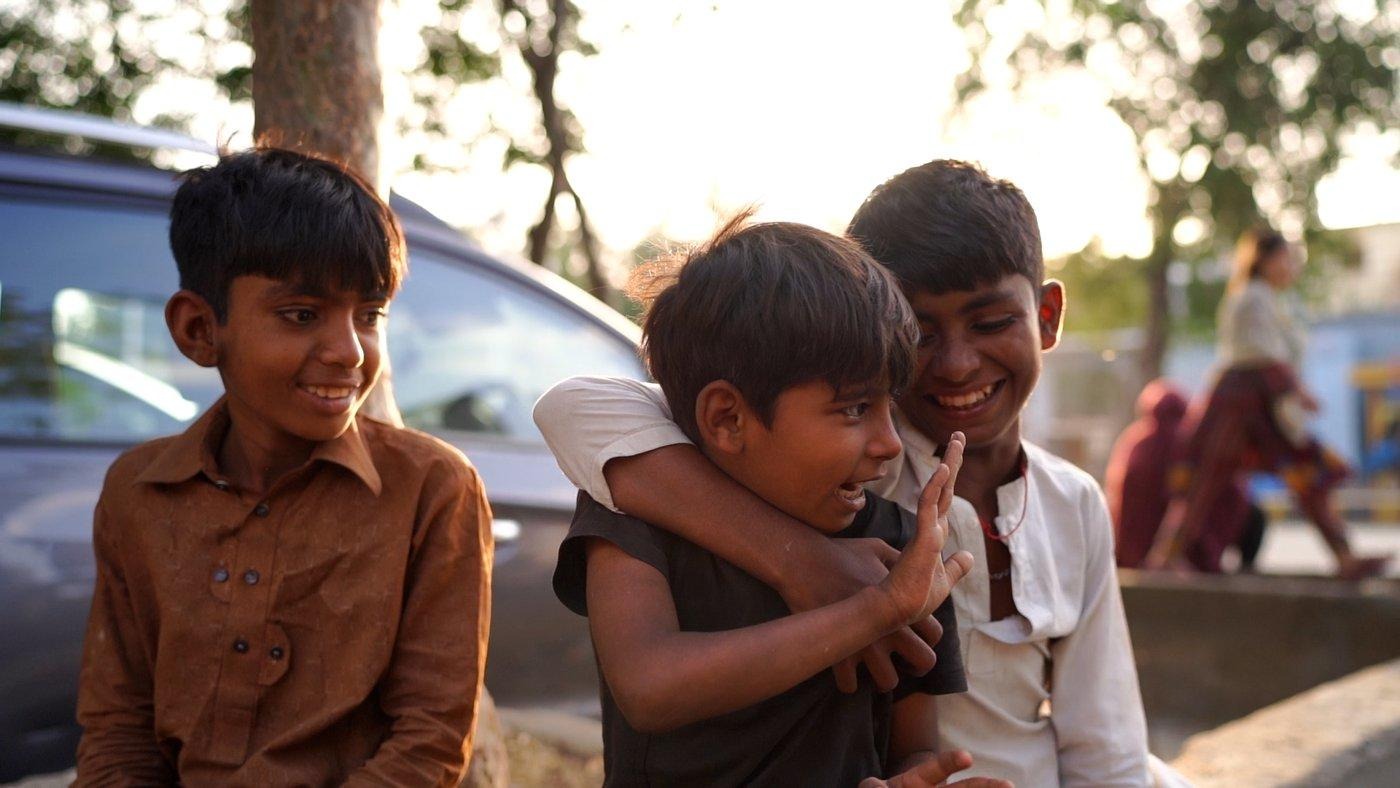
Children share a moment of laughter during the visit.
The initiative closes on a simple invitation. As the Chairman put it, Eid is a time to take care of oneself and of those living nearby. Whether that message translates into lasting community action will depend on how many people choose to act on it. For the children who received clothes, gifts and a few minutes of genuine attention this Eid, the effect was immediate. For the wider public, ICOHR’s challenge remains open.
“Insaniyat Hamari Pehchan Hai, Barabari Hamara Mission.”
Humanity is our identity. Equality is our mission.
Project at a Glance

© 2026 International Commission On Human Rights. All rights reserved.
 DONATE