helpline:+92 21 99332615 | +92 21 99332617
International Commission on Human Rights
How a Grassroots Medical Mission Is Reshaping Access to Care in Karachi and Sindh
Under the International Commission on Human Rights, doctors, students and volunteers are carrying free healthcare into the neighborhoods Karachi's formal medical system too often leaves behind.
Karachi
KARACHI — On a warm morning inside a modest community hall in Karachi, long before the sun climbed high enough to make the heat unbearable, a line had already begun to form outside a set of folding tables covered in medicine boxes. Mothers balanced toddlers on their hips. An elderly man in a striped shirt leaned on a walking stick, waiting patiently for his turn. A young girl in a red shawl clutched her grandmother's hand, eyes wide at the unfamiliar bustle of doctors in white coats moving briskly between patients.
This was not a hospital. There was no reception desk charging a consultation fee, no pharmacy counter tallying a bill. It was a free medical camp, one of many organized under the banner of Health for Humanity, an initiative of the International Commission on Human Rights, known widely as ICOHR, and for the people gathered that day it represented something increasingly rare in their daily lives, healthcare without a price tag attached to their dignity.
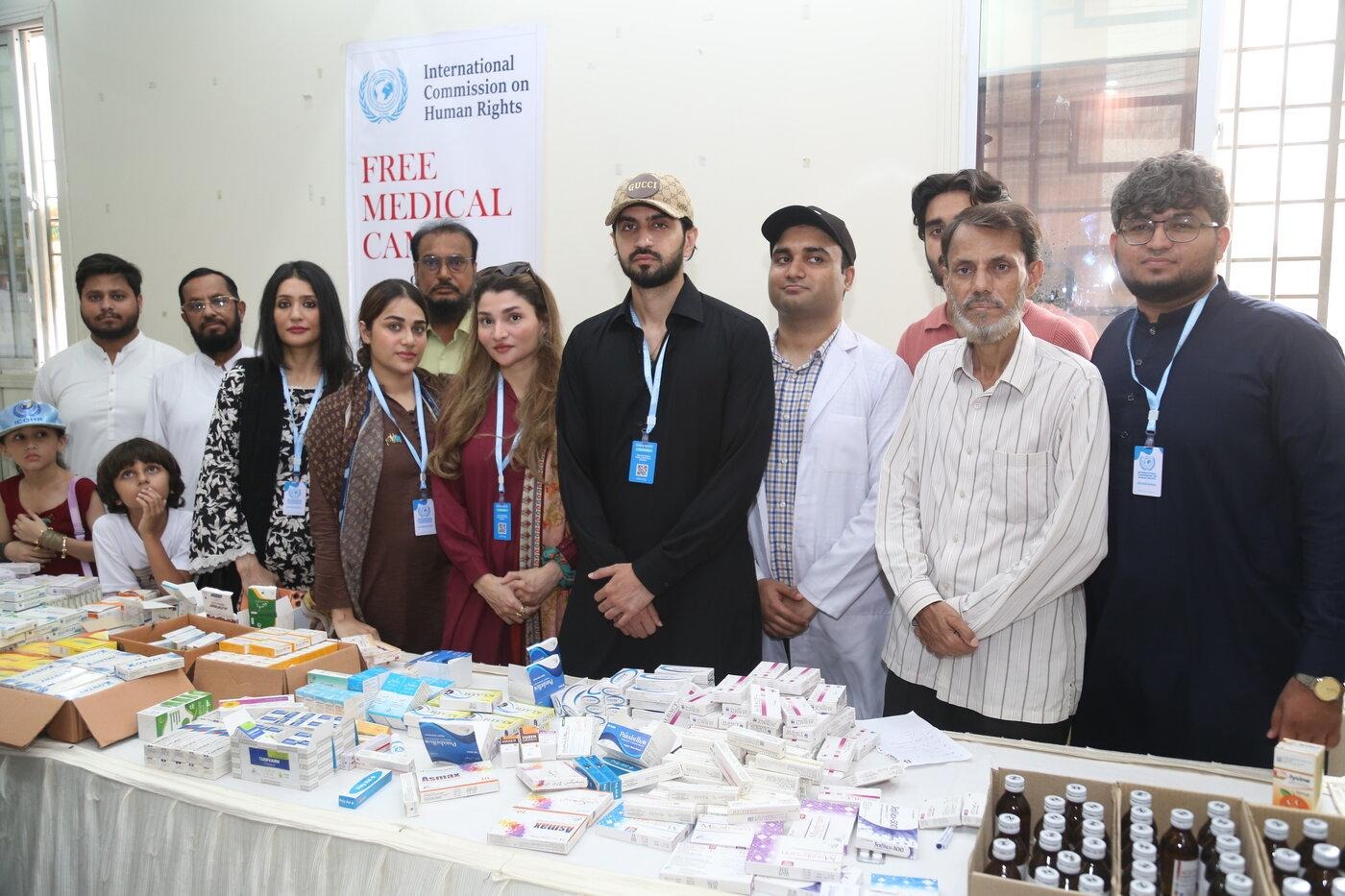
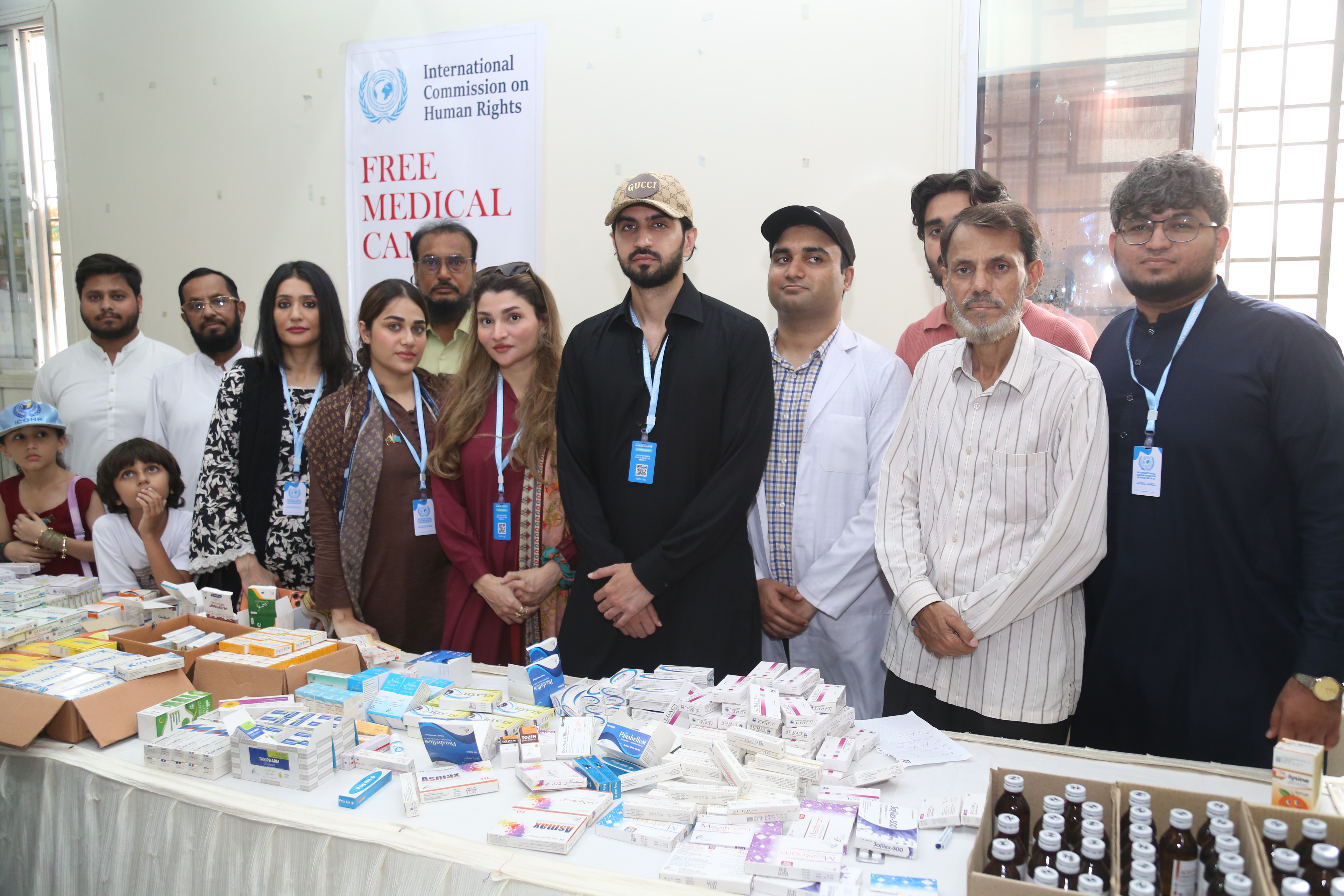
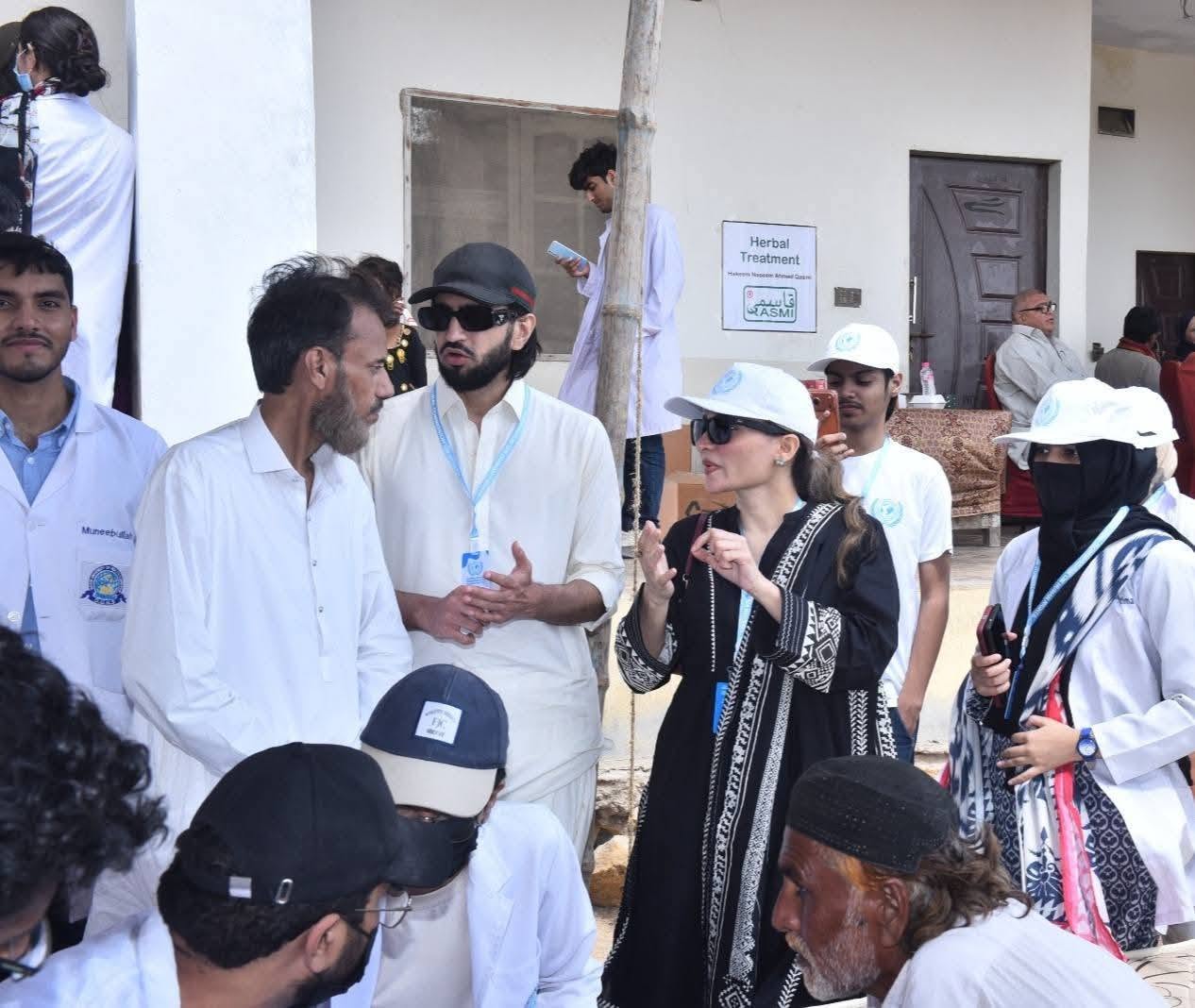
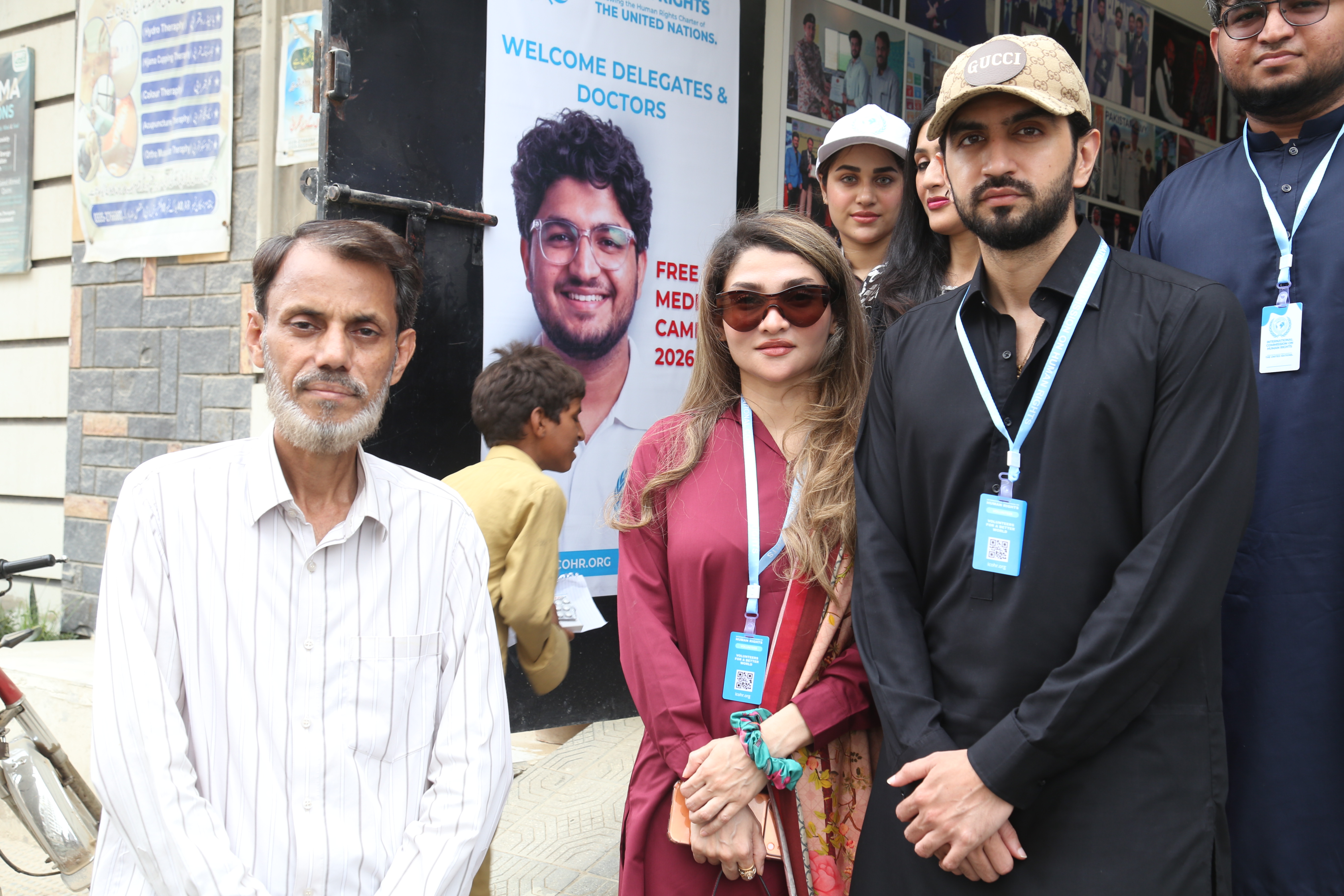
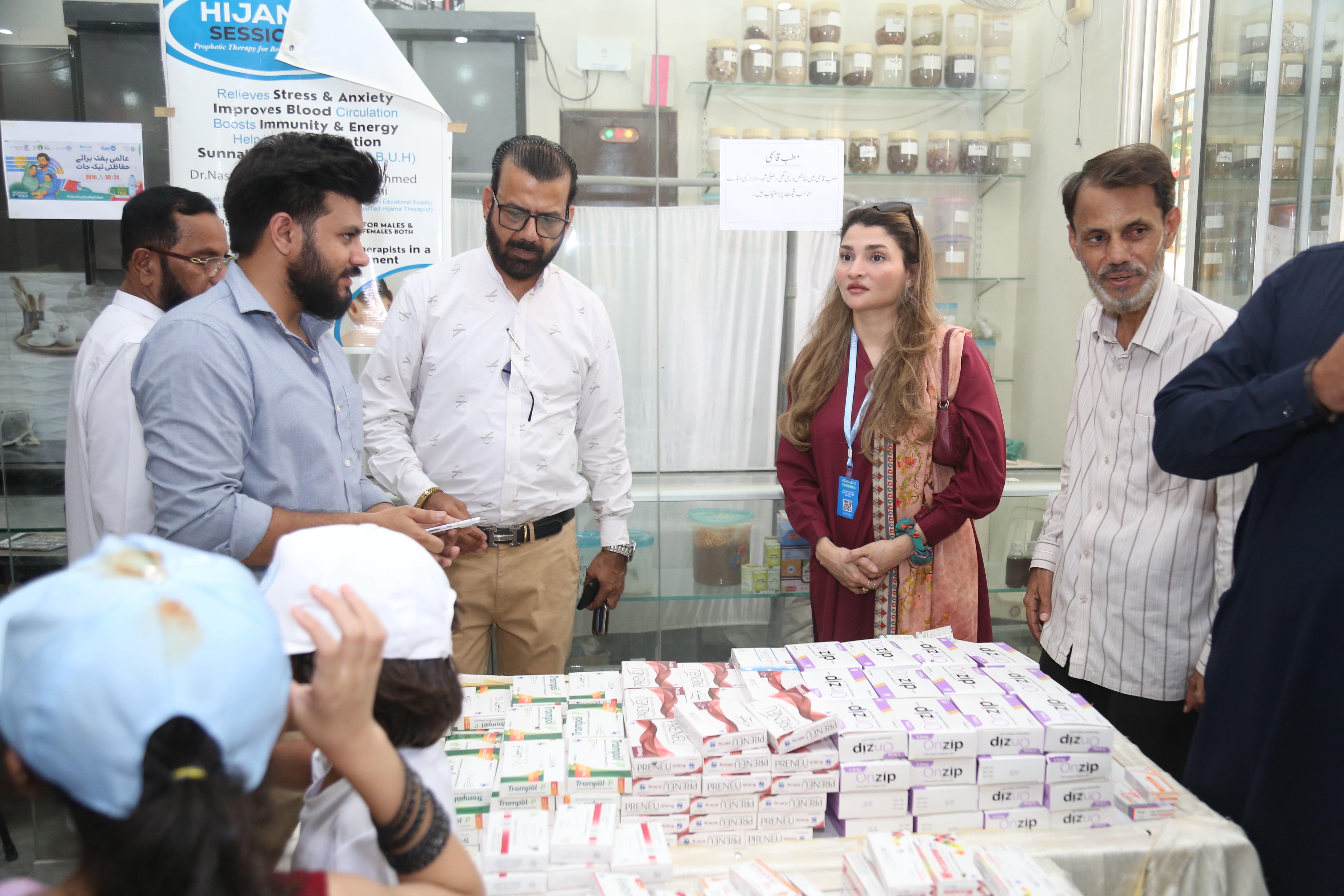
Doctors, volunteers and ICOHR representatives gather beside the medicine table at the start of a free medical camp in Karachi.
The Health for Humanity Free Medical Camps and Health Awareness Initiative did not emerge overnight. It is the product of years of sustained effort by ICOHR, developed under the vision and leadership of Chairman Muhammad Aslam Ilahi, who has long argued that healthcare should not be treated as a privilege reserved for those who can afford it, but as a basic component of human dignity and equality.
That philosophy is woven into everything the organization does. Over the years, ICOHR has partnered with doctors, healthcare professionals, universities, students, volunteers, welfare organizations, companies and community representatives to bring free medical camps into neighbourhoods across Karachi and the underserved corners of Sindh, among them Gulshan e Iqbal, Landhi, Korangi, Malir, Saudabad, Orangi Town, Lyari, Baldia Town, Thatta and Gharo.
“Your health matters. Your life matters. Your dignity matters. That is not a slogan for us, it is the entire reason this initiative exists.”
— ICOHR Volunteer Coordinator
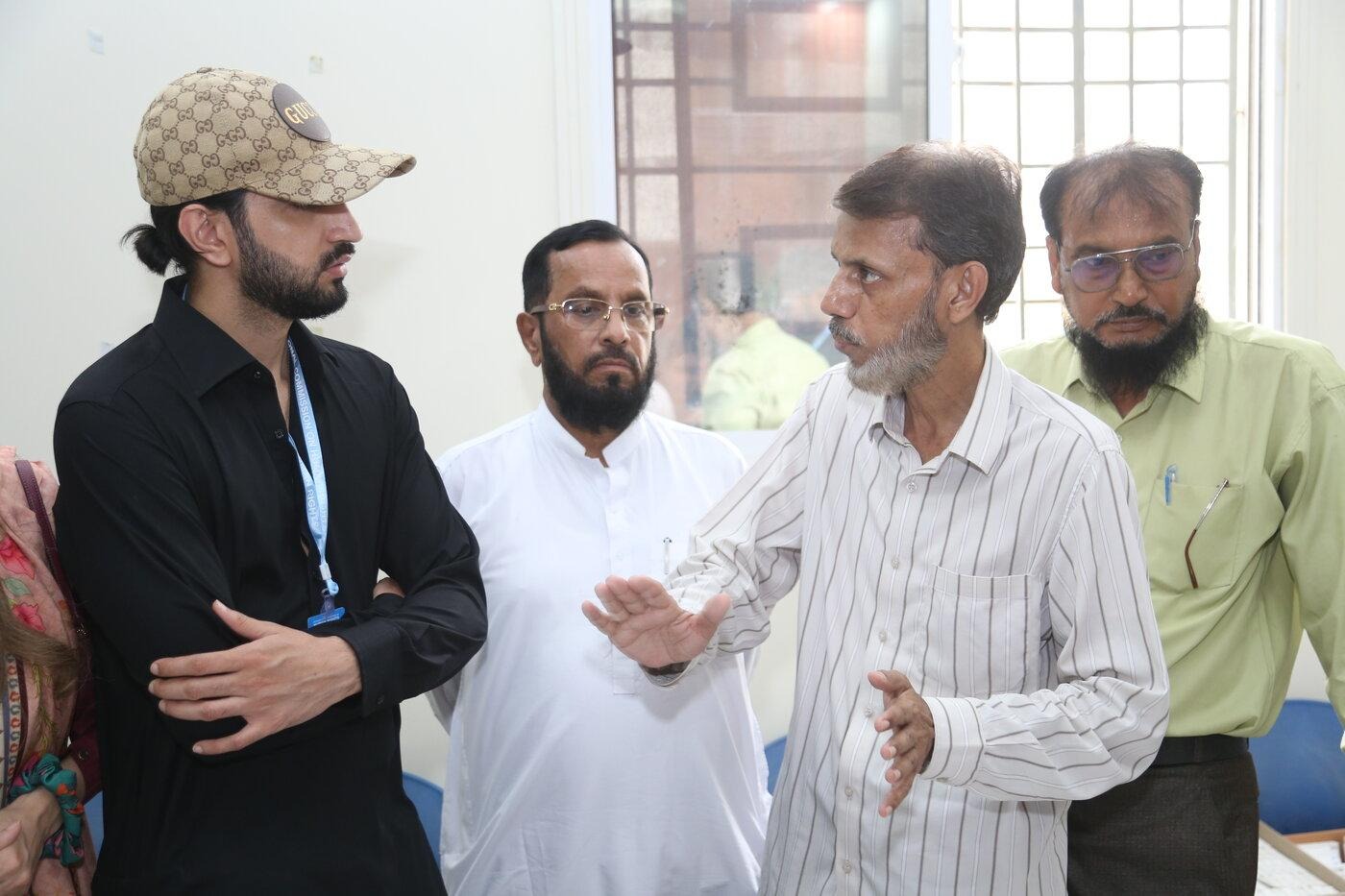
A patient's relative consults with an ICOHR volunteer before registration.
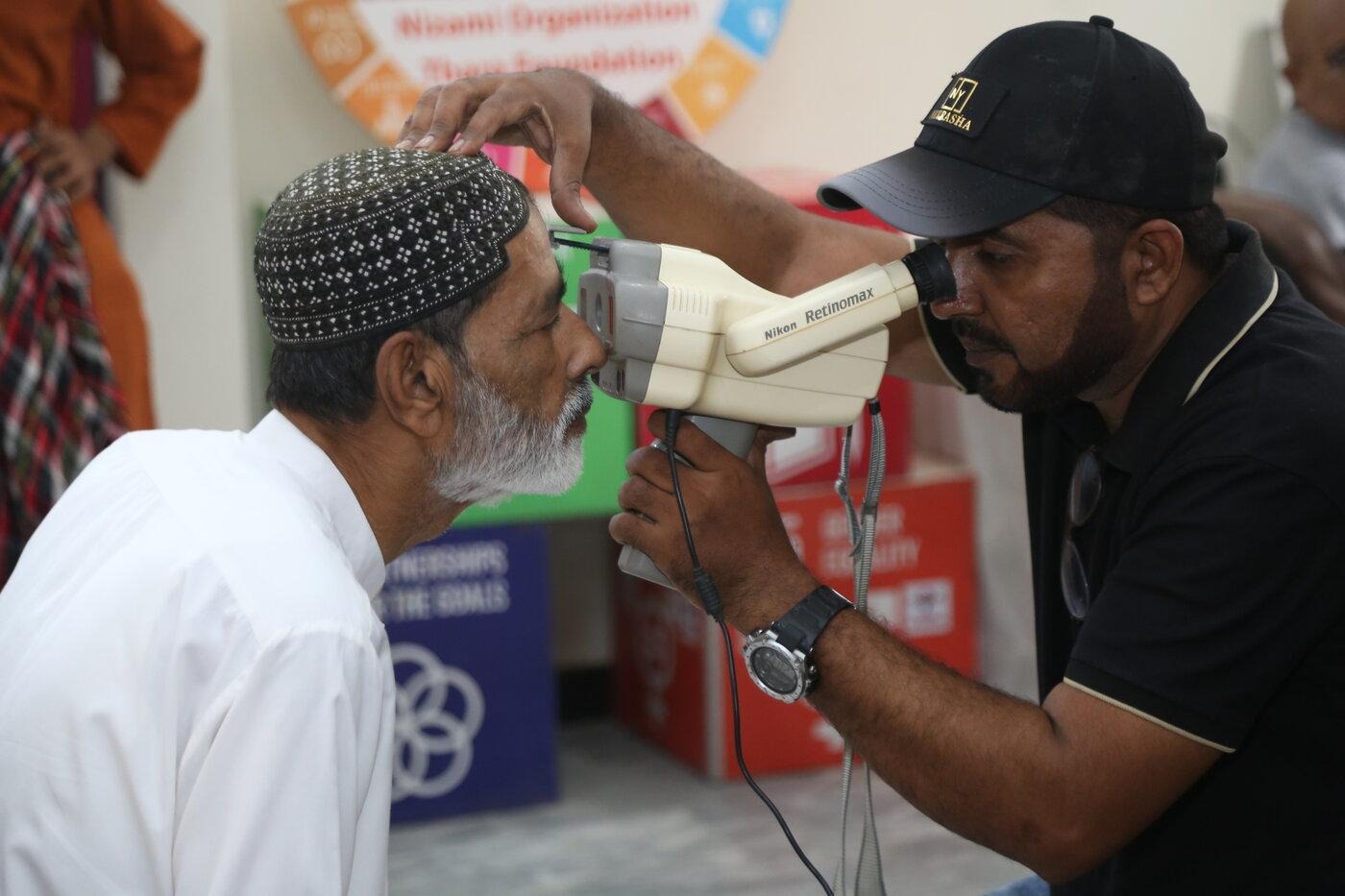
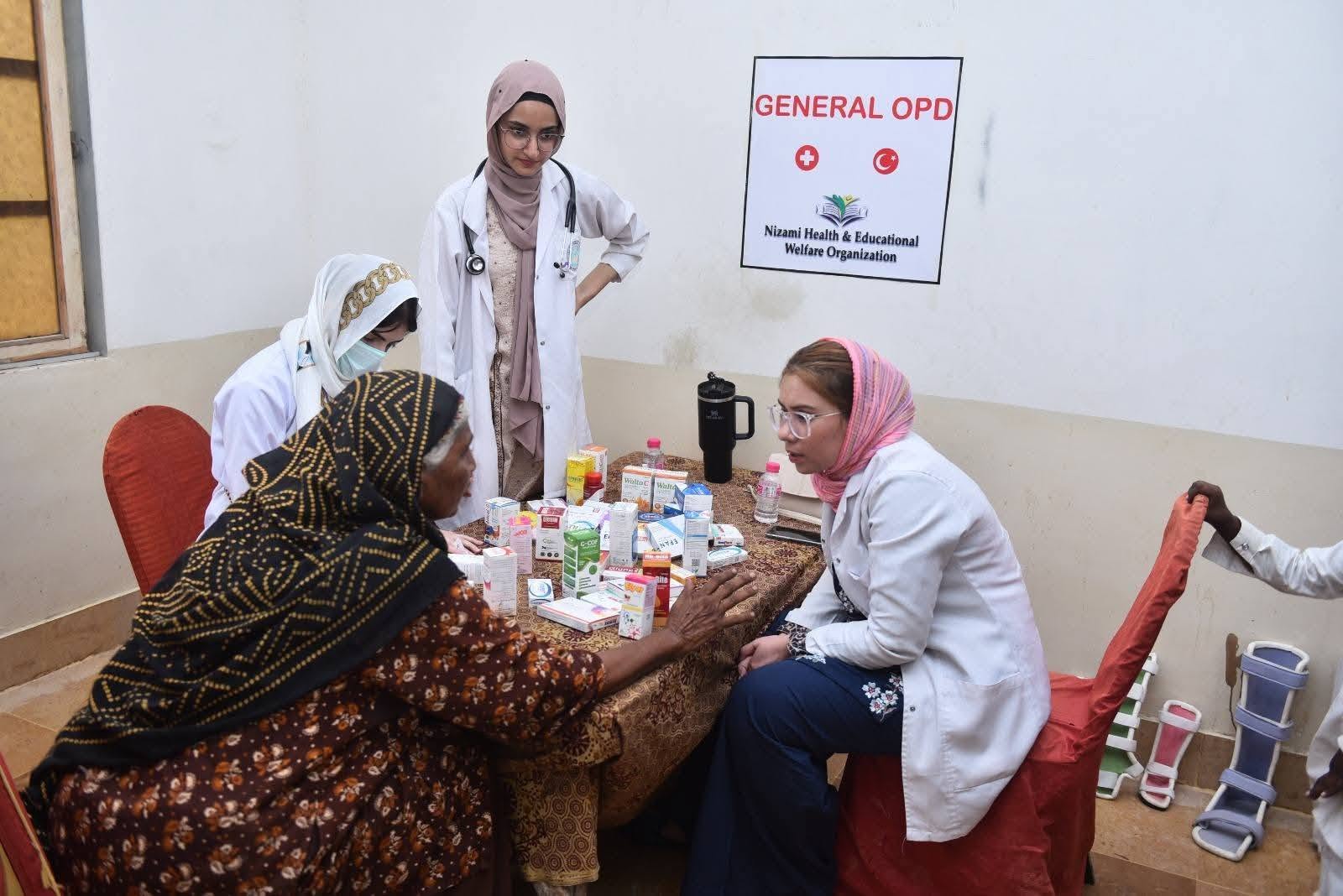
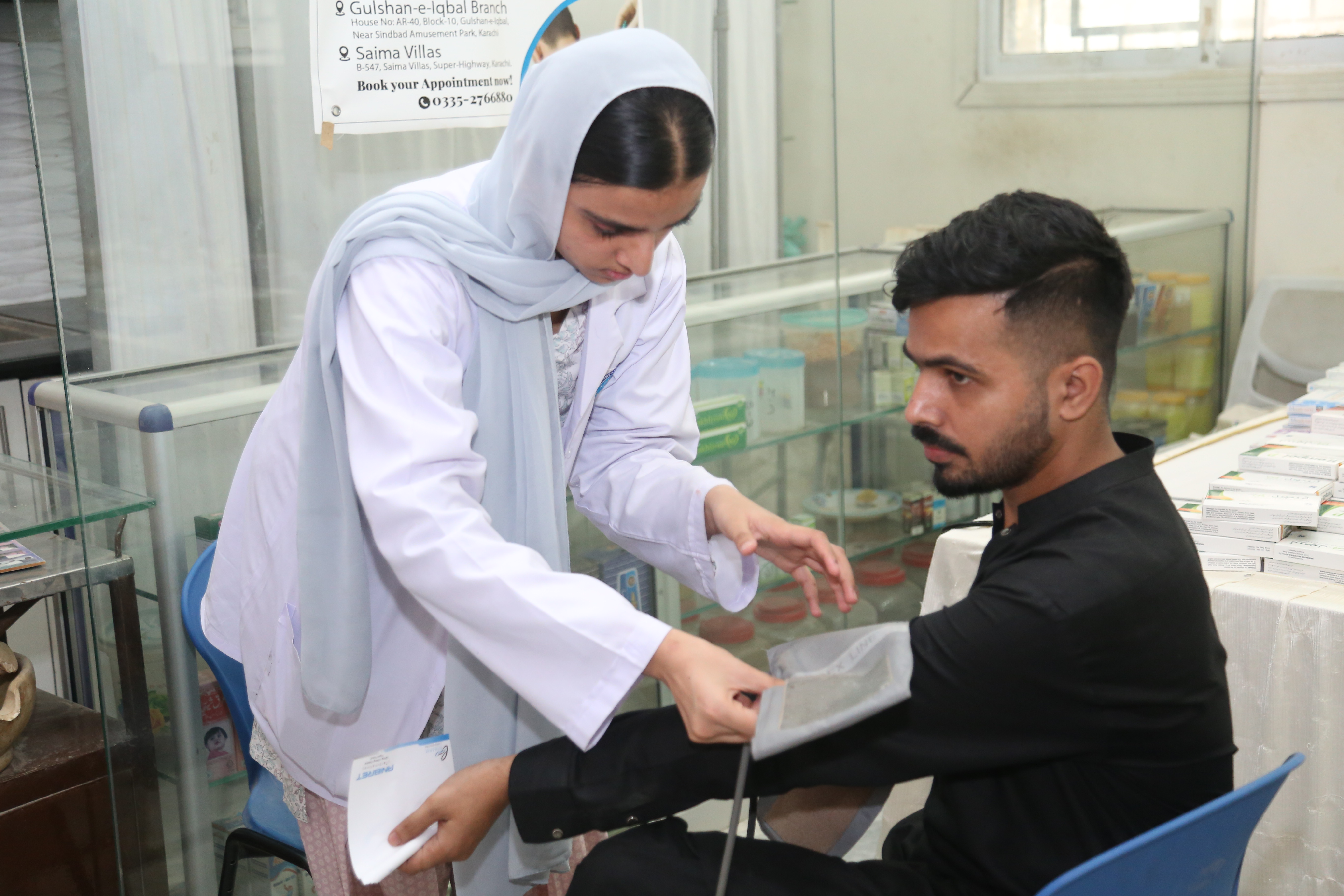
Walk into any Health for Humanity camp and the scene tells its own story. Tables lined with neatly arranged medicine boxes. Volunteers in ICOHR badges guiding elderly patients to their seats. A physician gently tilting an old man's head to examine his eyes with a handheld diagnostic device, checking for vision problems that might otherwise have gone undetected for years.
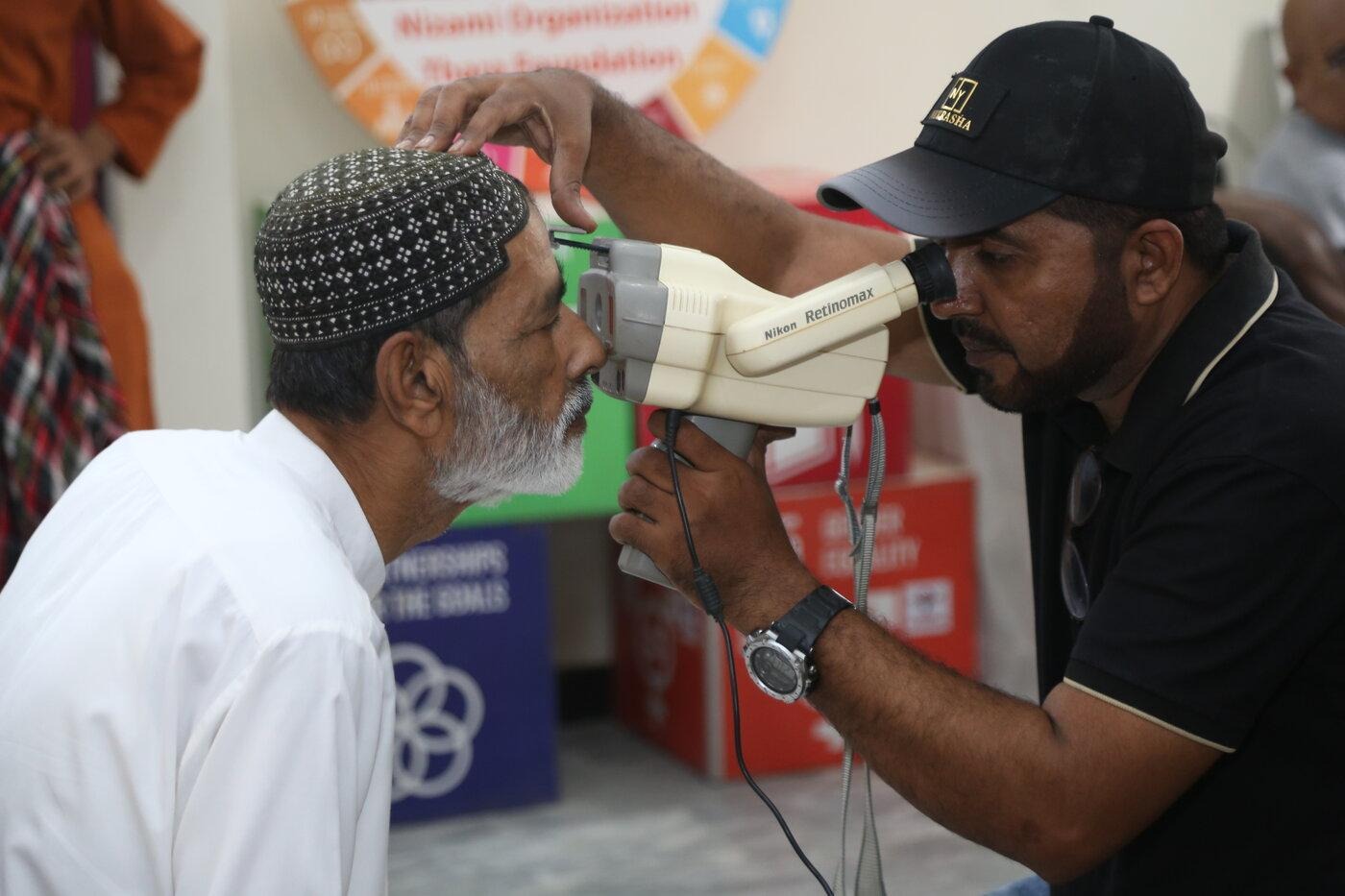
A volunteer optometrist conducts a free eye screening using a handheld refractometer.
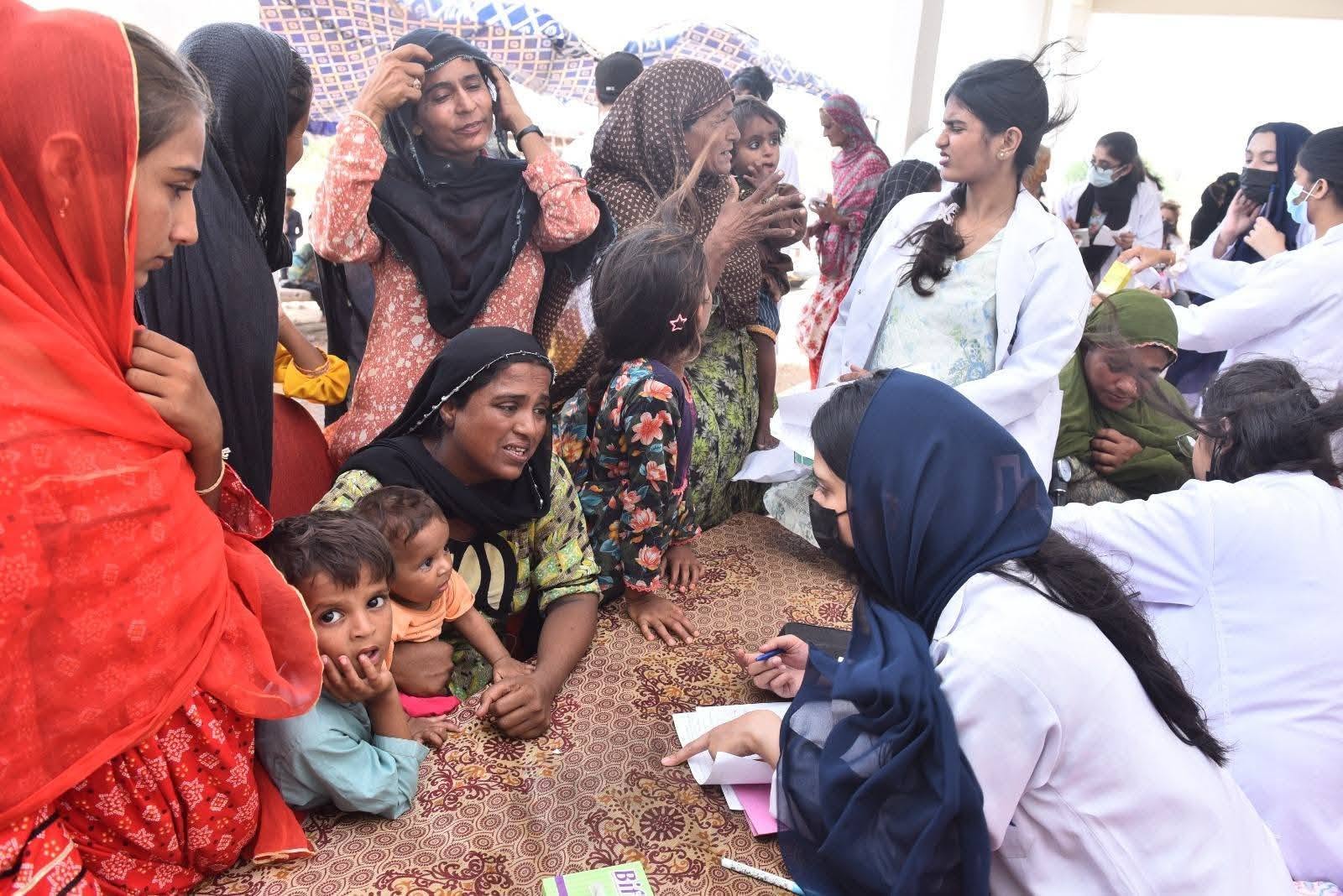
Nearby, a young woman doctor kneels on a patterned rug spread across the ground, notebook in hand, listening carefully as a mother describes her child's persistent cough, while other women and children crowd around, waiting their turn to be heard. It is this image, doctors sitting at eye level with their patients rather than behind a desk, that many volunteers describe as the emotional core of the initiative.
“We are not just handing out medicine. We are sitting with people, listening to them, sometimes for the first time in their lives having a doctor actually explain what is wrong and why. That changes something in a person.”
— Volunteer Physician, ICOHR Medical Camp
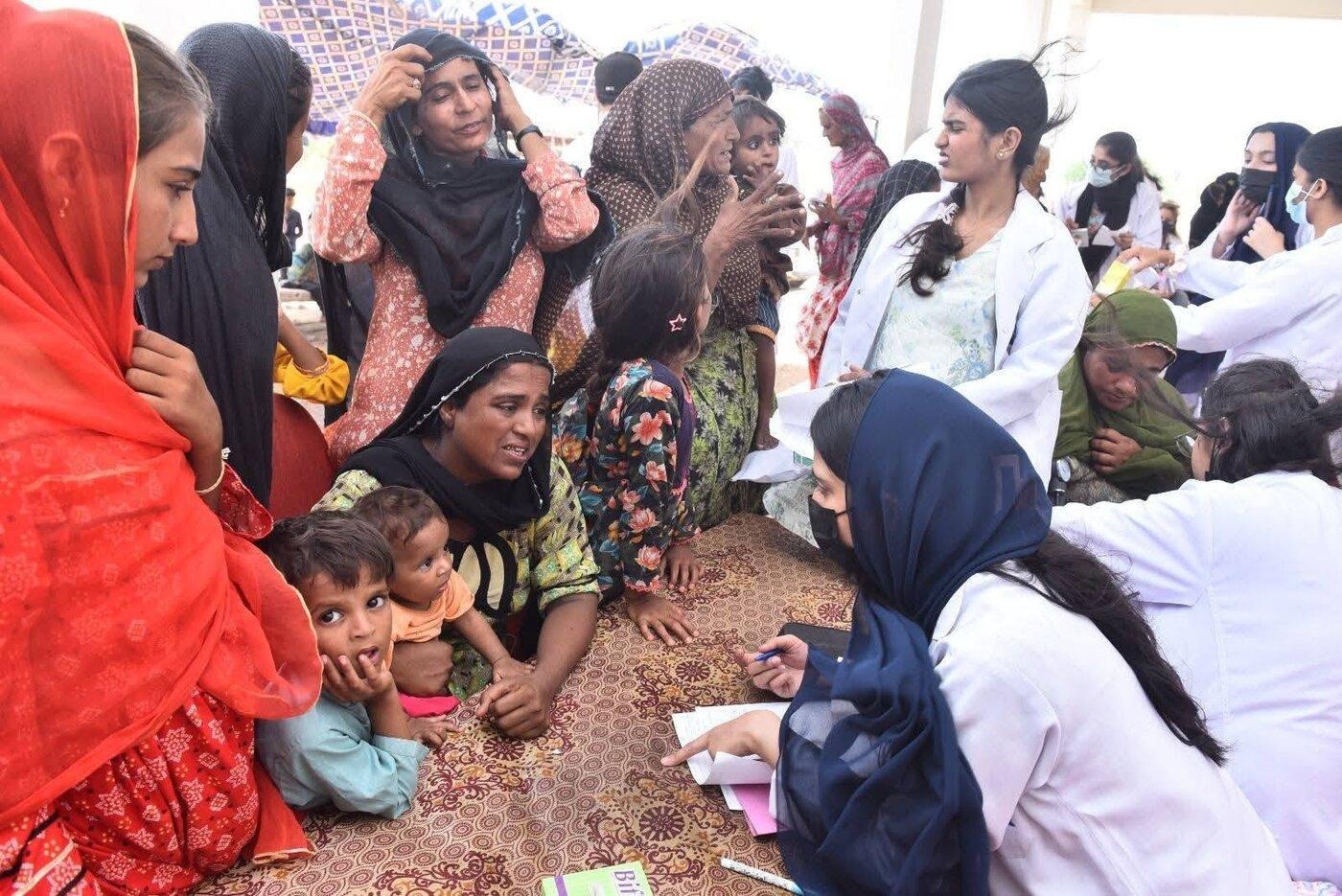
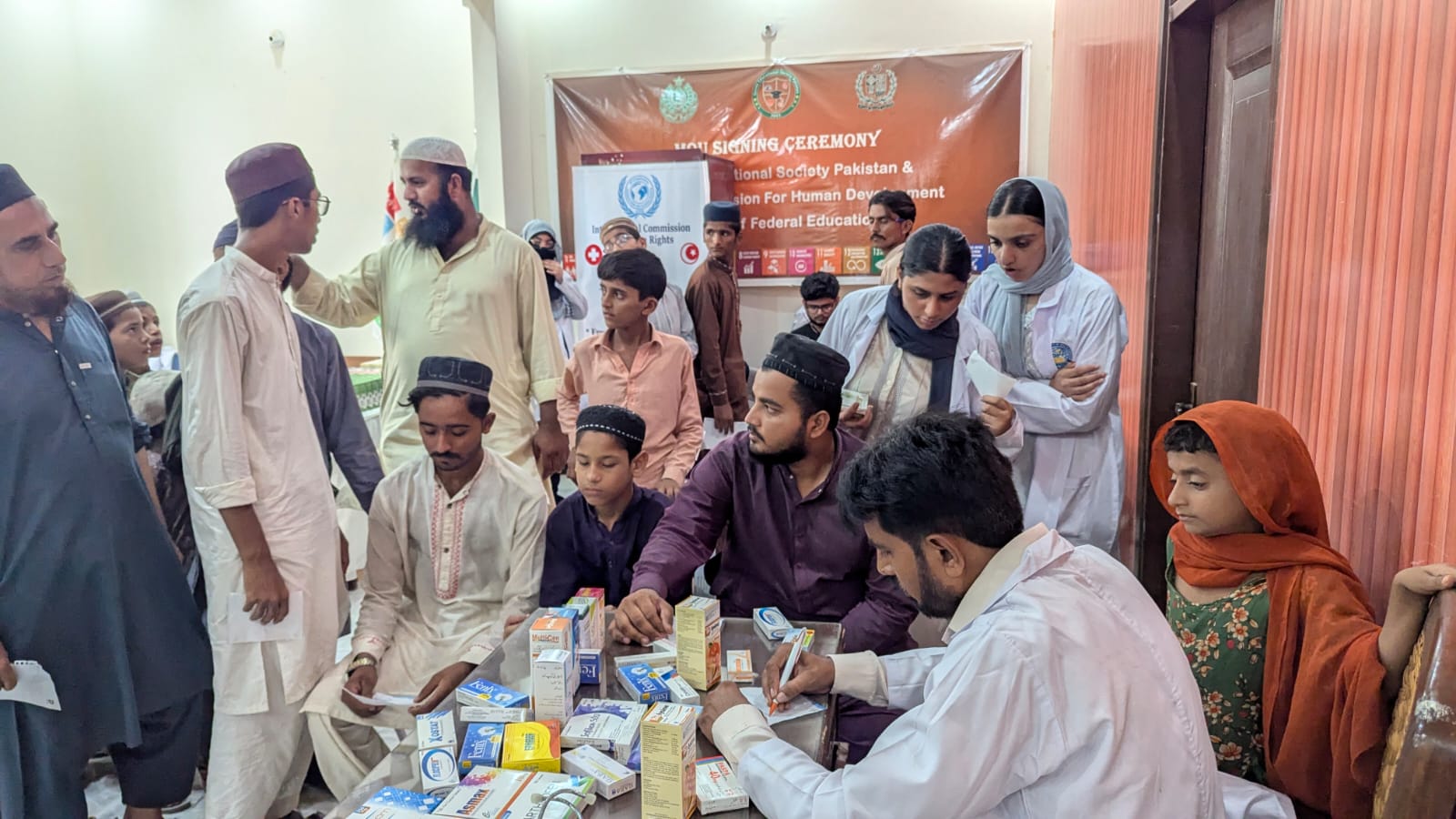
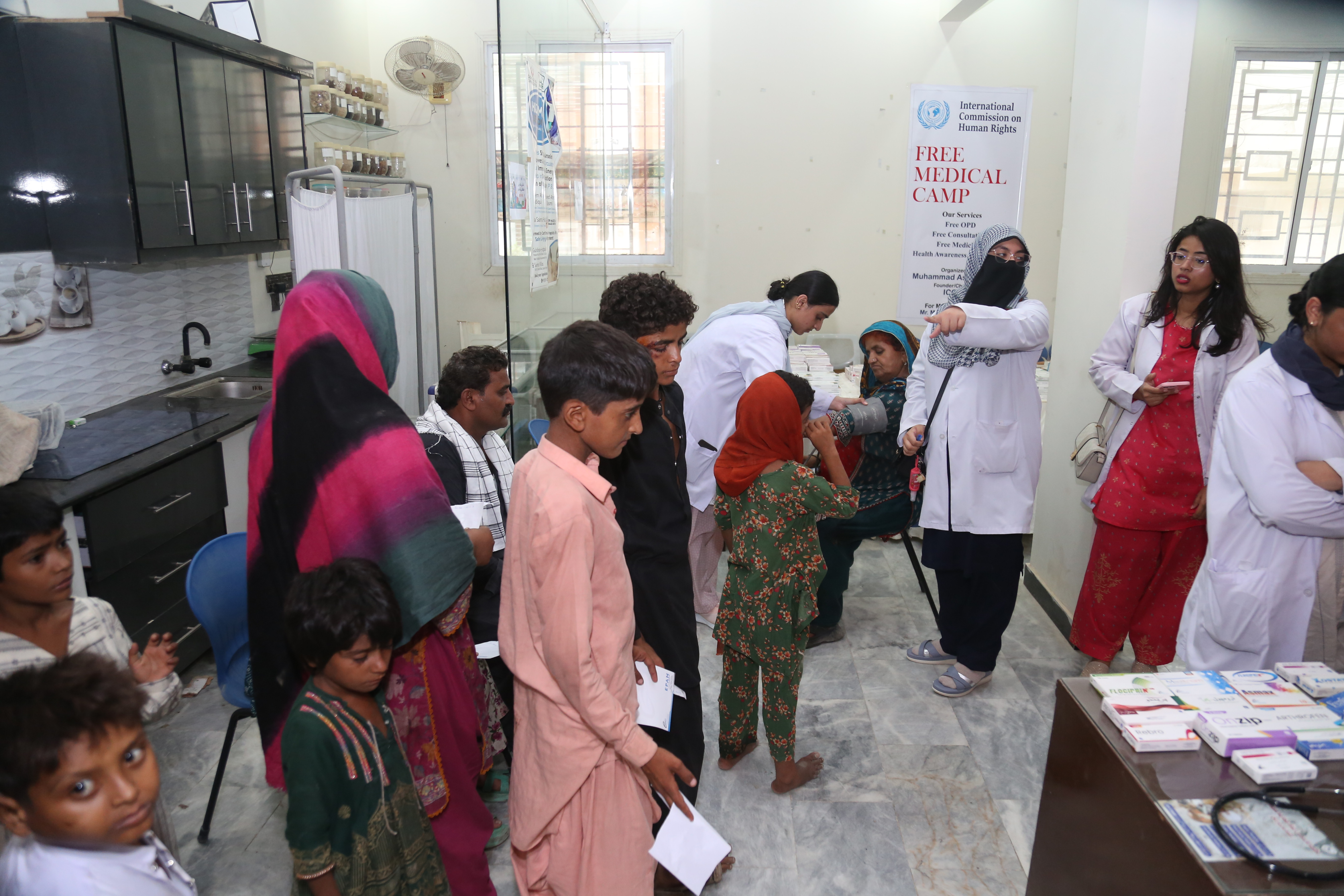
Volunteer doctors and medical students attend to women and children at an open air registration point.
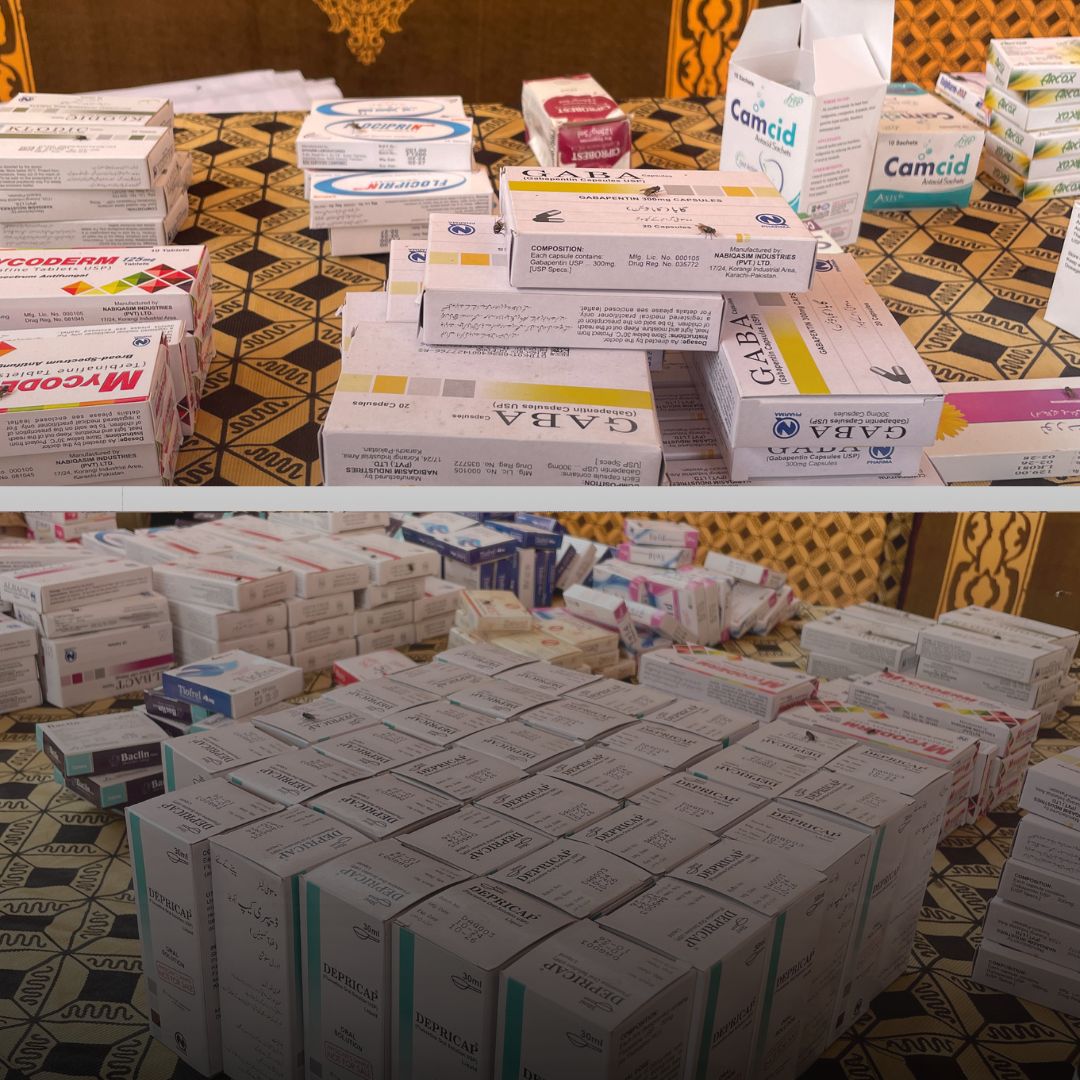
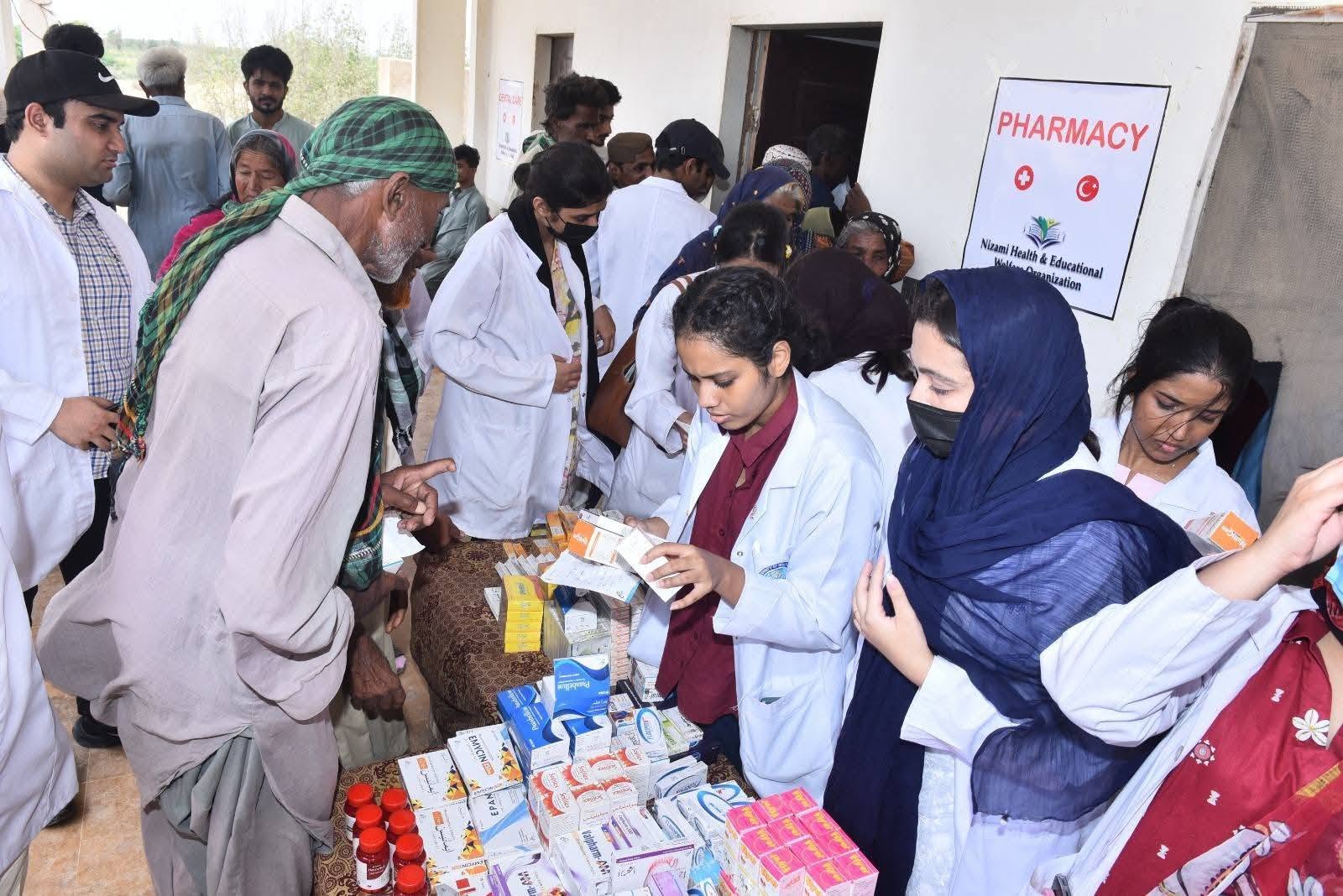
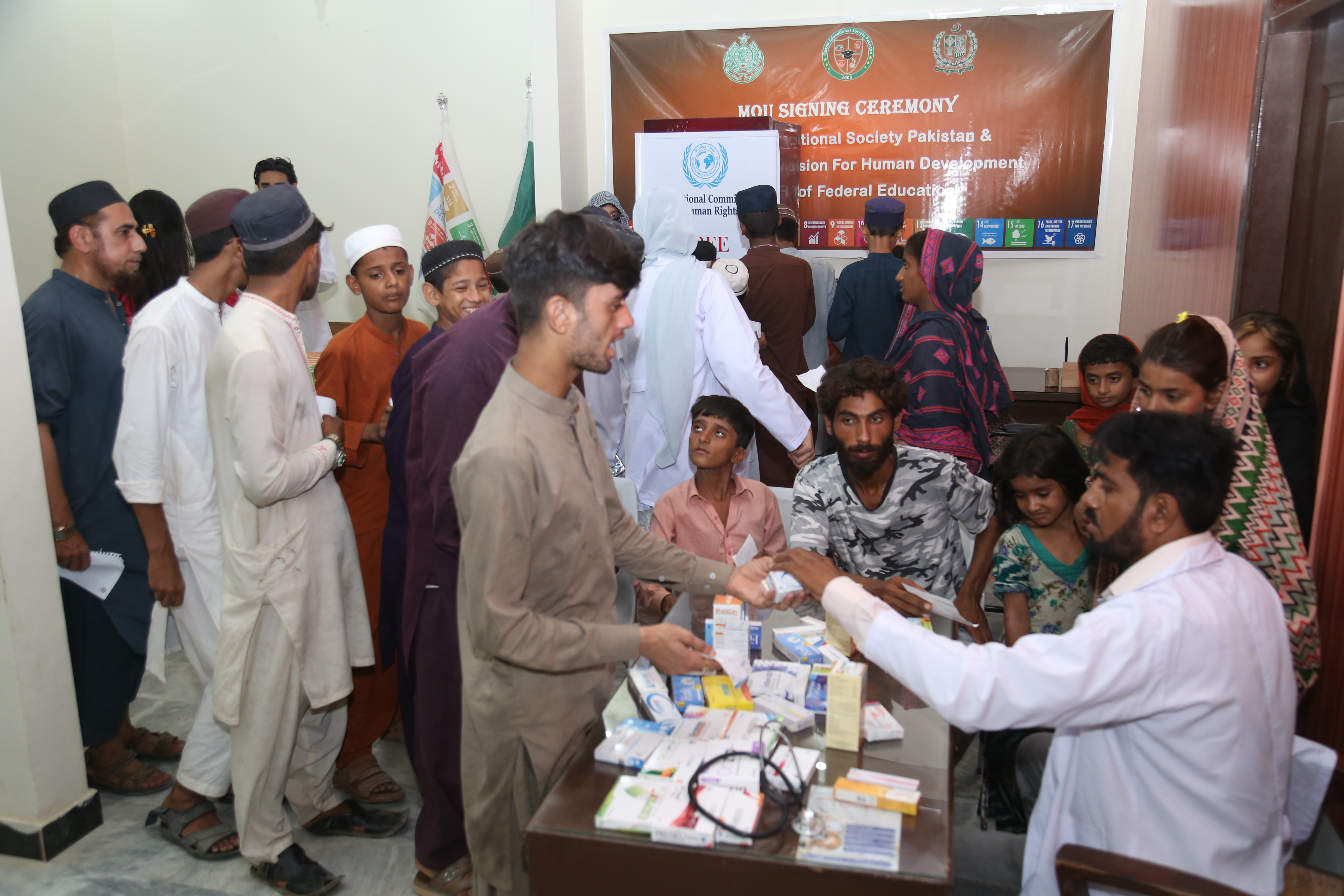
Elsewhere in the camp, pharmacy counters overflow with boxes of medicine, donated and organized meticulously by student volunteers and healthcare partners so that patients leave not only with a diagnosis but with the medicine required to act on it. Under bright canopies strung with traditional fabric backdrops, families wait together while volunteers record patient details by hand in thick registers, a quiet and almost old fashioned system that nonetheless manages to serve hundreds of people in a single day.
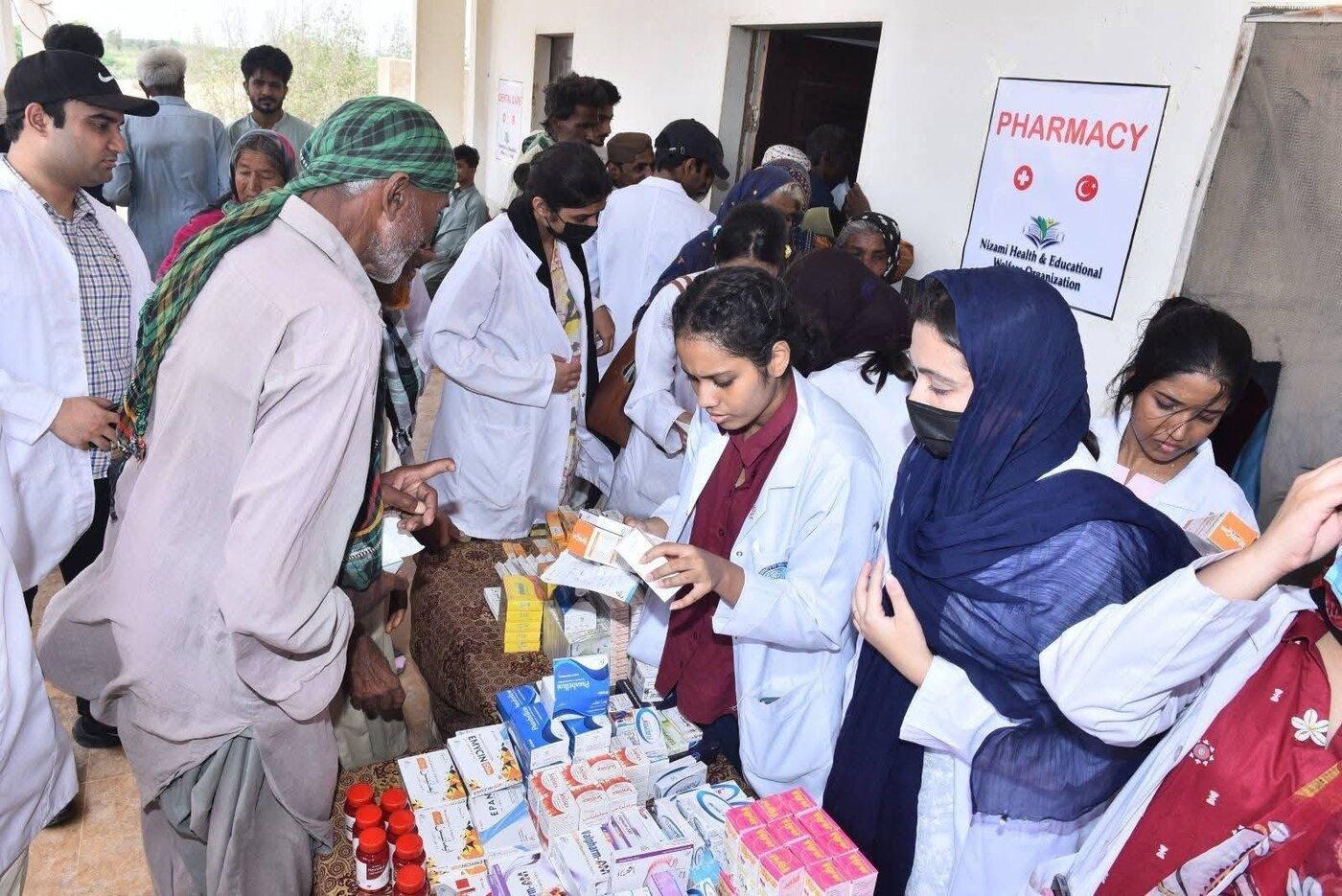
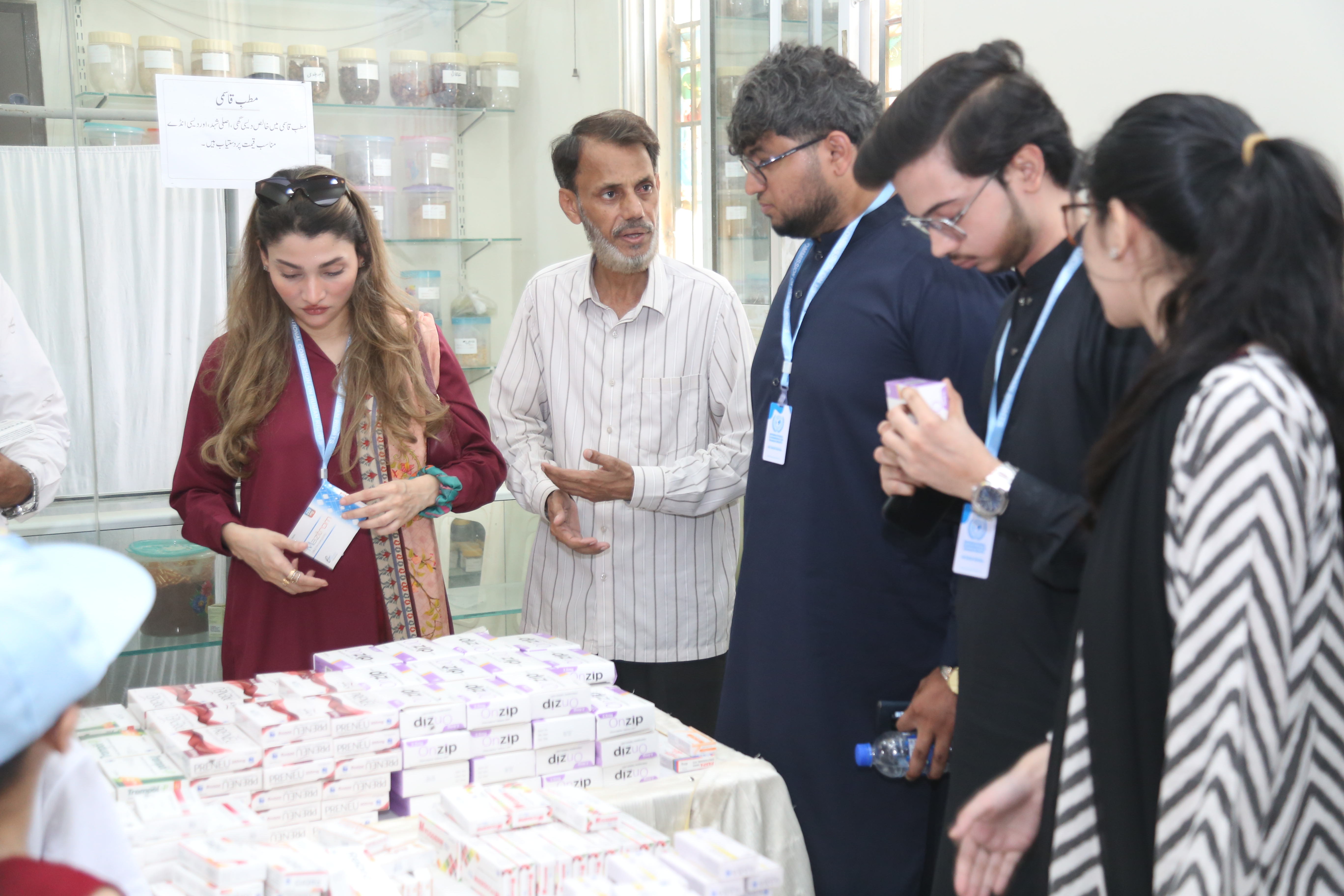
Student volunteers sort and distribute medicines at the camp pharmacy counter.
What distinguishes Health for Humanity from a typical charity drive is its insistence that a medical camp should never be a one day spectacle. According to ICOHR, each camp is designed to leave behind more than temporary relief. Depending on the location, resources and participating medical teams, services on offer include general physician consultations, specialist checkups, basic health screening, diagnostic and laboratory testing, medical reports, free or subsidized medicines, hygiene awareness sessions, preventive healthcare guidance, women's and children's health awareness, referral support for patients who need further treatment, and community sessions on the importance of timely medical care.
“A camp is not just about today's patient. It is about the mother who now knows the early signs of malnutrition in her child, or the elderly man who finally understands why his blood pressure needs regular monitoring. That knowledge stays with them long after we pack up the tents.”
— Camp Coordinator, ICOHR
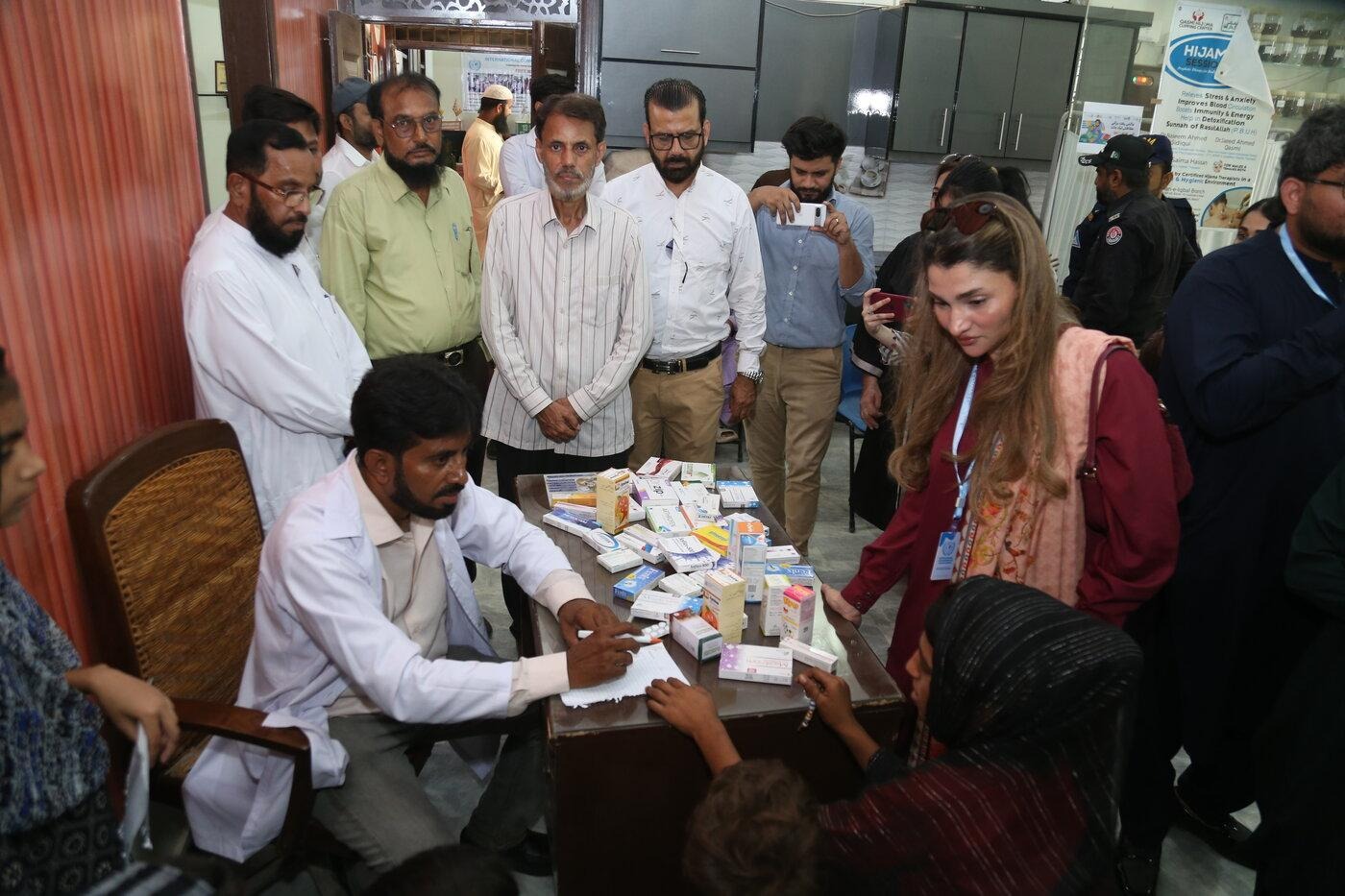
A physician records a patient's details at the registration desk as volunteers and observers look on.
If there is one theme that recurs again and again in conversations with those involved in Health for Humanity, it is the idea of collaboration. Doctors who volunteer their time. University students who handle registration, patient management and documentation. Companies and welfare organizations that contribute medicines, diagnostic equipment and logistical support. None of it, organizers insist, would be possible in isolation.
Photographs from recent camps capture this spirit vividly, rows of donated medicine boxes stacked high on tables, university students in lab coats sorting supplies, senior physicians standing shoulder to shoulder with young volunteers barely out of medical school, all working toward the same modest but powerful goal of getting a person seen, heard and treated.
“Every doctor who volunteers, every student who gives their time, every organization that contributes resources and every volunteer who serves a patient becomes part of a larger mission of humanity,” ICOHR notes in its own account of the project, a sentiment echoed repeatedly by those on the ground.
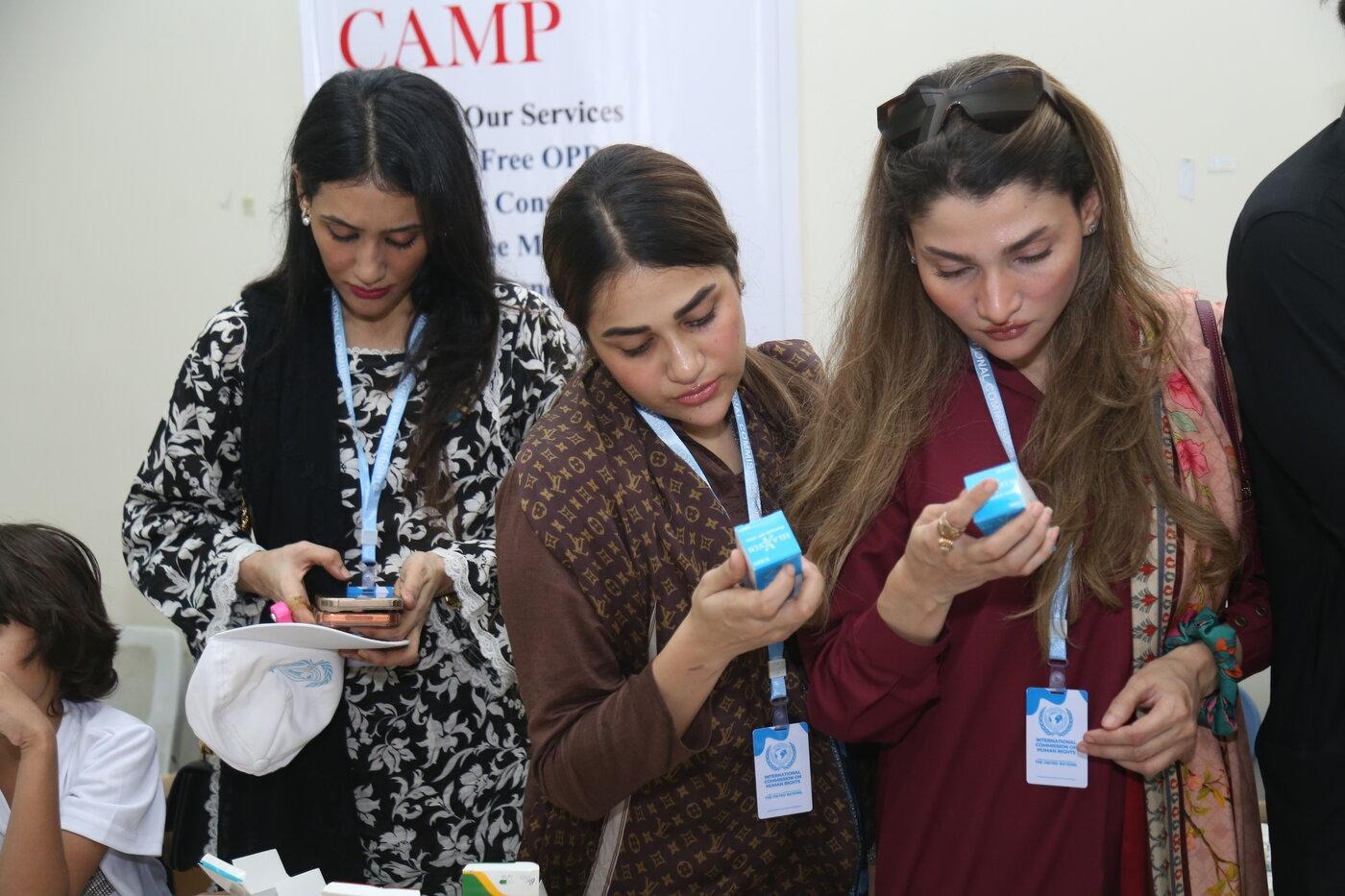
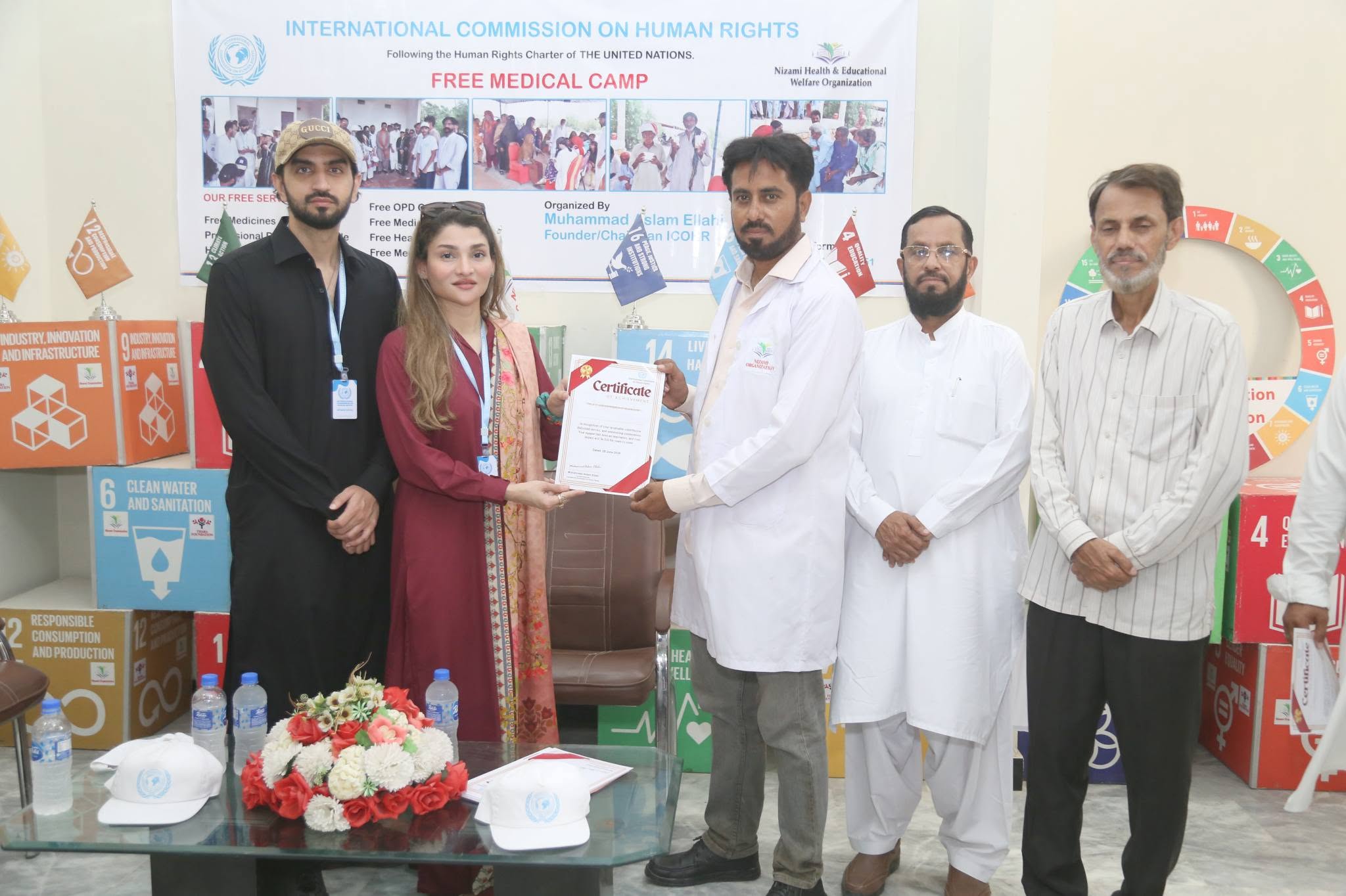
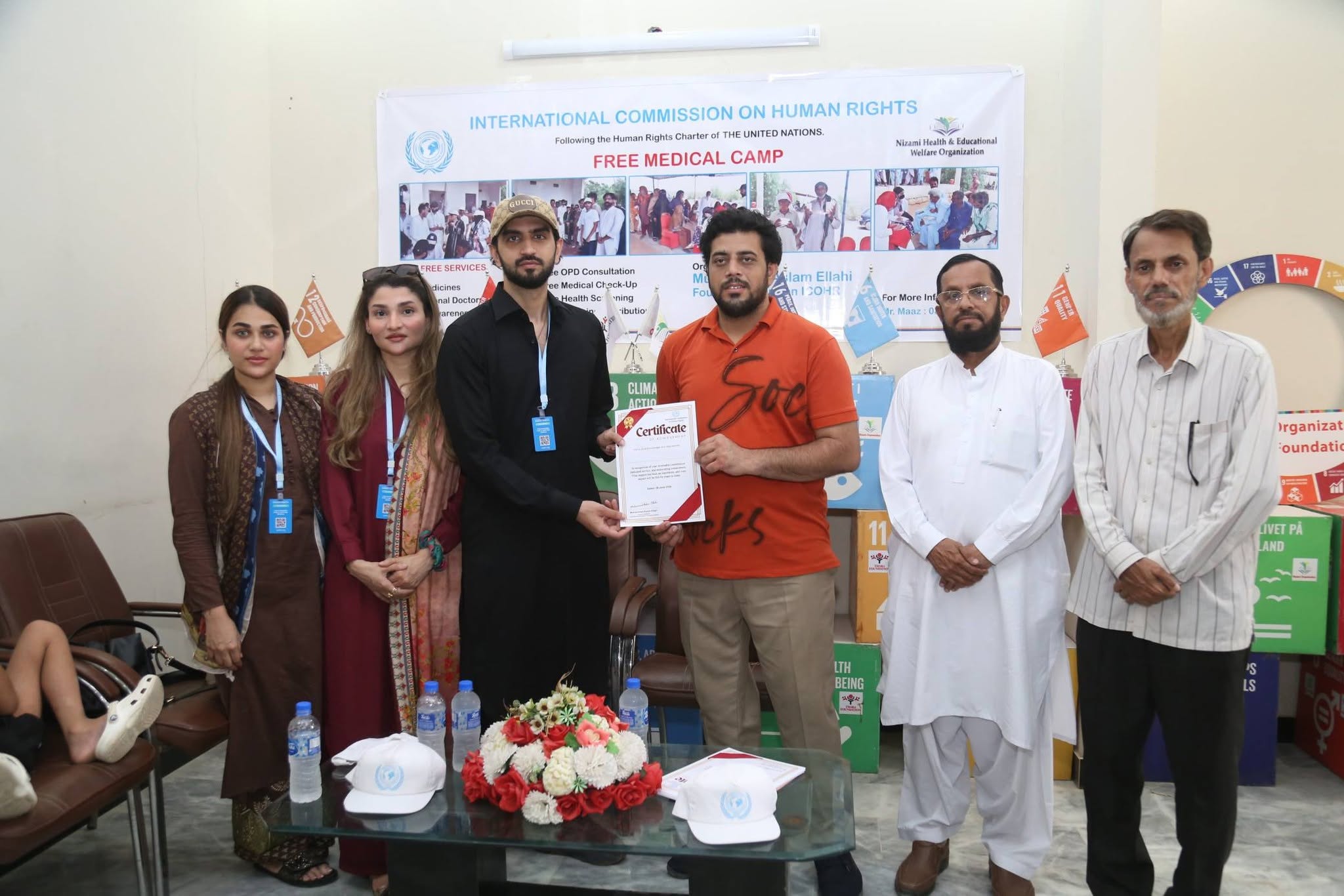
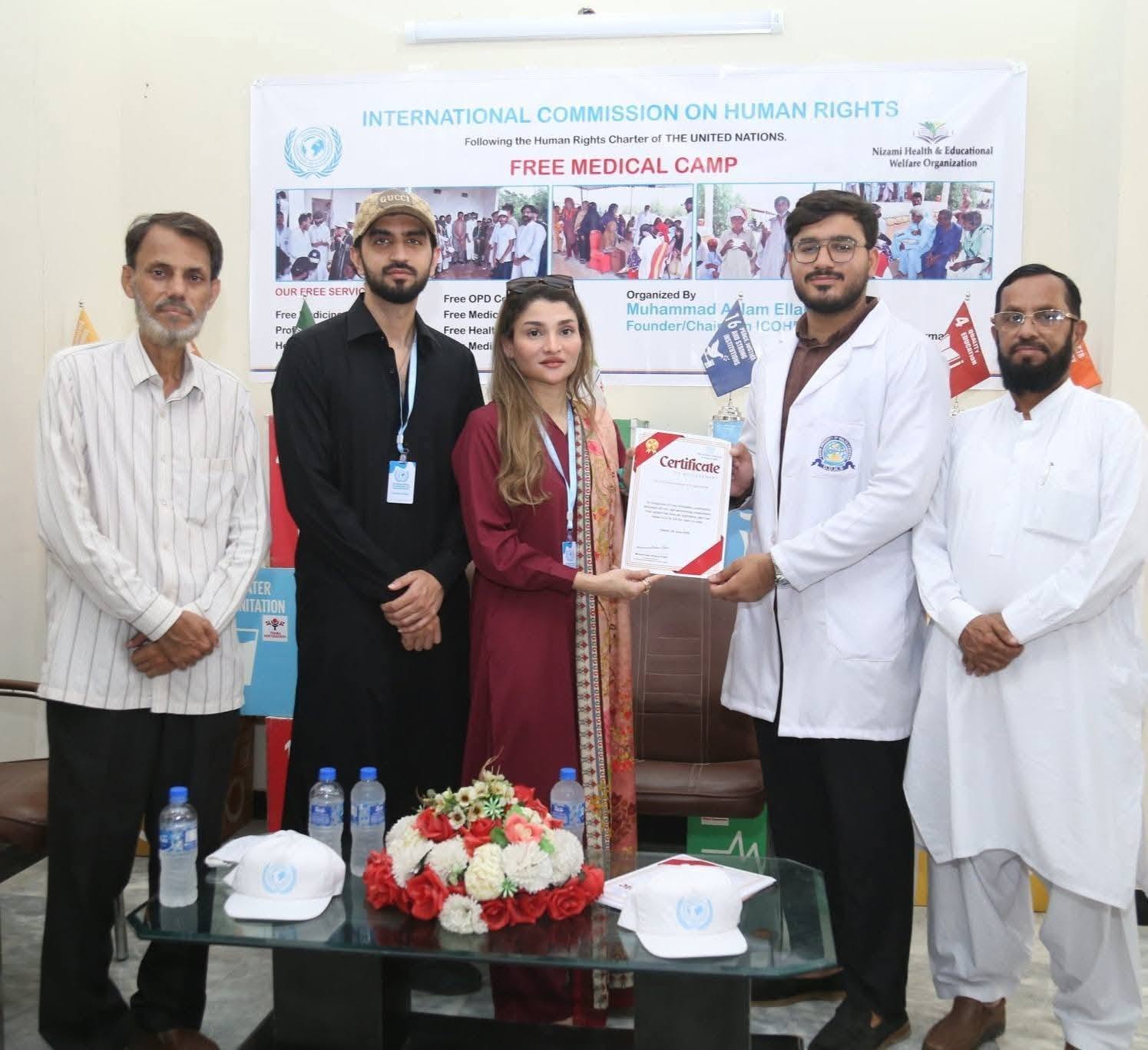
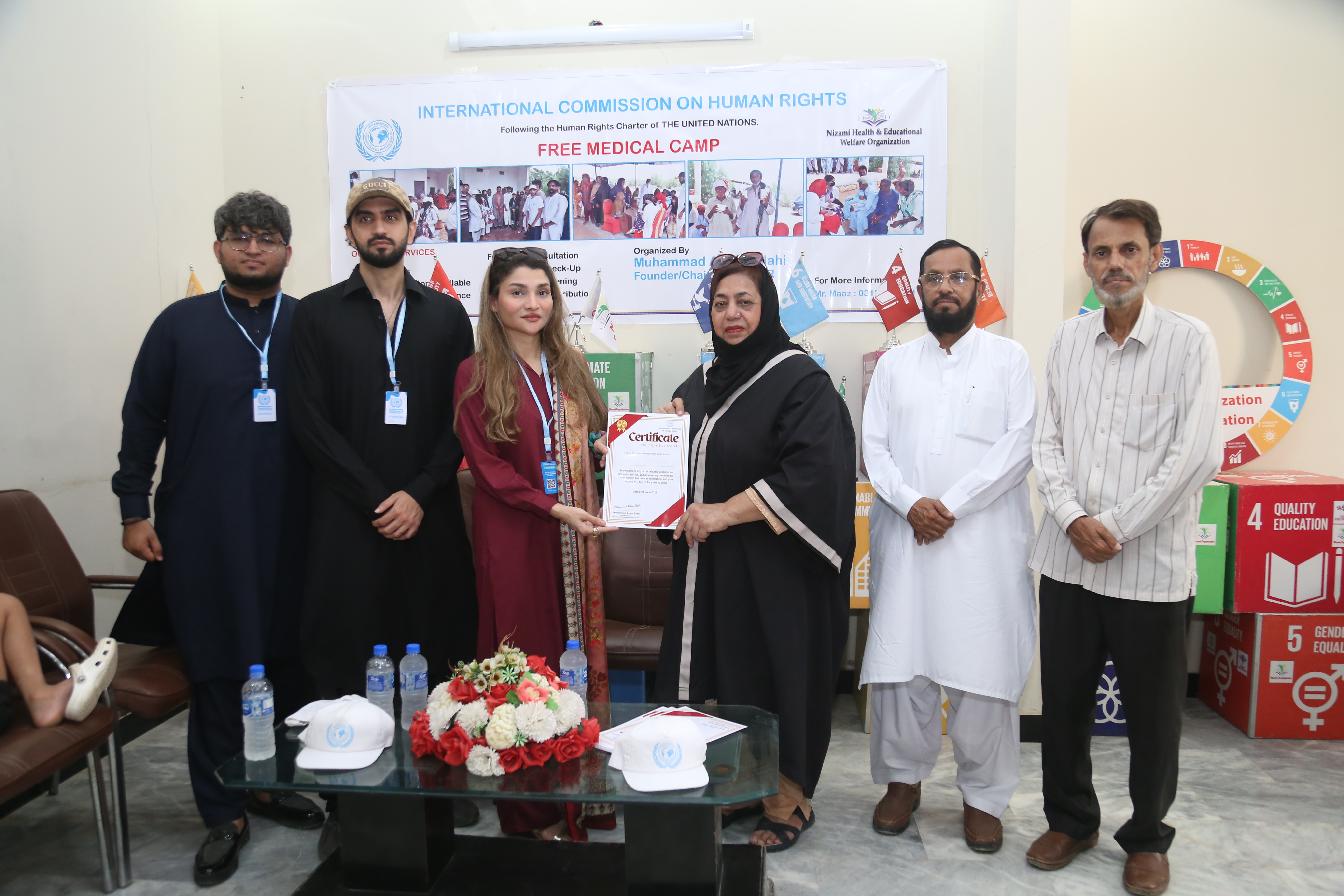
ICOHR representatives review donated medical supplies during a camp in Karachi.
Perhaps one of the most understated but significant aspects of the initiative is its role in shaping young minds. University students from across Karachi have taken part in these camps, not as passive observers but as active participants managing registration desks, coordinating with community elders, assisting doctors and documenting patient histories.
For many of these students, it is their first direct encounter with the realities of healthcare inequality in their own city. Organizers say this exposure is deliberate.
“We want young people to understand that human rights are not just something you study in a classroom. They are something you practice, in real communities, with real people who need you.”
— Volunteer Coordinator, ICOHR
That philosophy has, over time, cultivated a small but growing culture of youth engagement in humanitarian work across the city's universities, one that ICOHR hopes to expand in the years ahead.
The scale and consistency of ICOHR's outreach has not gone unnoticed. Health for Humanity camps have increasingly drawn attention from local media outlets covering community welfare initiatives in Karachi and Sindh, with several events attracting coverage from journalists documenting the growing footprint of grassroots healthcare access programs in the city's underserved districts.
Beyond domestic press interest, the initiative has also drawn quiet acknowledgment from segments of civil society and human rights focused circles, who point to the project as an example of how the principles enshrined in international human rights frameworks, equality, dignity and non discrimination, can be translated into tangible, on the ground action rather than remaining abstract ideals. Community leaders, local welfare bodies and partner organizations that have worked alongside ICOHR have repeatedly praised the initiative for its consistency, its reach into areas often overlooked by larger institutional healthcare programs, and its refusal to turn away a patient on the basis of their ability to pay.
For an organization built around the language of human rights, this recognition matters. It signals that the work being done in modest community halls and dusty neighbourhood lots is being seen, documented and, increasingly, held up as a model worth replicating.
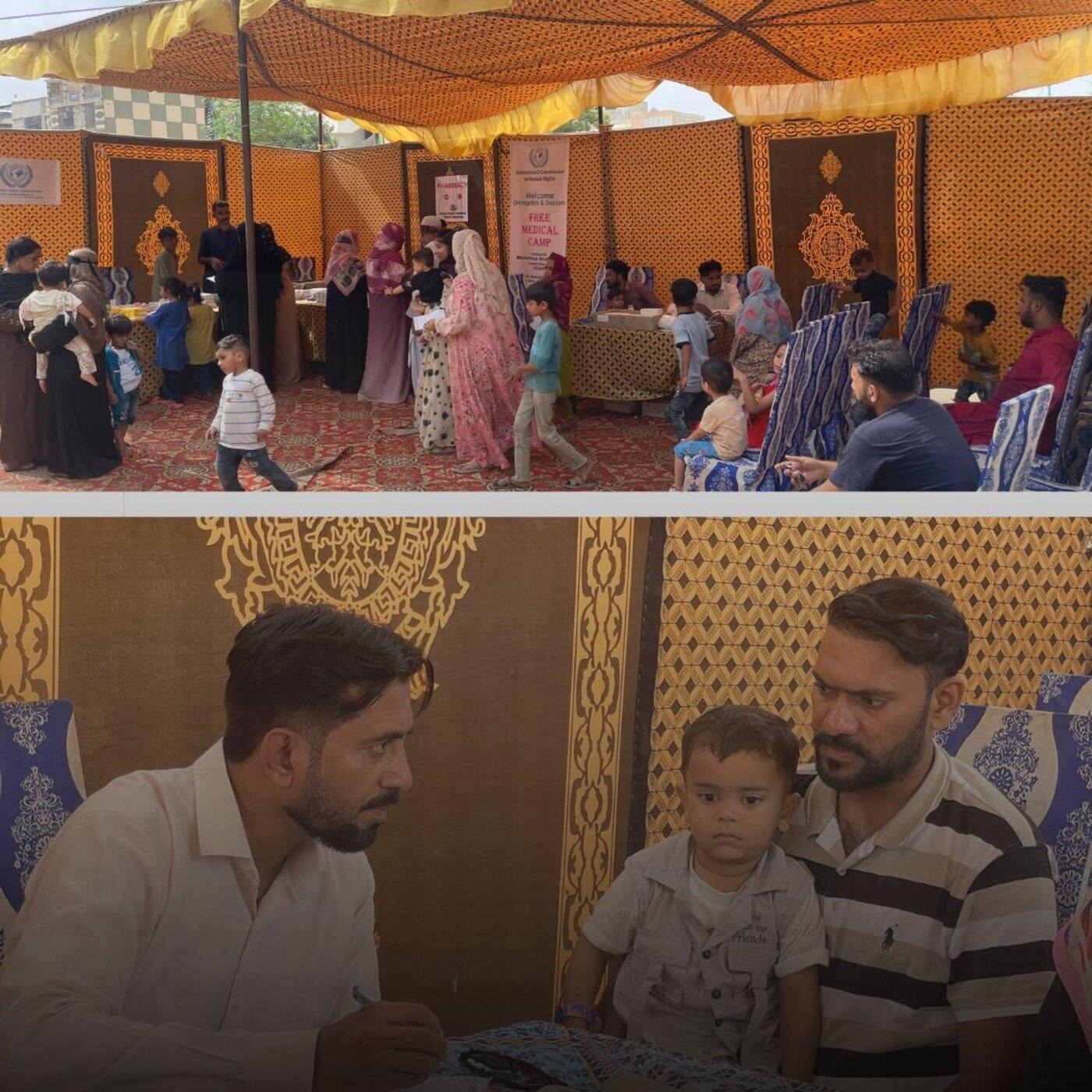
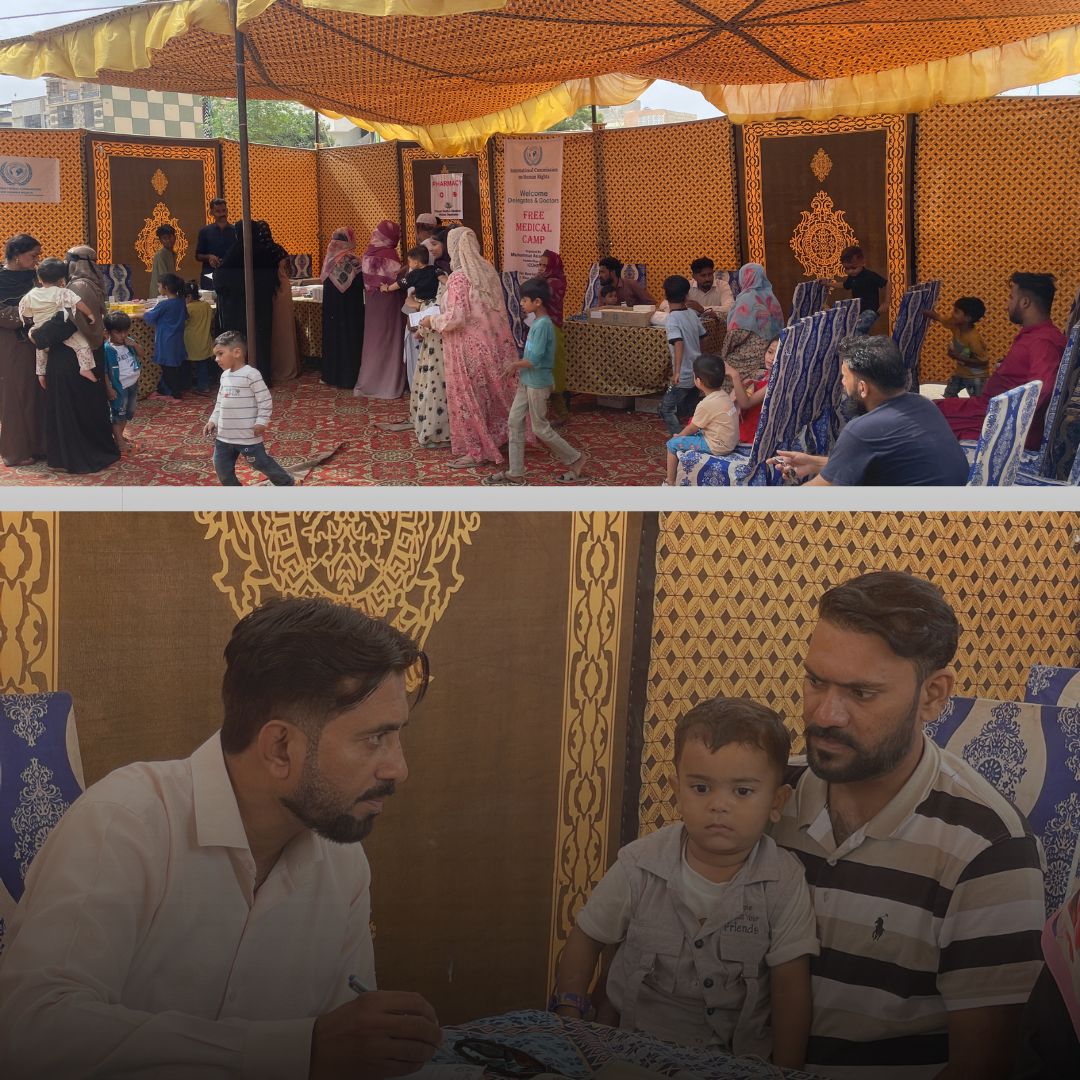
Volunteers register families under open canopies at a neighbourhood outreach camp, where a father and child wait to be seen.
ICOHR has made clear that Health for Humanity is not a finished project but an evolving one. Plans for the coming years include larger community medical camps, dedicated specialist clinics, expanded diagnostic facilities, structured medicine distribution networks, dedicated women's and children's health programs, and stronger referral systems for patients requiring ongoing treatment.
The organization also intends to deepen its partnerships with universities, hospitals, pharmaceutical companies, welfare institutions, corporate partners and international humanitarian stakeholders, aiming to build what it describes as a sustainable, continuing network of healthcare outreach across Karachi and Sindh rather than a series of isolated events.
As dusk settled over one recent camp, the crowds had thinned but the last few patients still waited quietly, medicine bags in hand, for a volunteer to walk them through their prescriptions one final time. Nearby, a group of young volunteers compared notes from the day, exhausted but smiling, already discussing logistics for the next outreach.
It is in these small, unremarkable moments, a prescription explained patiently, a child's fever finally diagnosed, a volunteer staying an extra hour to help an elderly patient understand his medication, that the real impact of Health for Humanity becomes visible. Not in grand declarations, but in the quiet, repeated act of treating every person who walks through the door as someone whose health, whose life and whose dignity genuinely matter.
“Health is not a privilege of the few, dignity belongs to every human being.”
— International Commission on Human Rights (ICOHR)
International Commission on Human Rights (ICOHR) | Humanity • Equality • Dignity • Justice

© 2026 International Commission On Human Rights. All rights reserved.
 DONATE