helpline:+92 21 9250630 | +92 21 9250640 | +92 21 5820716
International Commission on Human Rights
A MEETING OF PURPOSE
MUHAMMAD ASLAM ELLAHI, CHAIRMAN, ICOHR CALLS ON MUSHAAL HUSSEIN MULLICK
Islamabad • ICOHR News Desk
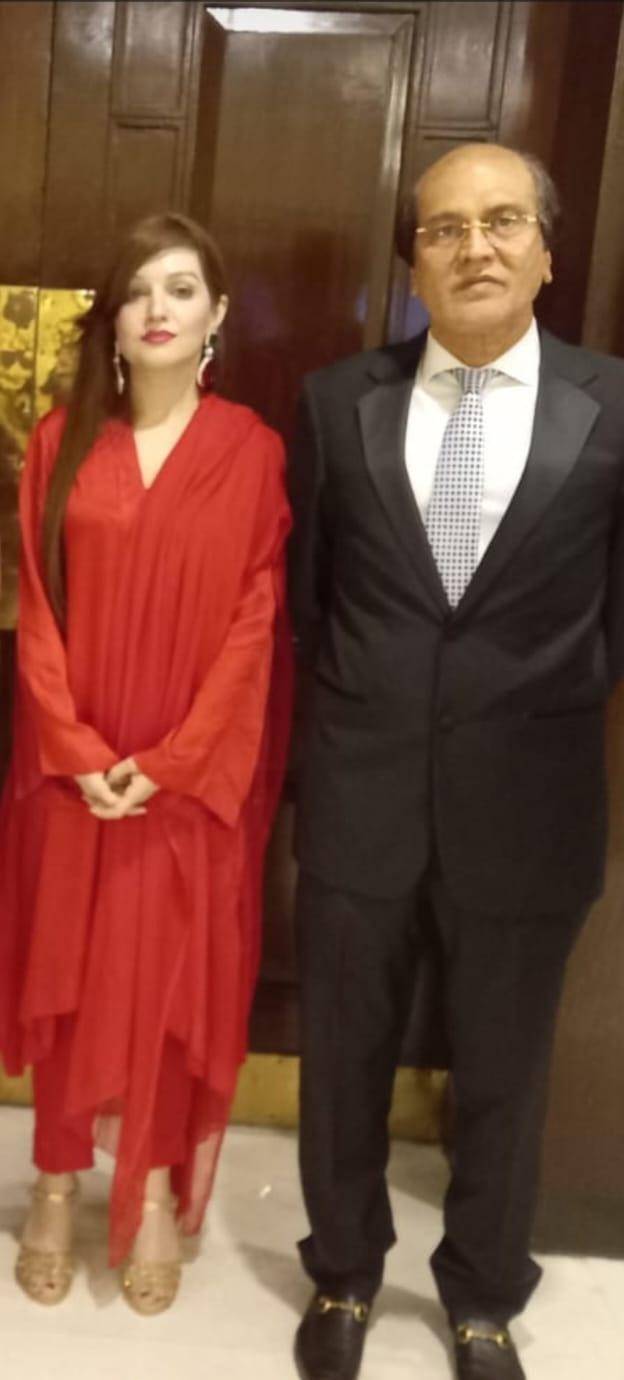
Muhammad Aslam Ellahi, Chairman ICOHR, with Mushaal Hussein Mullick, Chairperson, Peace and Culture Organisation.
There are meetings that fill a calendar, and there are meetings that mark a moment. This week's engagement between Muhammad Aslam Ellahi, Chairman of the International Commission on Human Rights (ICOHR), and Mushaal Hussein Mullick, Chairperson of the Peace and Culture Organisation, belonged firmly to the second category.
The setting was understated, a quiet room away from cameras and podiums, but the conversation touched on some of the most pressing questions facing human rights advocacy in the region today: how institutions built decades ago can remain relevant to a new generation, how civil society and government backed initiatives can work in tandem rather than in parallel, and how the language of human dignity can be translated into action that ordinary families actually feel.
ICOHR has spent more than twenty years building a body of work grounded in the United Nations Universal Declaration of Human Rights, corresponding with heads of state and international bodies, and advocating for communities whose voices rarely reach the rooms where policy is made. The Peace and Culture Organisation, under Ms. Mullick's leadership, has become one of Pakistan's most visible platforms for humanitarian advocacy, particularly on issues of women's rights, education, and the long, painful story of Jammu and Kashmir.
That two such institutions would find common ground was, in many ways, inevitable. Chairman Ellahi has often said that human rights work cannot survive on declarations alone. It needs relationships. It needs institutions willing to sit across a table from one another, compare notes honestly, and ask what more can be done. This meeting was that principle, put into practice.
When two organizations that have each spent years in the field sit down together, something more than courtesy happens. There is an exchange of hard-won experience, and that exchange is where real cooperation begins.
Muhammad Aslam Ellahi, Chairman, ICOHR
During the meeting, Chairman Ellahi took a moment to acknowledge the sustained efforts of Ms. Mullick and the Peace and Culture Organisation, particularly her long standing advocacy on behalf of the people of Jammu and Kashmir and her broader work for women's rights and humanitarian causes. He noted that such consistency, maintained over years without fanfare, is often what separates lasting institutions from passing initiatives, and that ICOHR views her work as a valuable part of the wider human rights landscape in the region.
Her commitment to these causes has been consistent and, in many ways, quietly courageous. That kind of steady, principled work deserves recognition, and it is exactly the sort of partnership ICOHR hopes to build on.
Muhammad Aslam Ellahi, Chairman, ICOHR.
Ms. Mullick's presence at the meeting carried the weight of a long record on the international stage. As Special Assistant to the Prime Minister of Pakistan for Human Rights and Women Empowerment, she has repeatedly called on the United Nations and global human rights bodies to act on the unresolved status of Jammu and Kashmir, urging implementation of UN resolutions on the region's right to self-determination. She has chaired Pakistan's Kashmir Advisory Committee, worked to bring the Kashmiri diaspora and foreign universities into the conversation, and pursued academic debates abroad aimed at building wider international understanding of the situation in Indian Illegally Occupied Jammu and Kashmir.
She has been a regular voice at Kashmir Solidarity Day events across the country, and has used press conferences, seminars, and international forums to draw attention to the treatment of Kashmiris under Indian administration. In 2022, she also led a public campaign in Islamabad, including a hunger strike camp, calling for a fair trial for her husband, JKLF Chairman Yasin Malik, and has continued to press the United Nations and international rights organizations to take notice of his case. It is this sustained, years long body of advocacy that Chairman Ellahi referenced when he spoke of her commitment as consistent and quietly courageous.
For more than seven decades, the people of Jammu and Kashmir have waited for a promise the world itself made to them, the promise of self-determination, enshrined in the resolutions of the United Nations Security Council. That promise remains unfulfilled, and the cost of that delay has been paid, generation after generation, by ordinary families: by mothers who have buried sons, by children who have grown up under curfew instead of classrooms, by communities whose basic freedoms of expression, movement, and assembly have been curtailed for far too long.
The International Commission on Human Rights was founded on a simple conviction, that human dignity does not stop at a border, and that silence in the face of suffering is itself a form of complicity. We cannot, in good conscience, call ourselves an organization committed to human rights while looking away from the documented reports of arbitrary detention, restrictions on the press, and the use of collective punishment that have been raised repeatedly by independent observers and human rights bodies in relation to Indian Occupied Kashmir.
We stand with the people of Kashmir, not as a political position, but as a matter of principle rooted in the same Universal Declaration of Human Rights that gives this Commission its purpose. We call once again on the international community, on the United Nations, and on all states committed to the rule of law, to press for the implementation of the UN resolutions on Kashmir, to insist on independent and unhindered access for human rights monitors to the region, and to ensure that the voices of Kashmiris themselves, not merely the governments that claim to speak for them, are heard in any process that determines their future.
Our organization will continue to raise this cause in every forum available to us, in correspondence with international bodies, in our advocacy work, and in partnership with individuals and institutions, such as Ms. Mushaal Hussein Mullick and the Peace and Culture Organisation, who have carried this struggle forward with courage and consistency. History has shown that no people's aspiration for freedom and dignity can be suppressed indefinitely. We remain committed to standing with the people of Jammu and Kashmir until that aspiration is realized.
Muhammad Aslam Ellahi
Chairman, International Commission on Human Rights (ICOHR)
Much of the discussion, according to those present, cantered on the practical side of advocacy work: how organizations sustain long term credibility with international bodies, how humanitarian messaging can stay effective without becoming diluted, and how younger members of both institutions can be brought into leadership roles without losing the discipline that built these organizations in the first place.
For ICOHR, now guided by a new generation carrying forward more than two decades of institutional groundwork, conversations like this one are part of a deliberate strategy. The Commission has made clear, both in its manifesto and in its public messaging, that its objectives go beyond statements of principle. They include the development of practical economic and social reforms, the integration of sustainable development into policy conversations, and the use of international frameworks to advance the wellbeing of ordinary people, not just the language of diplomacy.
Meetings of this kind rarely make front page news, and they are not designed to. Their value lies elsewhere, in the slow, patient work of building trust between institutions that will need one another in the years ahead. Human rights advocacy in Pakistan and the wider region faces no shortage of urgent causes. What it often lacks is coordination between the organizations already doing the work.
By meeting directly with Ms. Mullick, Chairman Ellahi reaffirmed a position ICOHR has held since its founding: that the Commission does not see itself as operating in isolation. It sees itself as one thread in a much larger fabric of institutions, humanitarian, governmental, and civil society alike, all working toward the same horizon.
Both sides are understood to have discussed the possibility of continued engagement, though no formal agreement has been announced. For ICOHR, the meeting stands as a marker of where the organization intends to go under its current leadership: present, engaged, and willing to build bridges rather than simply issue statements.
As Chairman Ellahi noted in his own reflections on ICOHR's mission, the Commission remains committed to a world in which every person enjoys the rights enshrined in the Universal Declaration of Human Rights, not as a distant ideal, but as a lived reality. Meetings like this one, quiet, deliberate, and grounded in mutual respect, are how that ideal takes its first practical steps forward.

© 2026 International Commission On Human Rights. All rights reserved.
 DONATE