helpline:+92 21 99332615 | +92 21 99332617
International Commission on Human Rights
International Commission on Human Rights
From Legacy to Impact
HUMAN RIGHTS | FEATURE | KARACHI
Where Walls Once Ended the Conversation, an Iftar Table Began One
In a first of its kind initiative, an ICOHR delegation carried the spirit of Ramazan into Karachi’s prisons, sharing iftar with inmates in women’s and juvenile facilities despite serious security warnings. What followed was noticed by the media, by society and by the human rights community.
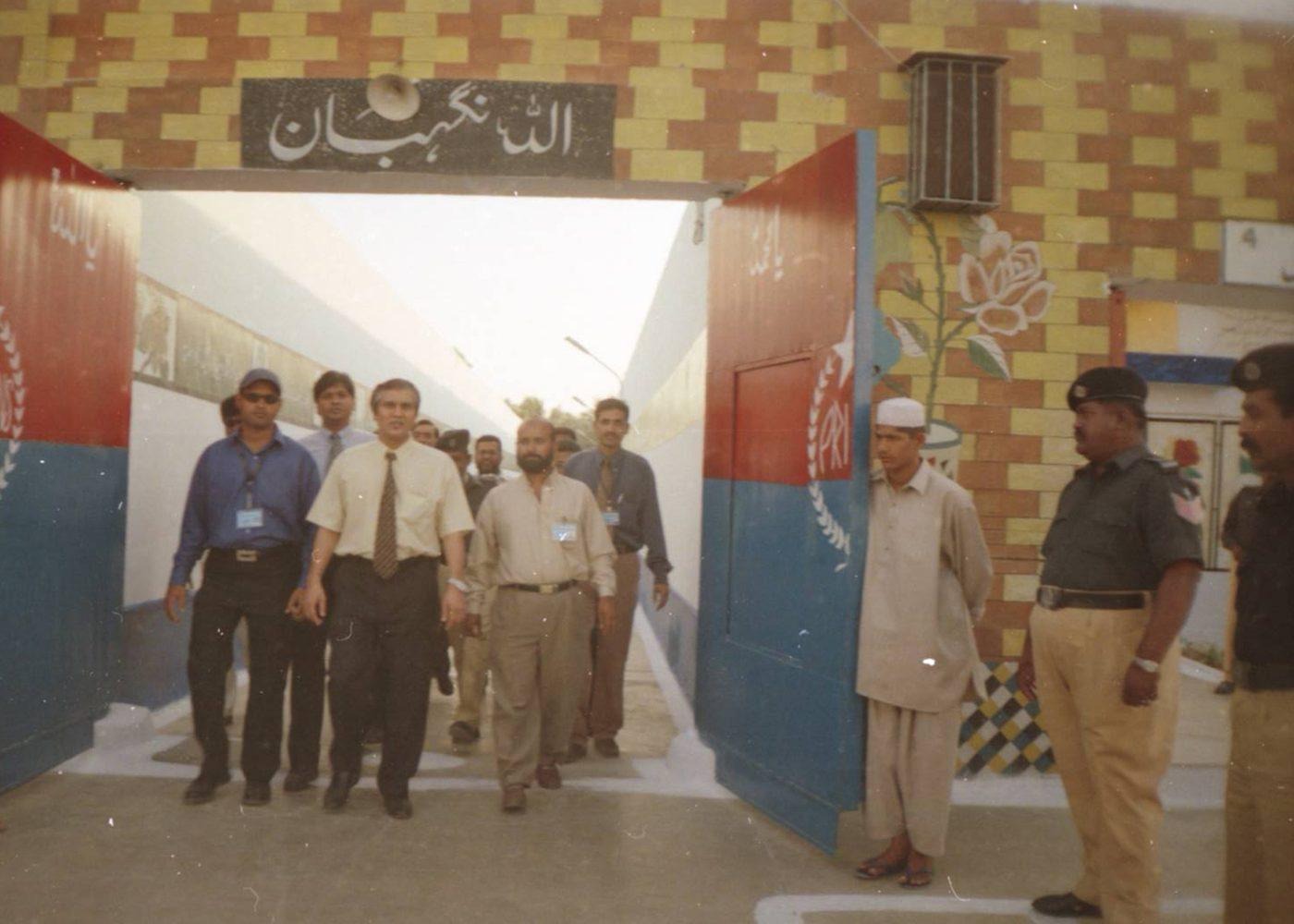
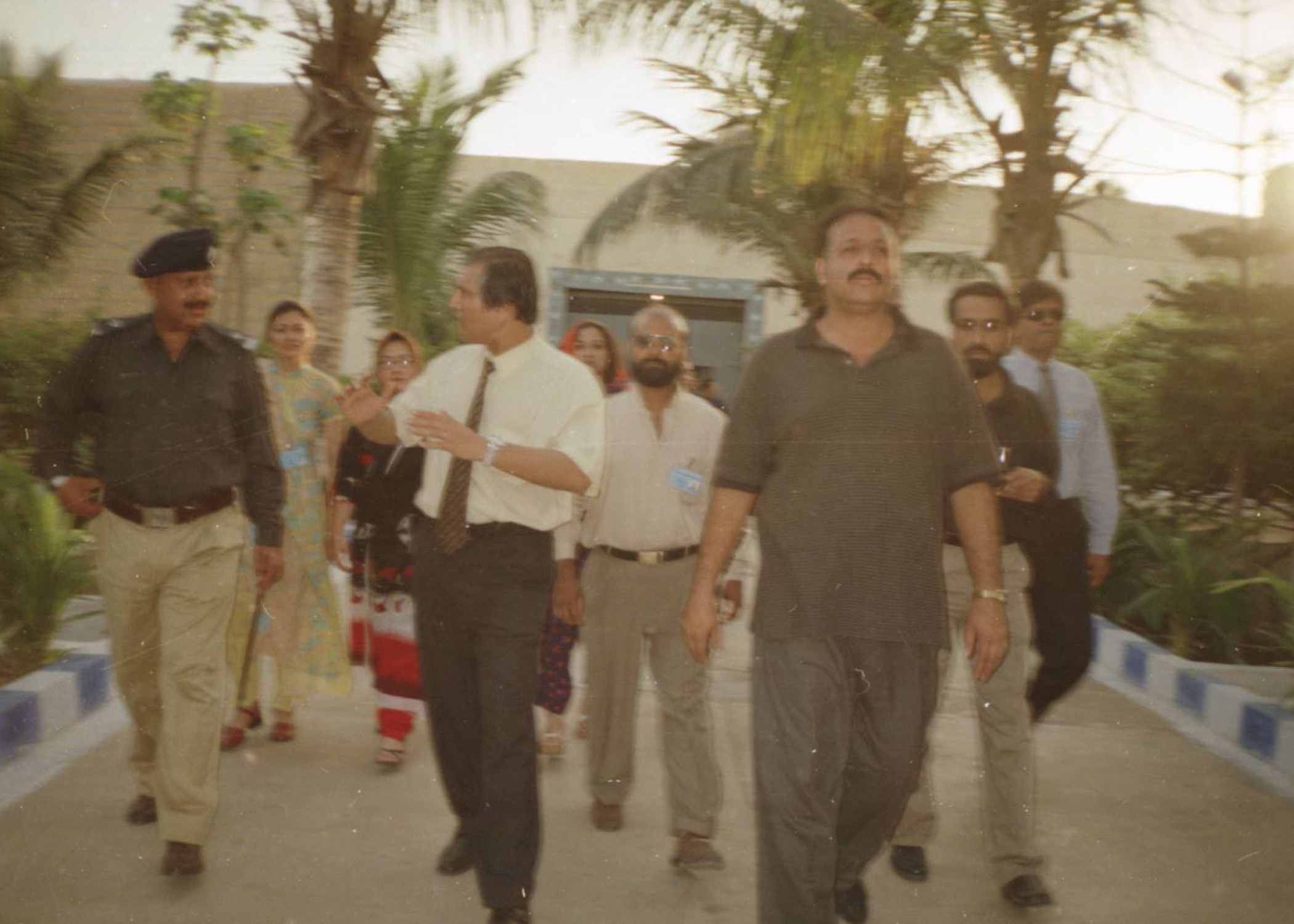
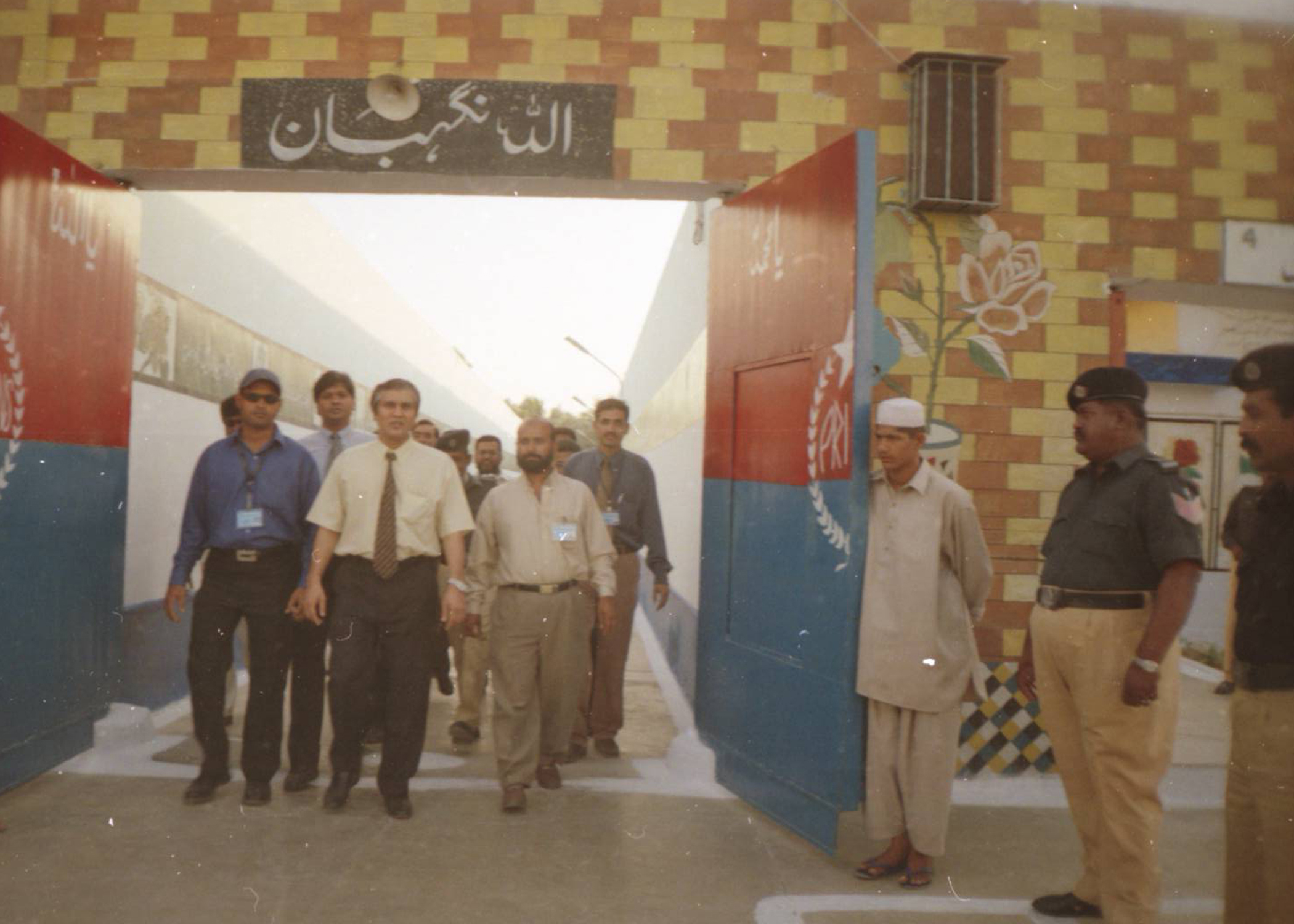
The ICOHR delegation led by ICOHR CHAIRMAN MUHAMMAD ASLAM ELLAHI walk out through the gate of a Karachi prison after the visit, watched by prison staff and inmates.
KARACHI: The gate was painted in the bright blue and red that Pakistan’s prison department favours, and above it, in bold Urdu lettering, hung the words Allah Nigehban, God is the Protector. It is a line that visitors to prisons in this country have read for decades, usually with a heavy heart. On this particular evening, it carried a different weight. Through that gate walked a delegation that had come not to inspect, not to accuse and not to campaign, but to sit with prisoners and break the fast together.
The initiative, organised by ICOHR, brought iftar meals, a team of professionals, volunteers and women members of the delegation to prisons in Karachi during the holy month. The scale was considerable: the effort reached some 10,000 prisoners across the facilities covered. It was a simple idea on paper. In practice, it was an operation that no organisation had attempted before in the history of such work in the province, and one that many experienced hands had advised against.
A Project with No Precedent
Civil society in Pakistan has a long and honourable tradition of visiting prisons. Lawyers go to meet clients. Charities distribute blankets in winter. Commissions inspect conditions and file reports. What had not been done, at least not at this scale and with this level of access, was a coordinated community iftar inside prison premises, involving both women and young inmates, organised by a human rights body and carried out in person by its own team.
That absence of precedent is precisely why the idea was both powerful and dangerous. There was no template to copy, no earlier project to learn from and no established protocol for moving cooking vessels, volunteers, vehicles and visitors through a high security environment at the hour when the fast is broken and the whole city is in motion.
“Nobody had done this before, and that was the first reason we were told not to. It was also the reason we felt we had to.”
ICOHR CHAIRMAN MUHAMMAD ASLAM ELLAHI
The Risk Behind the Gesture
It would be dishonest to describe this project as a routine charitable outing. The risks were real, and they were spelled out clearly. Security departments at both the federal and Sindh levels had issued warnings about the prevailing threat environment, and prison premises are, by their nature, among the most sensitive locations in any security assessment. A gathering of outsiders, a convoy of vehicles carrying food, and a predictable evening schedule are exactly the kind of variables that security planners lose sleep over.
The advisories were not brushed aside. They were read, debated and weighed, sometimes late into the night. The team’s conclusion was that the danger was genuine but that the purpose was worth the effort of managing it: to reduce exposure through careful timing, close coordination with prison administration and disciplined conduct on the ground, rather than to abandon the idea altogether. Every member of the delegation wore an identity badge. Movements were planned in advance. Police and prison staff were present at every stage.
One participant described the mood in the vehicles on the way in as quiet and focused. “Nobody was joking,” the participant recalled. “We all knew what we had been told. But nobody suggested turning back.”
“Courage in this field is not the absence of warnings. It is deciding, with open eyes, that the people behind those walls are worth the risk of showing up.”
ICOHR CHAIRMAN MUHAMMAD ASLAM ELLAHI
The Convoy and the Cooking Pots
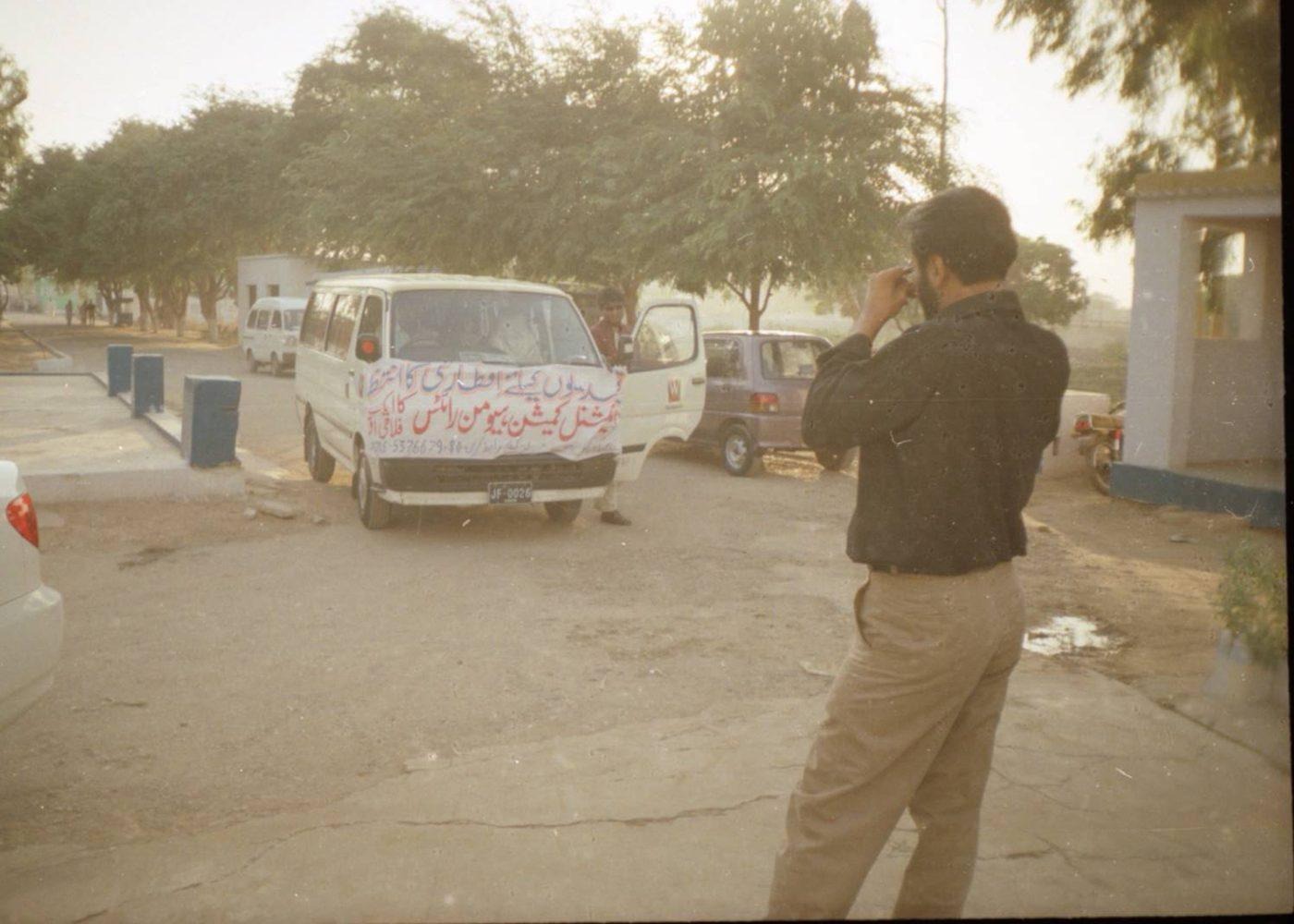
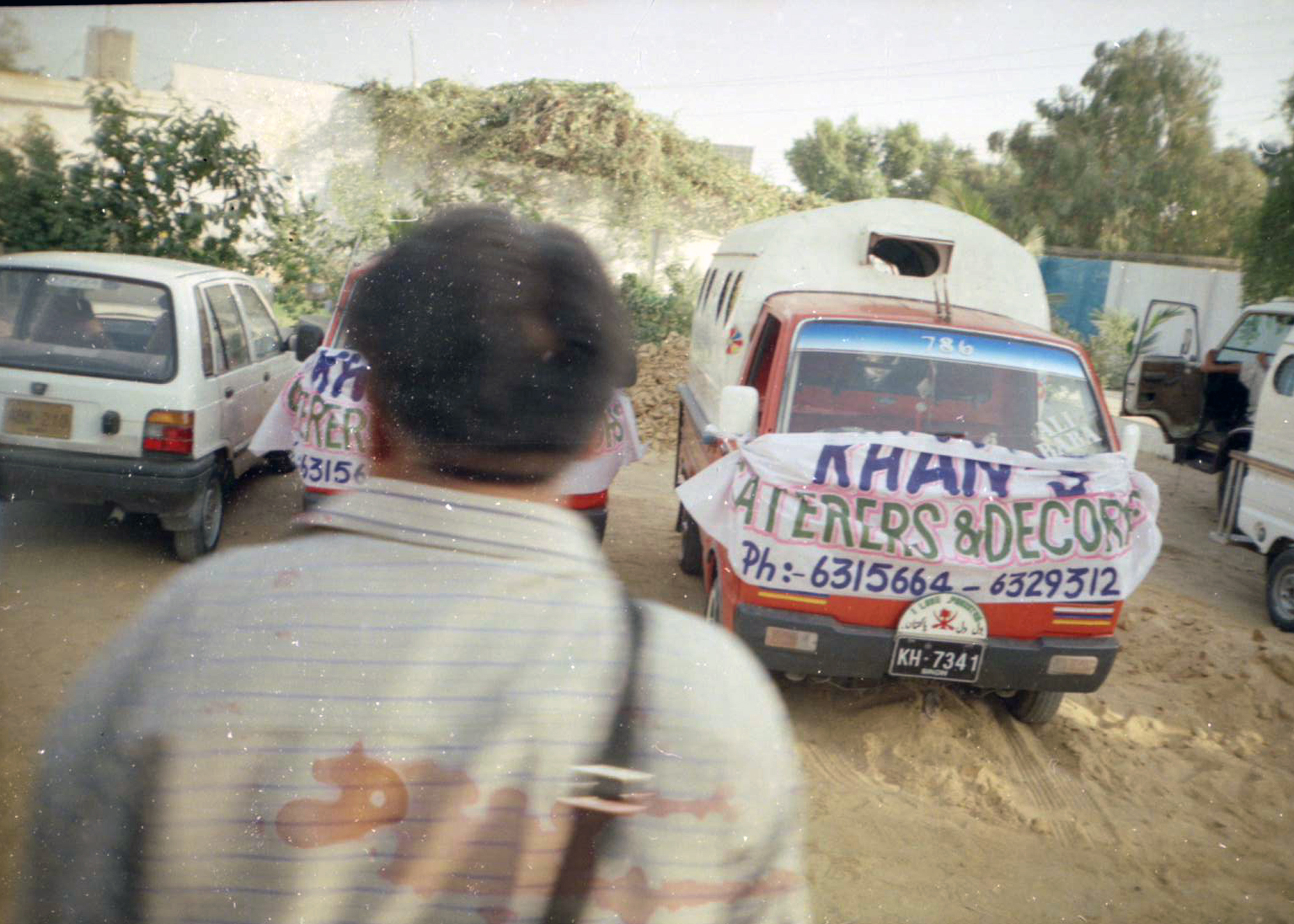
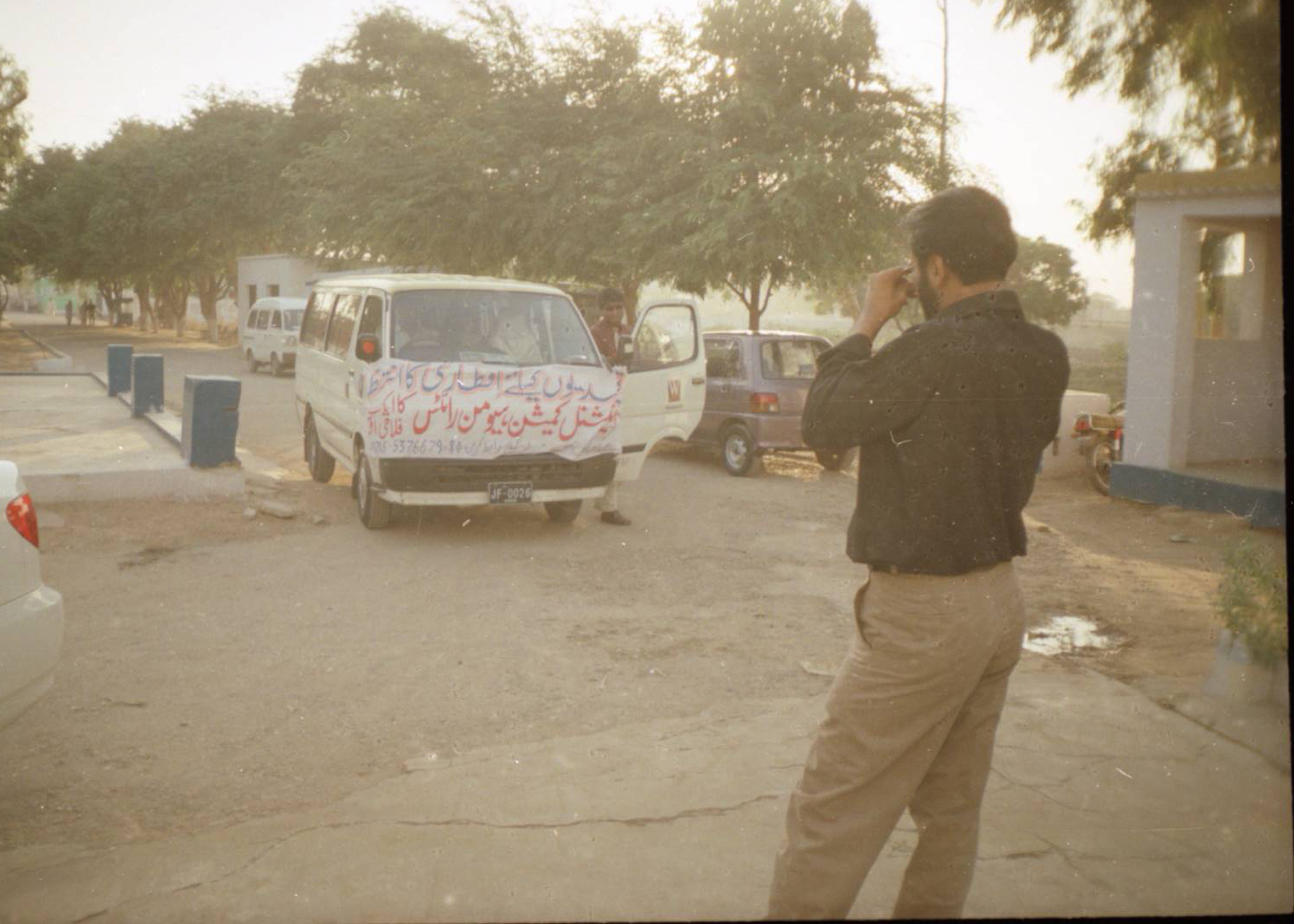
A van carrying a hand painted banner announcing the iftar arrangements for prisoners waits at the prison approach road.
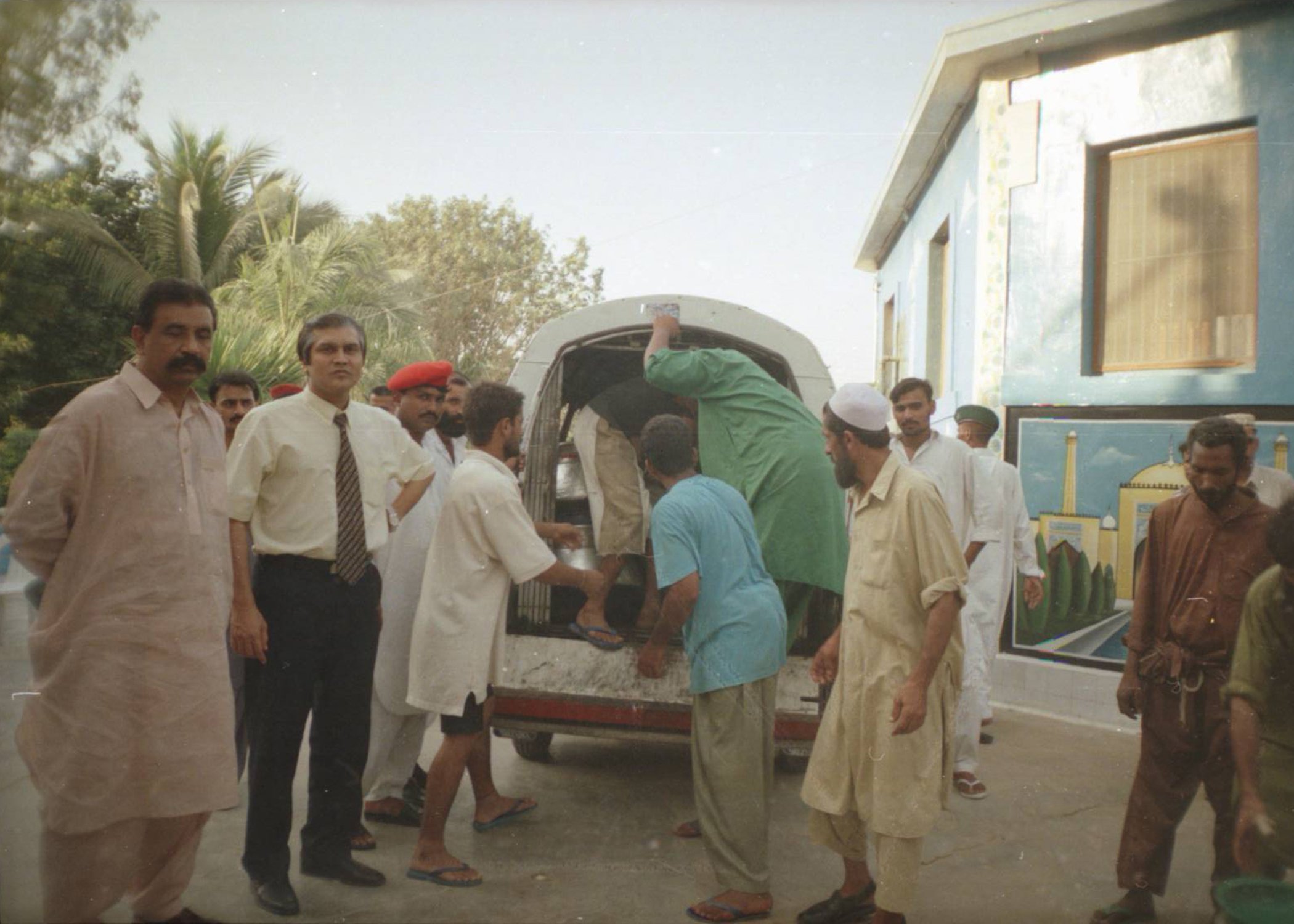
The operation began, as many good things do in Karachi, with a van. A white minibus, its front covered by a hand lettered banner in red and blue Urdu script announcing the iftar arrangements for prisoners, pulled up on the approach road while a team member photographed the moment. The banner was homemade and slightly crumpled by the wind. It said, in the plainest possible language, what the visit was for.
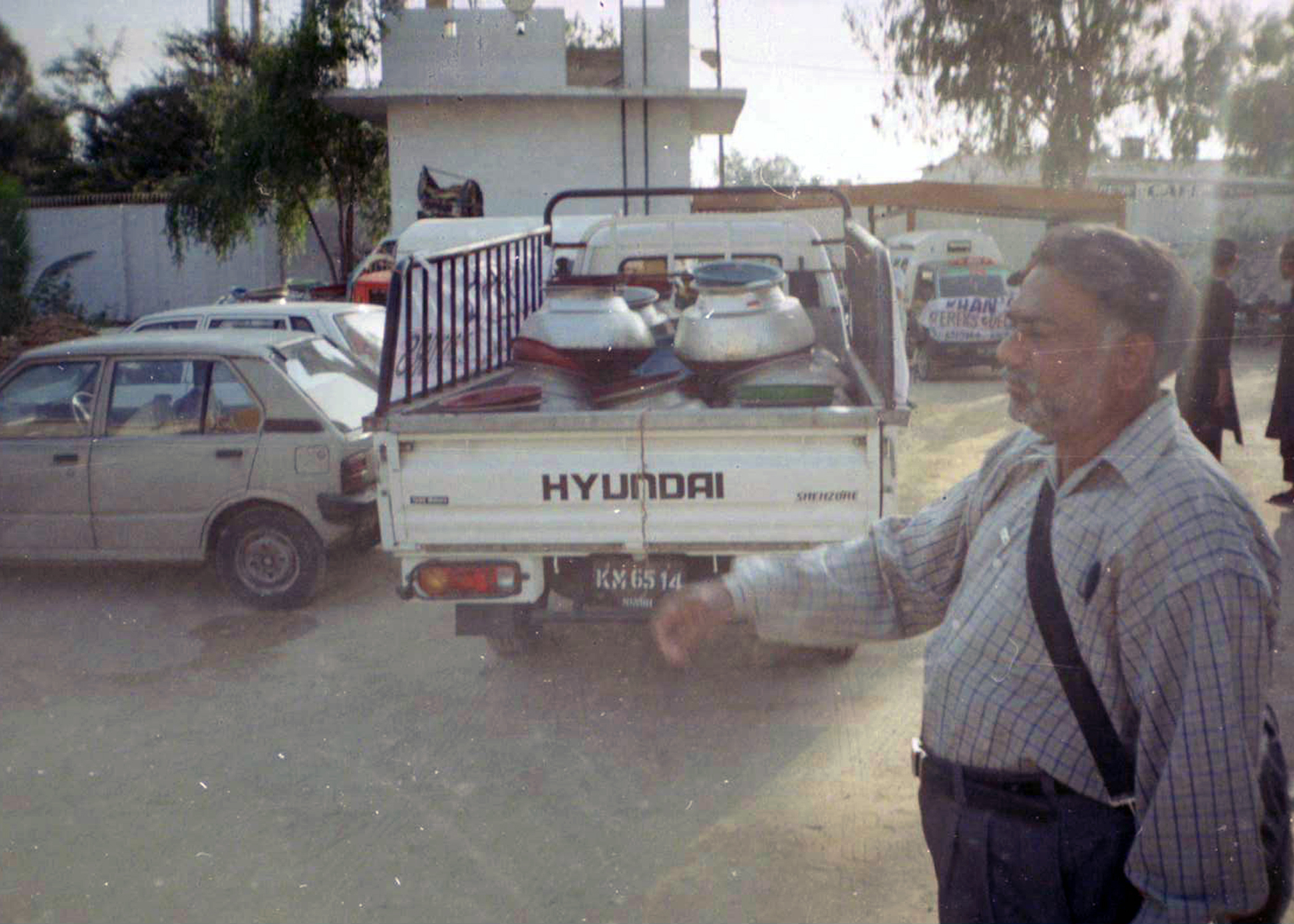
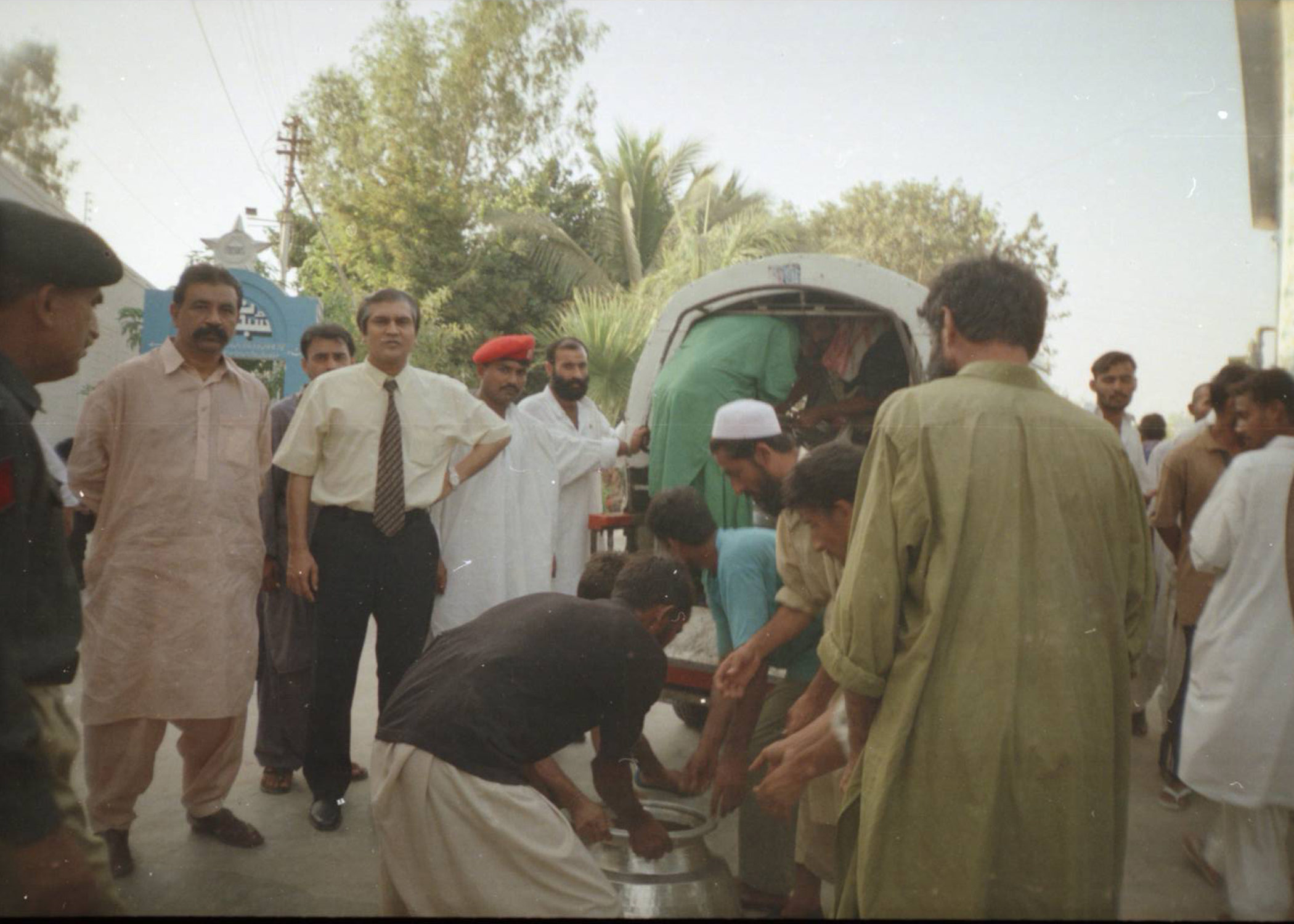
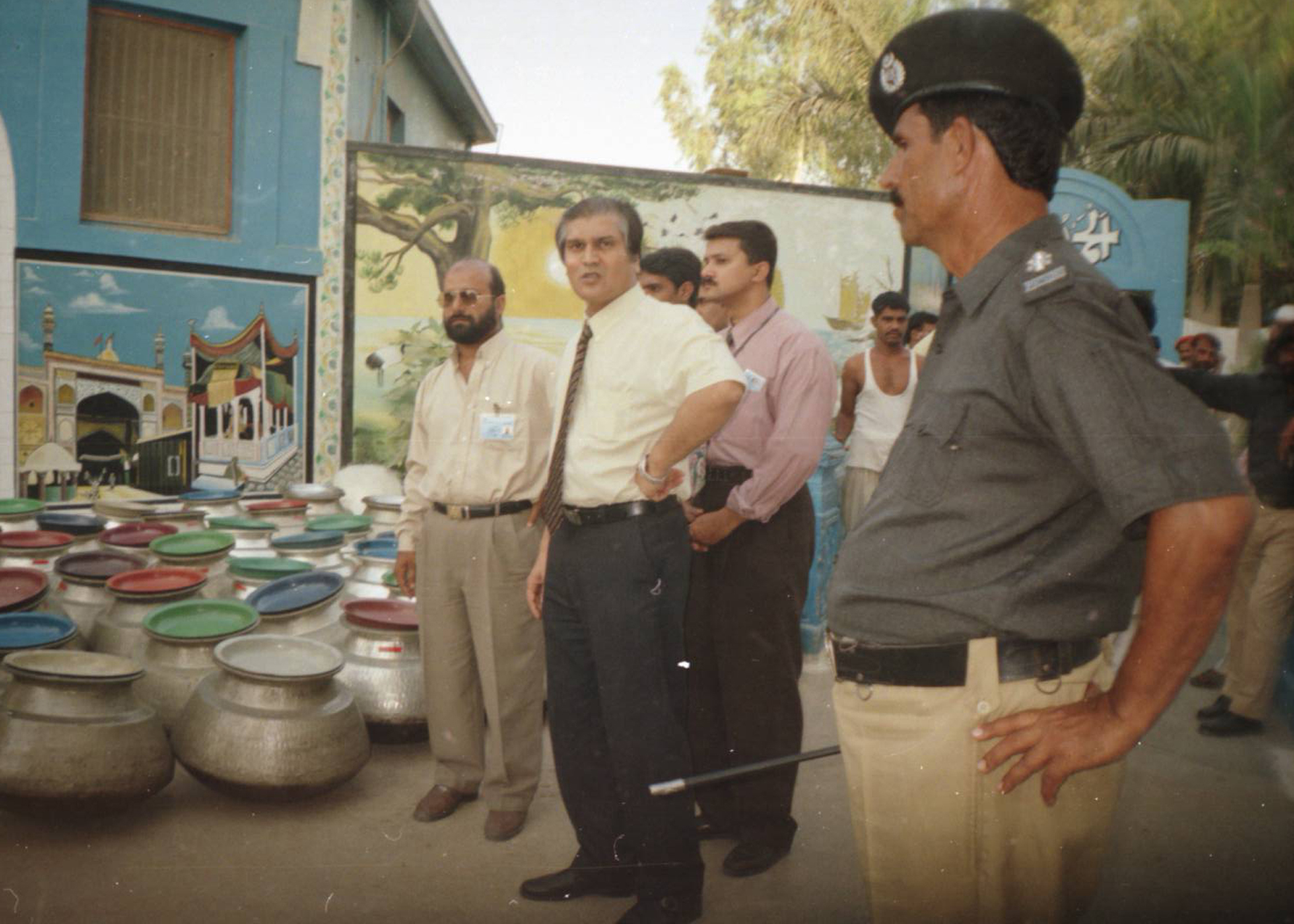
Inside the compound, the scene changed from logistics to something closer to a festival. Rows of large aluminium cooking pots, each with a coloured lid in green, blue, red or silver, stood in the courtyard in front of a wall painted with a mosque, a tree and a sailing boat on a golden sea. Prison murals are a quiet tradition in Sindh, and here they framed a very ordinary and very moving sight: enough food to feed a very large number of inmates, ready to be shared.
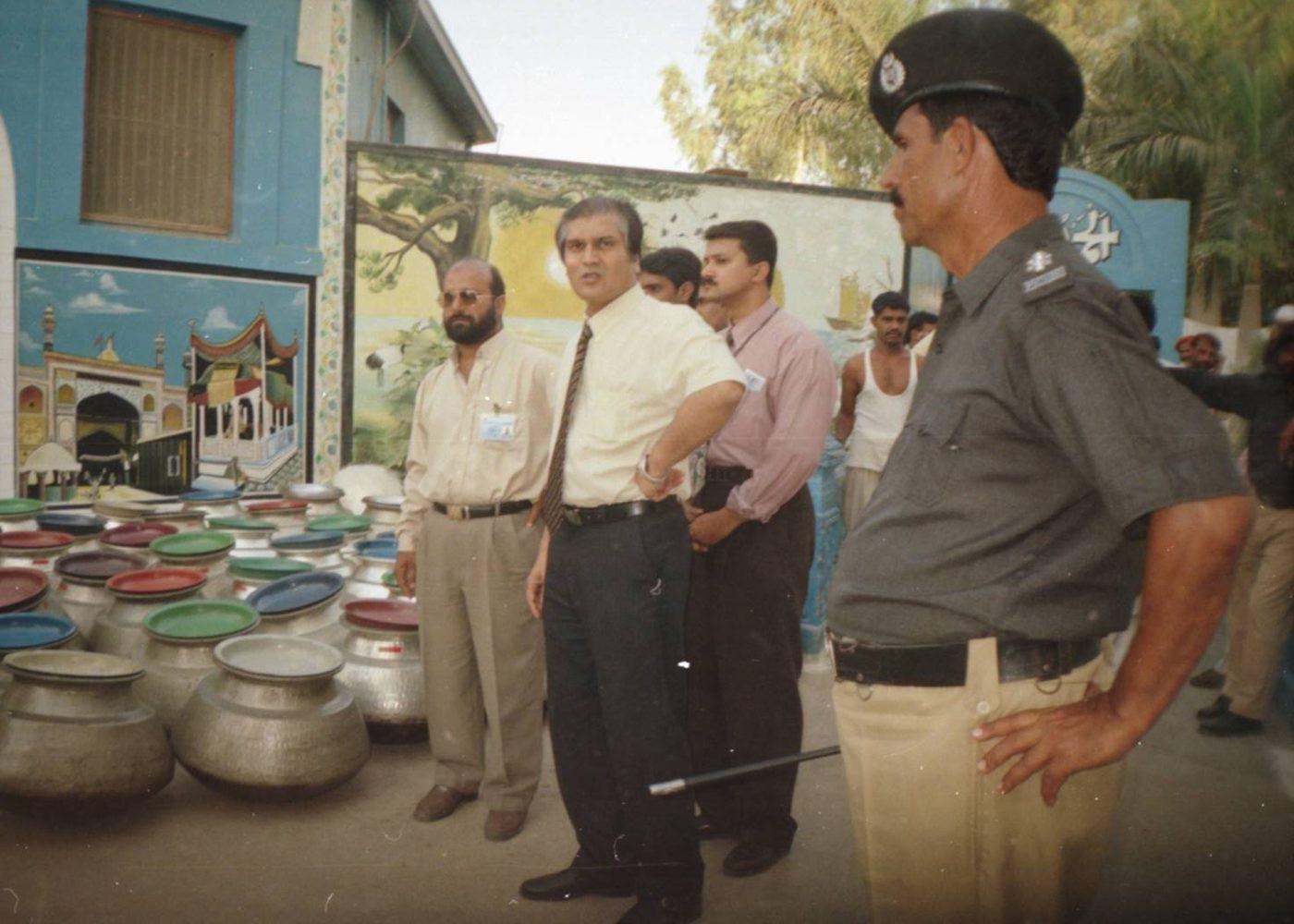
Freshly prepared iftar meals in large cooking pots, lined up in the courtyard as the delegation coordinates with prison officers.
Prison officers stood alongside the delegation as the pots were counted and the distribution was arranged. A uniformed officer, hand on hip and baton tucked under his arm, watched the preparations with the calm of a man who had seen many kinds of visitors and was quietly surprised by this one.
“For most of the year, the food in that courtyard is a matter of routine. That evening it was a message. It said, you have not been forgotten.”
ICOHR CHAIRMAN MUHAMMAD ASLAM ELLAHI
Behind the Gate for Women
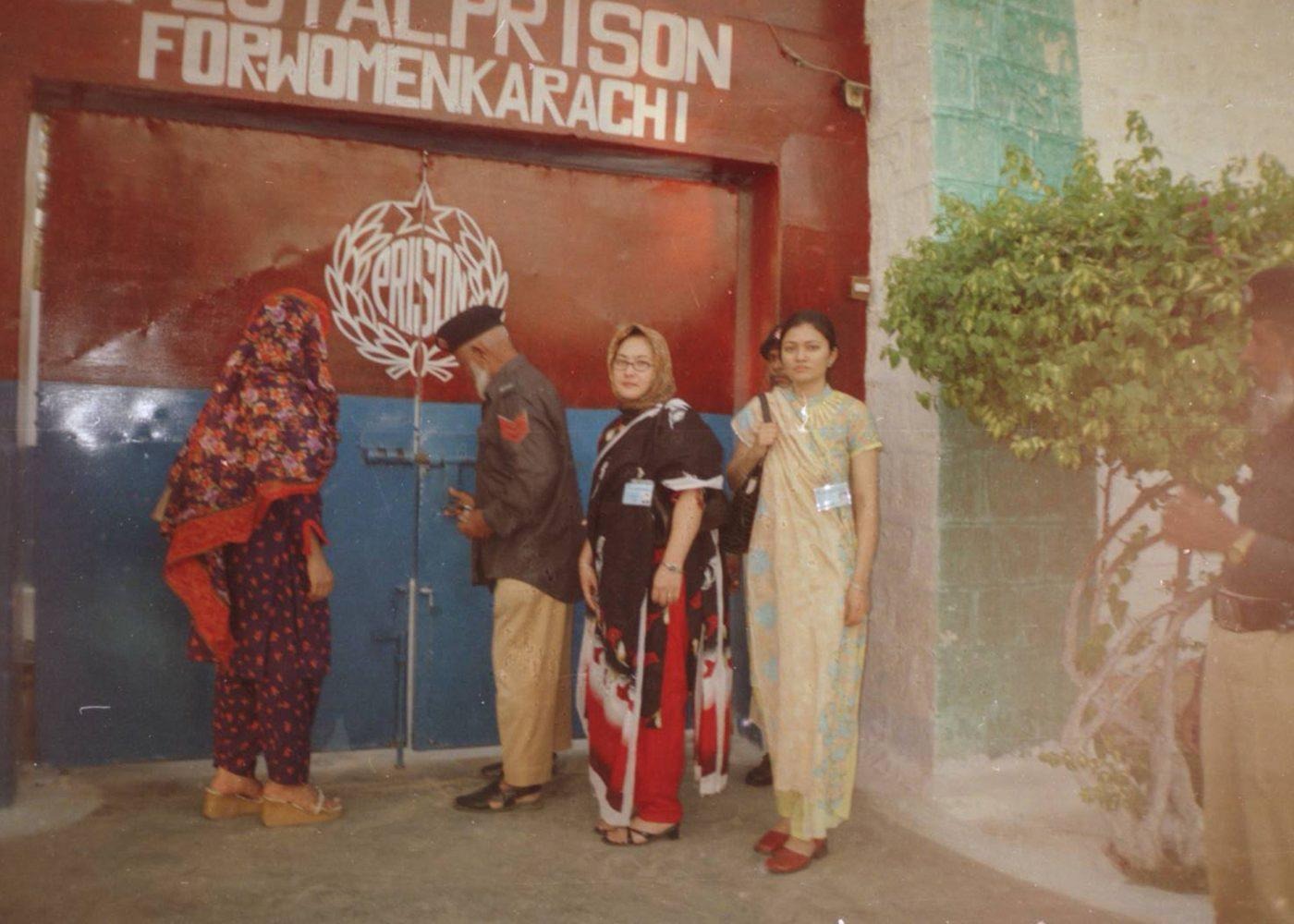
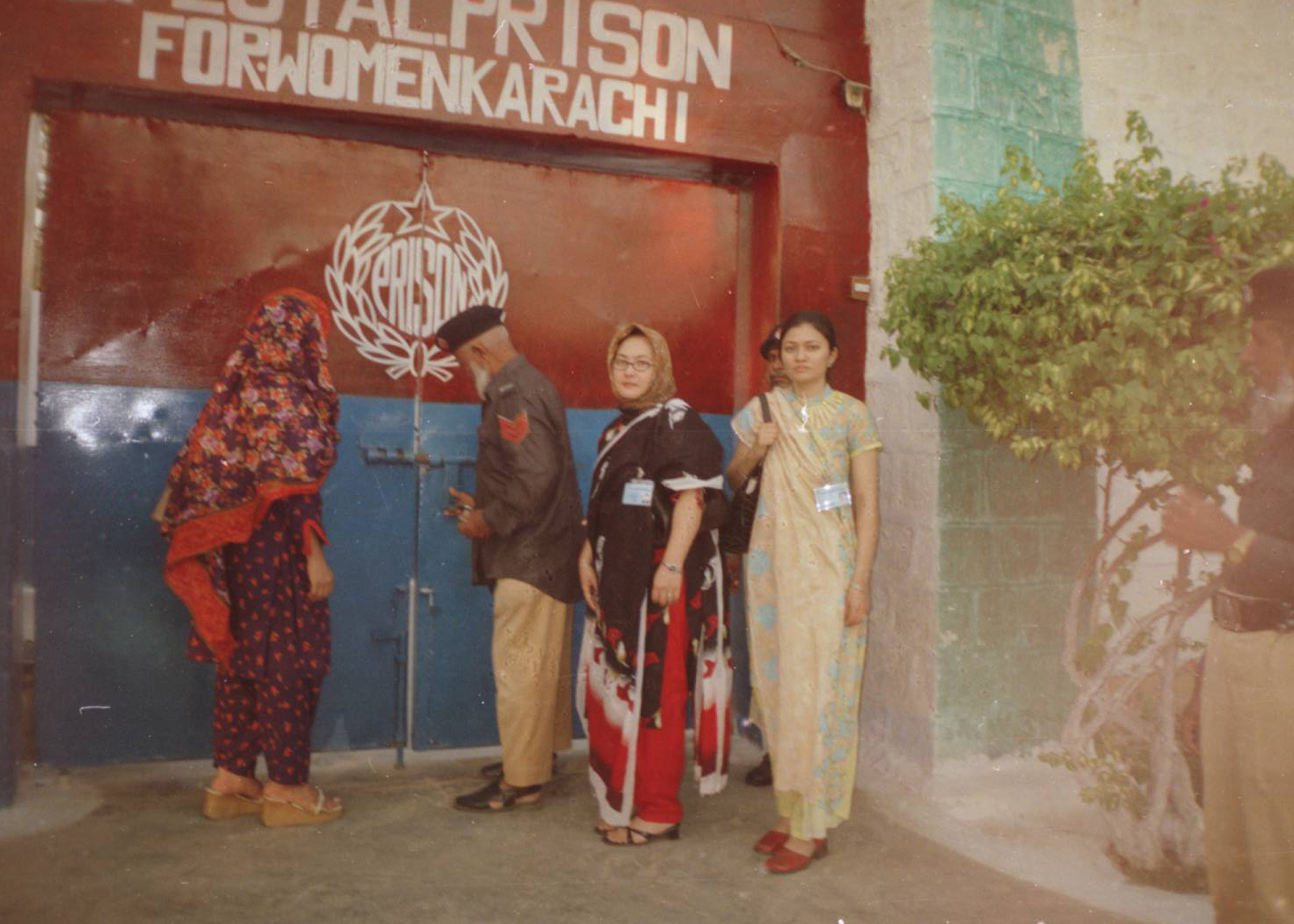
Women members of the delegation wait at the gate of the Central Prison for Women, Karachi, as a guard unlocks the heavy door.
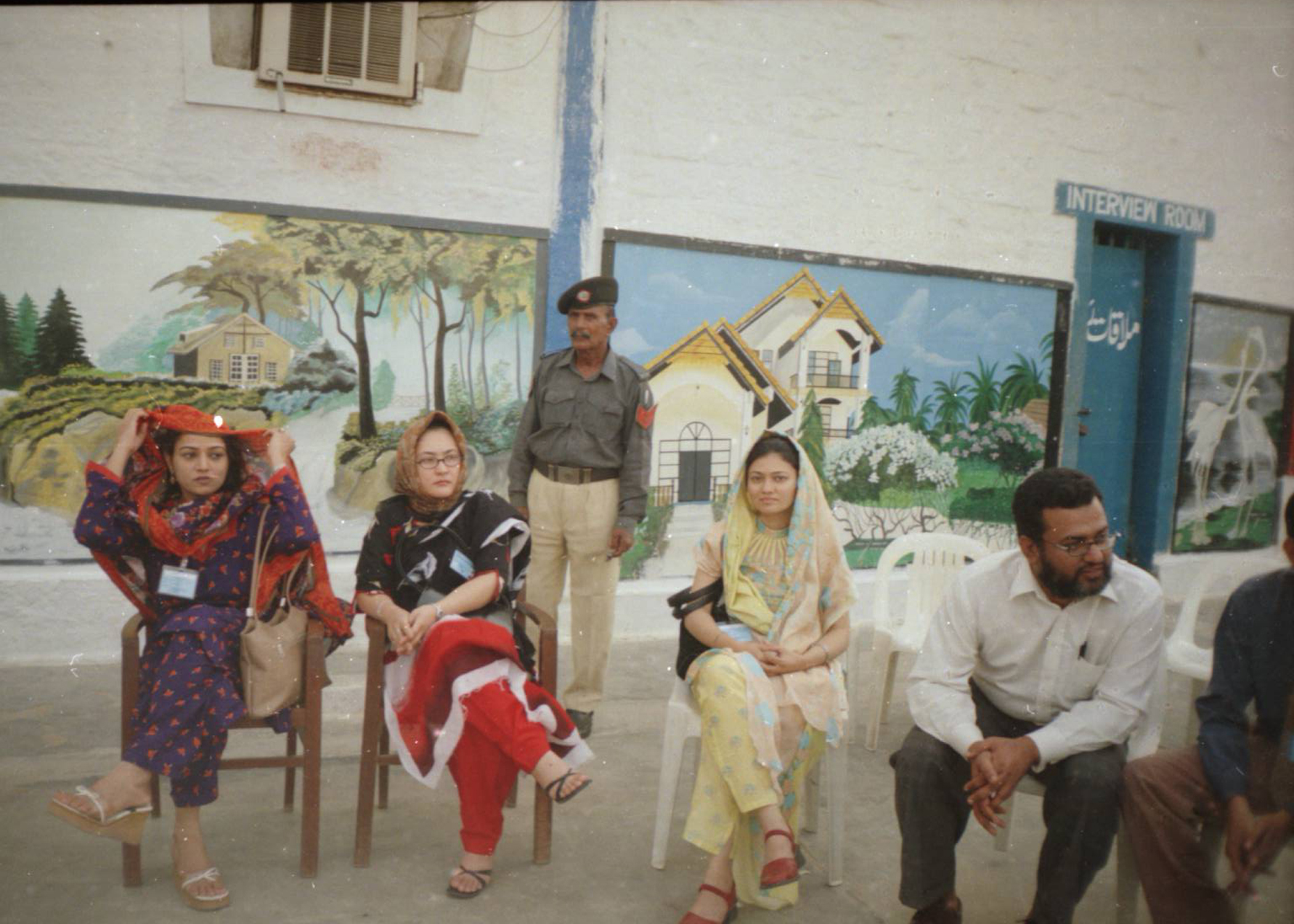
At the Central Prison for Women, the gate was red above and blue below, with the prison emblem painted at its centre. A senior guard, his beret set firmly on his head, worked the heavy latch by hand while the women of the delegation waited, identity cards pinned to their clothes. One wore a headscarf and a black shawl over bright red. Another wore a soft yellow and blue kameez with a bag on her shoulder. They looked less like inspectors than like guests, which was exactly the point.
The presence of women on the delegation was not an afterthought. Women prisoners in Pakistan often face a double isolation: separated from their families by the prison walls and, in many cases, by the social stigma that follows them. A conversation with another woman, at the hour of iftar, can reach places that a formal inspection never will.
“I did not expect anyone to come and simply sit with us. Nobody asked me what I had done. They asked me if I had eaten.”
A woman inmate, as recalled by a member of the delegation
Young Voices in a Crowded Hall
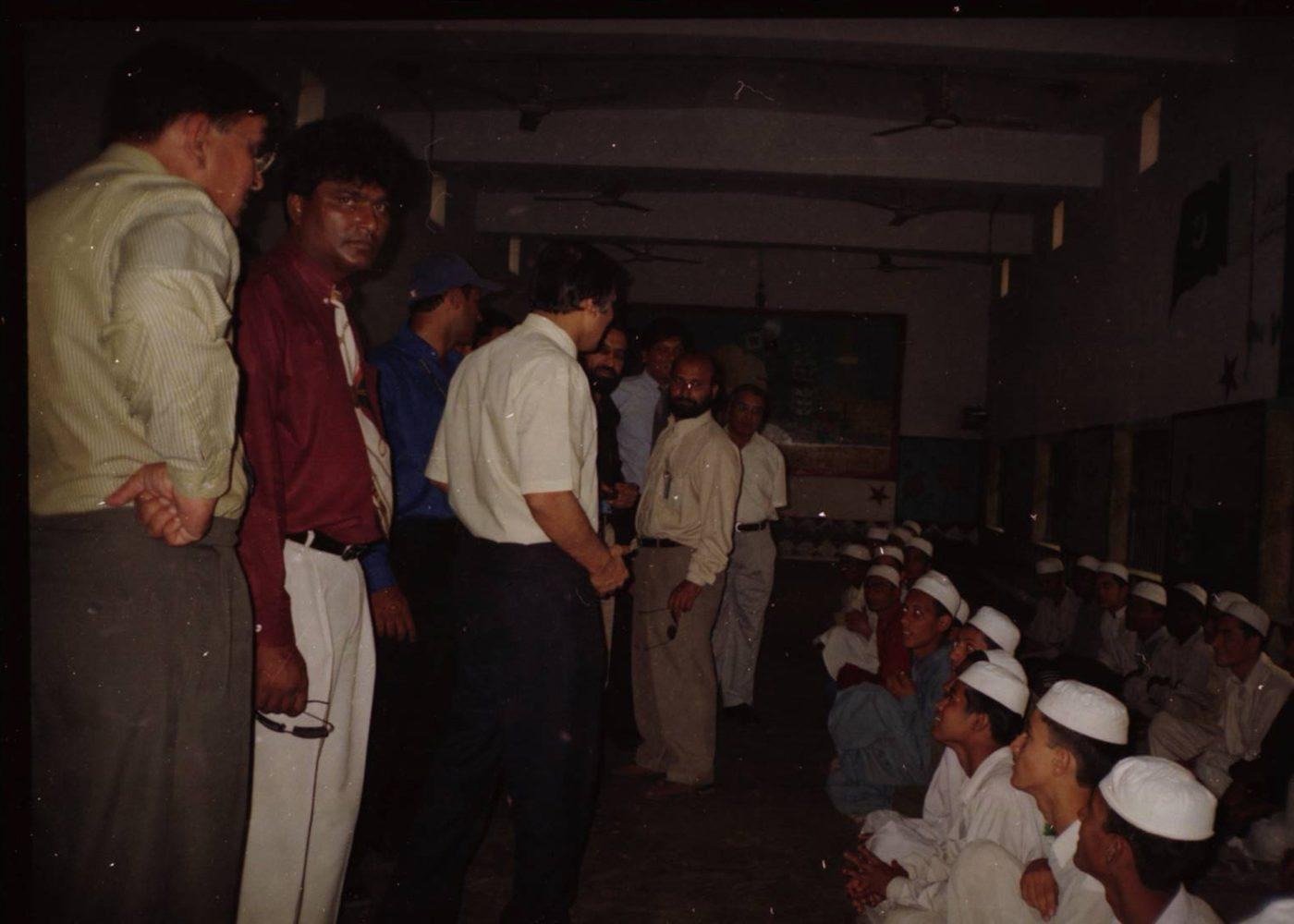
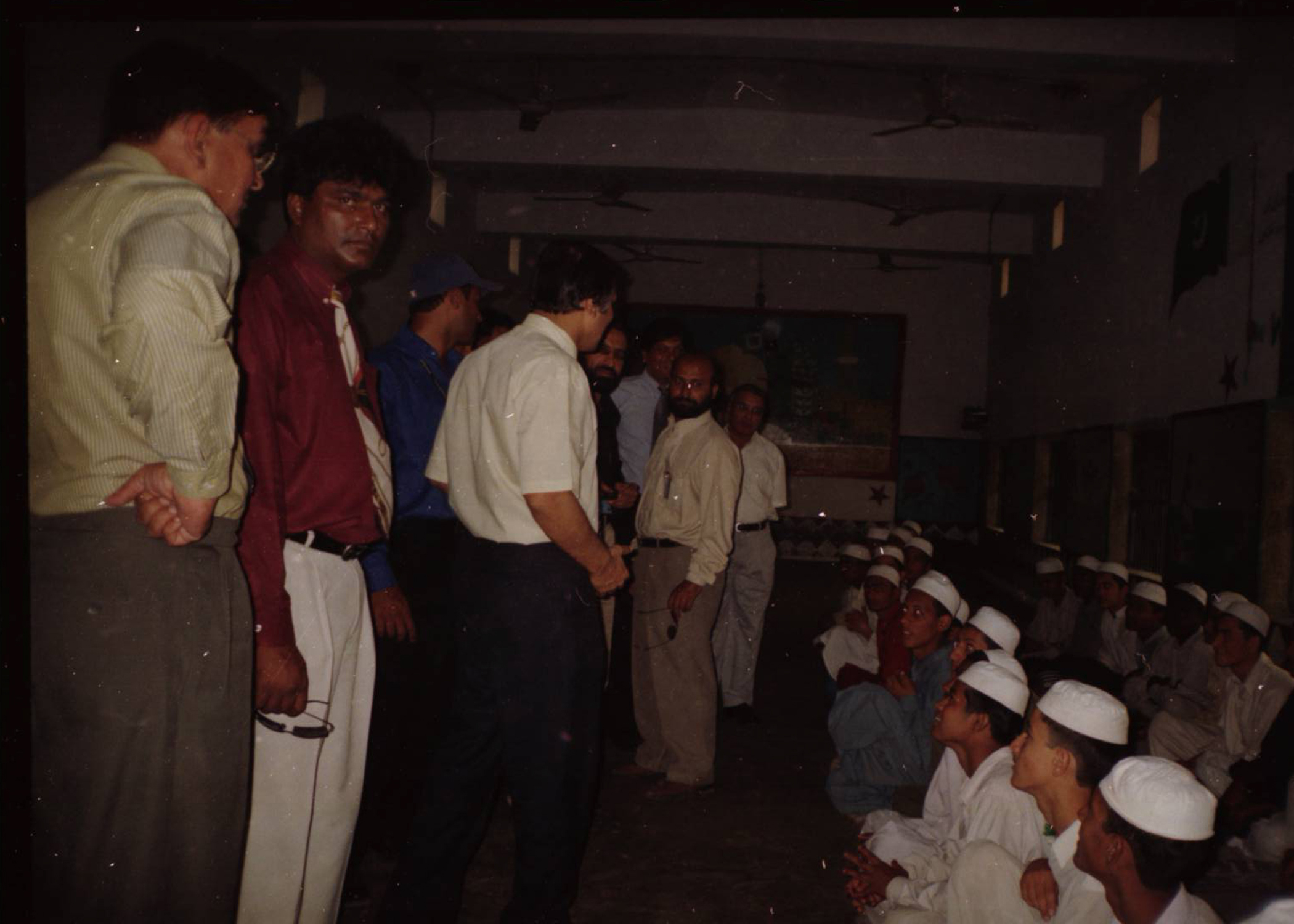
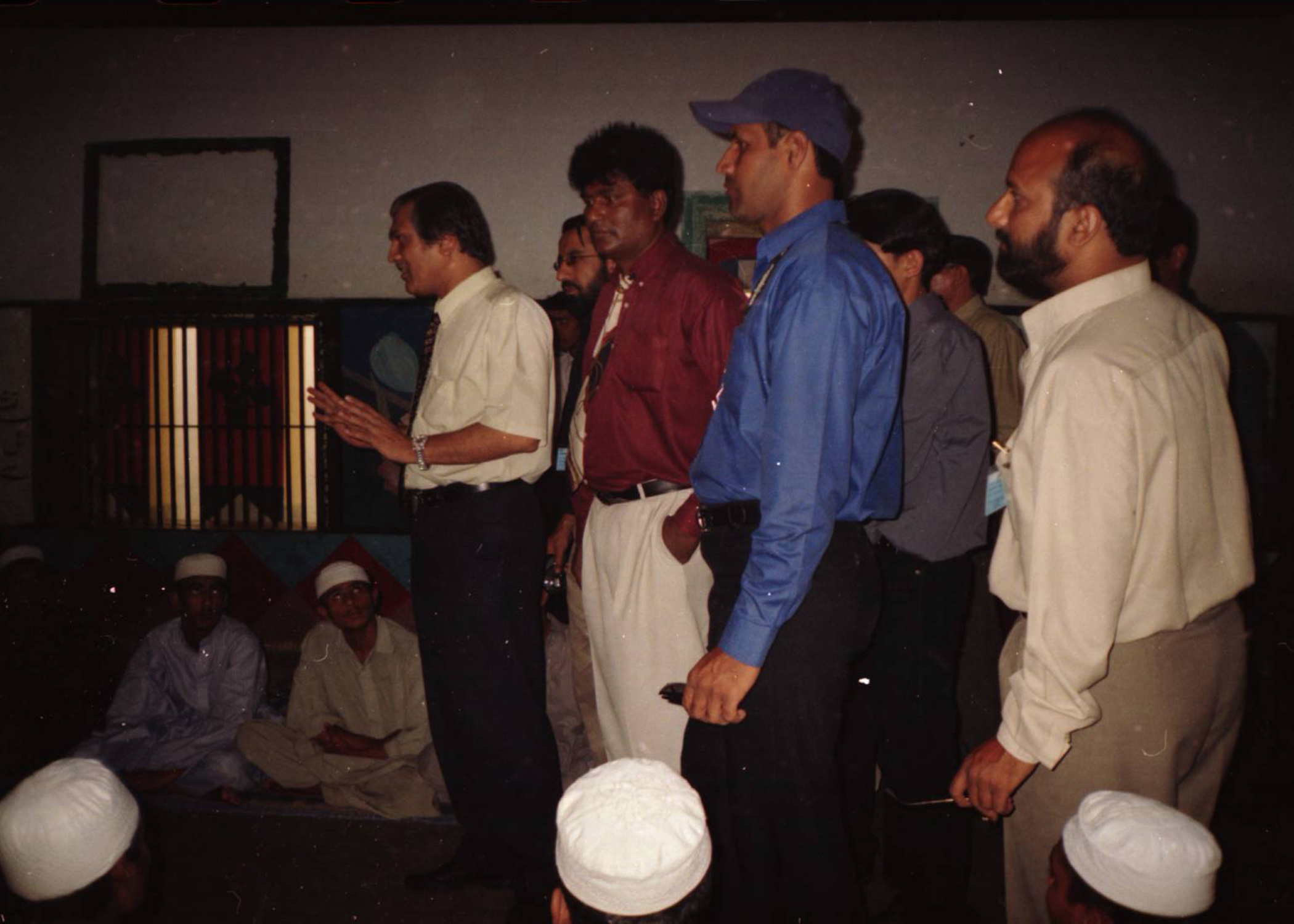
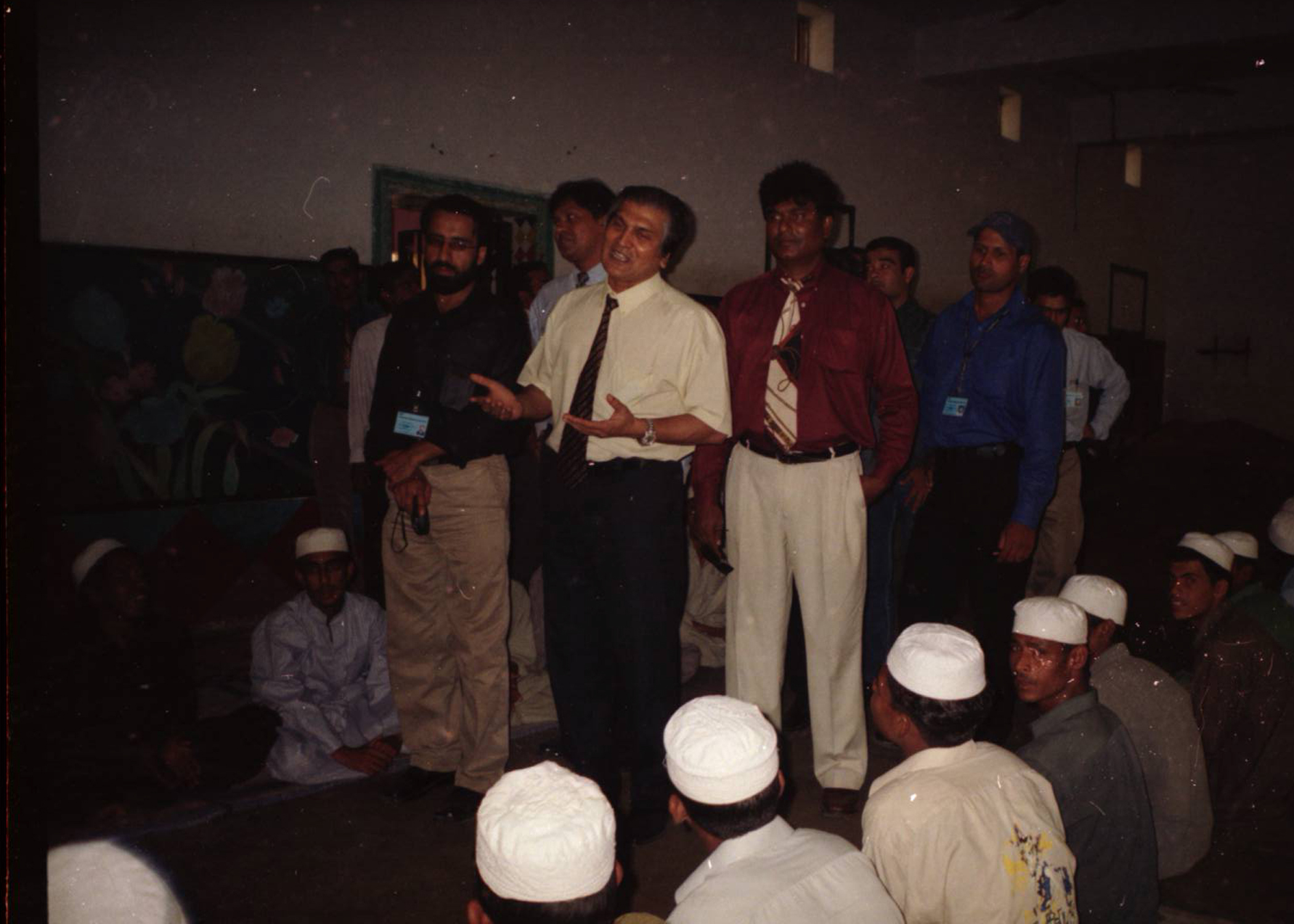
Young inmates in white prayer caps listen as delegation members speak in a long hall of the facility.
The most striking moments of the day took place in a long, dim hall where young inmates sat cross legged on the floor in rows, most of them wearing the small white caps traditionally worn for prayer. The ceiling fans turned slowly overhead. Barred windows let in strips of evening light. A flag and a large painted mural decorated the far wall, and along the walls, in faded paint, were scenes of a life outside.
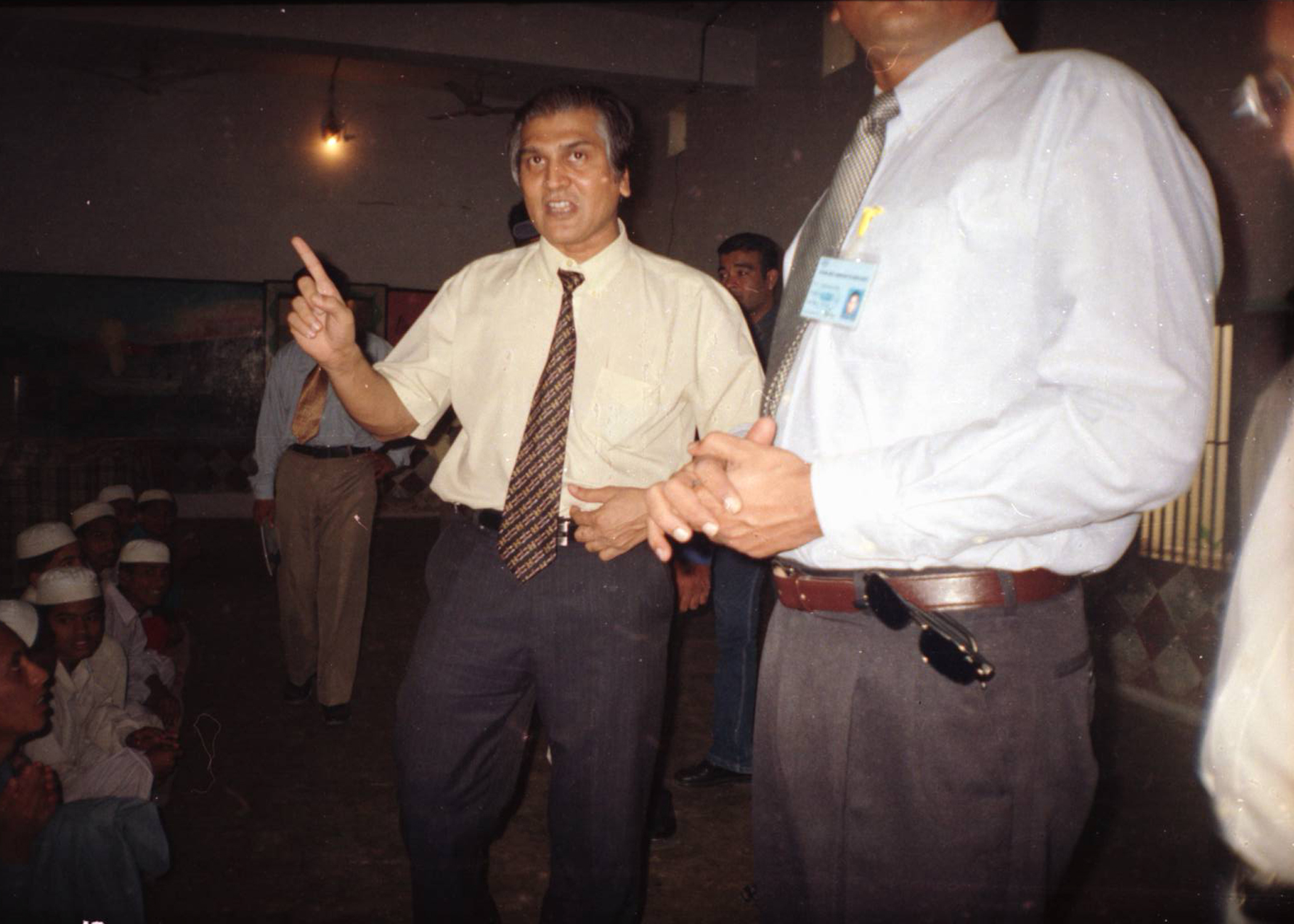
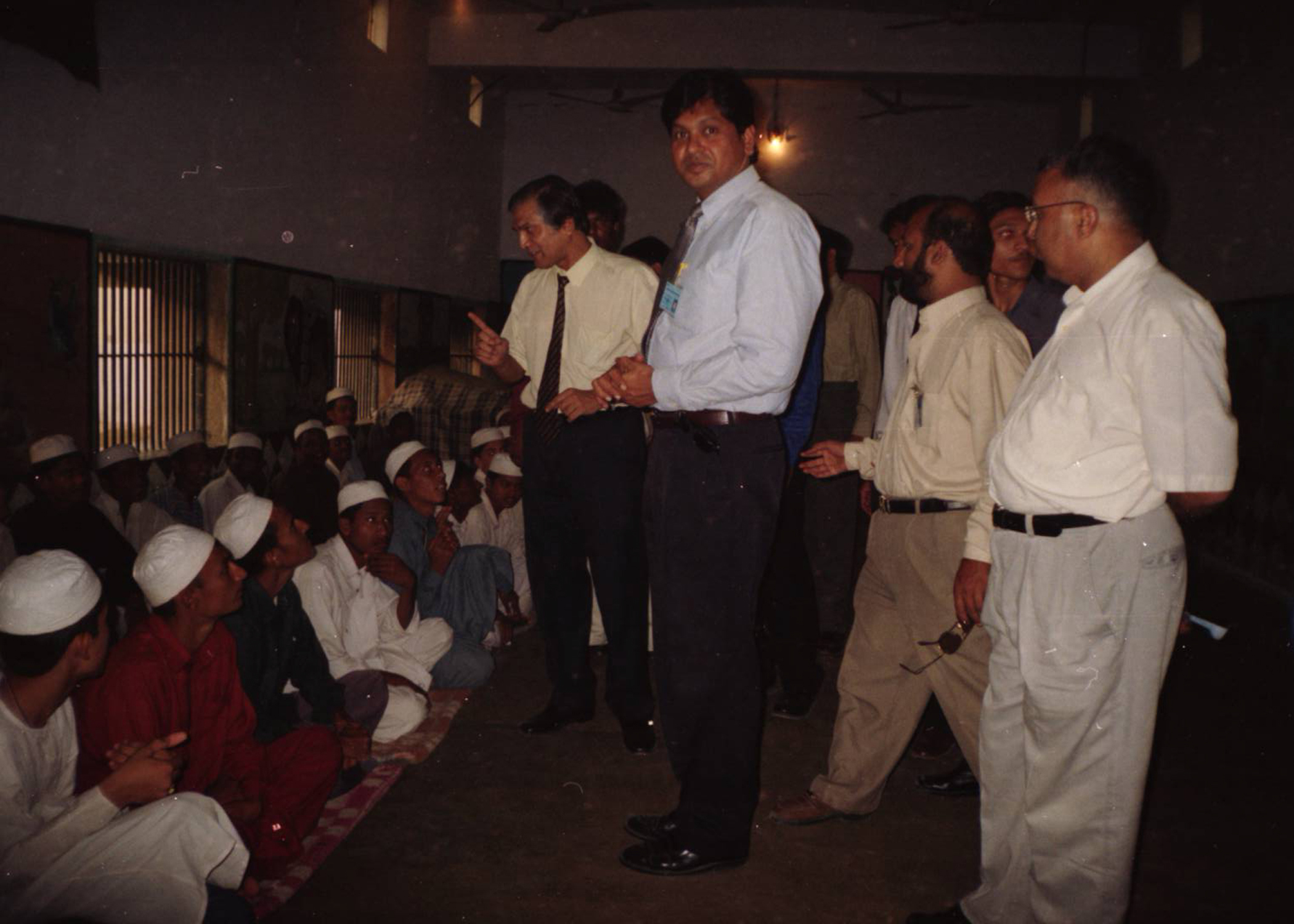
The delegation’s lead speaker stepped forward and addressed the boys directly, in plain language and with an expressive hand raised to make a point. He did not lecture. He asked questions, listened to the answers and, at moments, stopped to let a young voice finish a thought. Around him stood colleagues and prison staff, some listening with arms folded, others leaning in to hear.
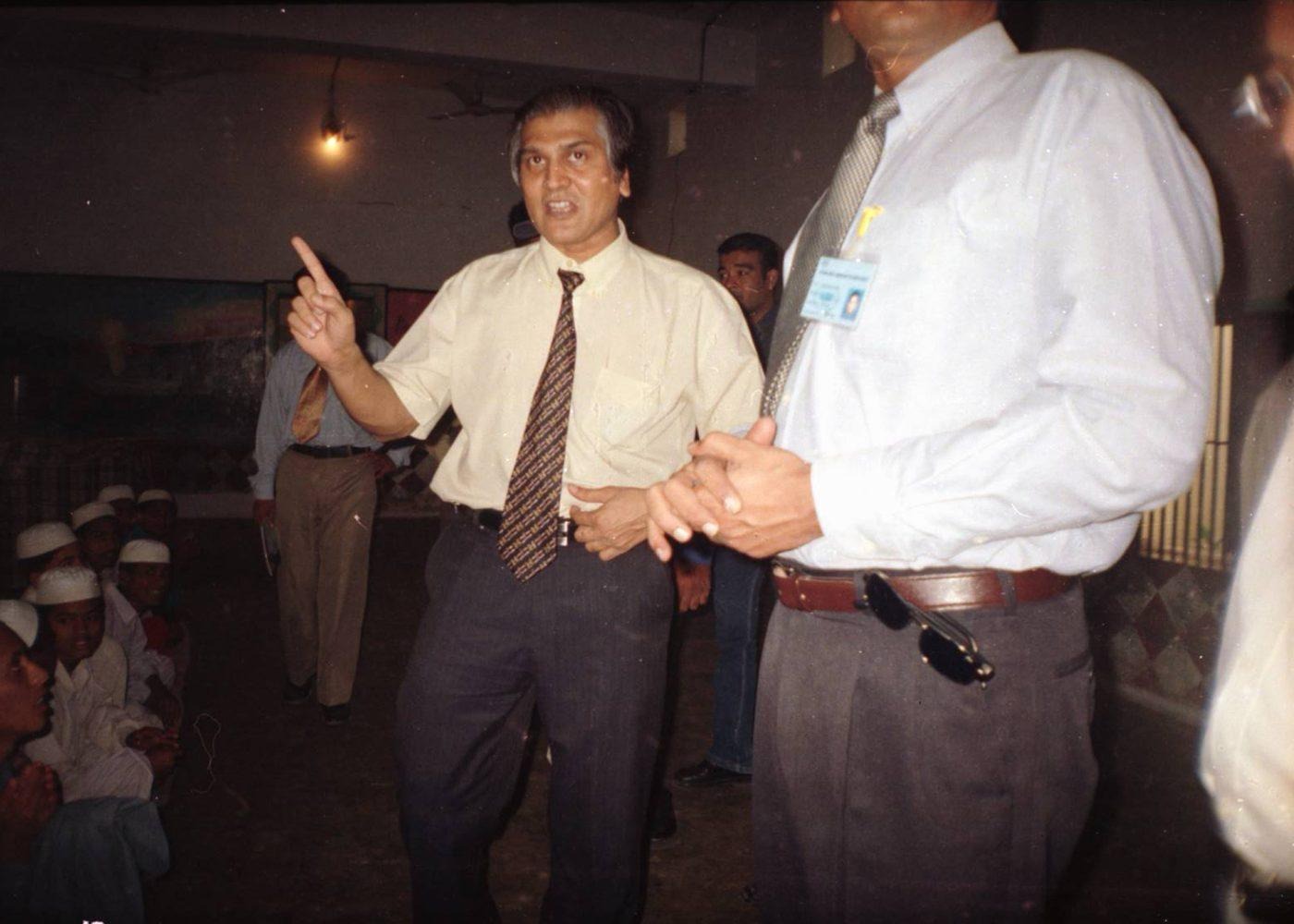
ICOHR Chairman Muhammad Aslam Ellahi Addresses Young Inmates, Gesturing To Emphasise A Point As Colleagues Look On.
The boys leaned forward. Some smiled. Some looked at the floor. One teenager near the front, cap set straight, held the speaker’s eyes for a long time before asking a question that made several of the adults smile. It was not a complicated question. It was the kind that a young person asks when he is trying to find out whether the adult in front of him is really listening.
“These are children who made mistakes, some of them terrible, some of them the result of circumstances they never chose. A society is judged by what it offers them next.”
ICOHR CHAIRMAN MUHAMMAD ASLAM ELLAHI
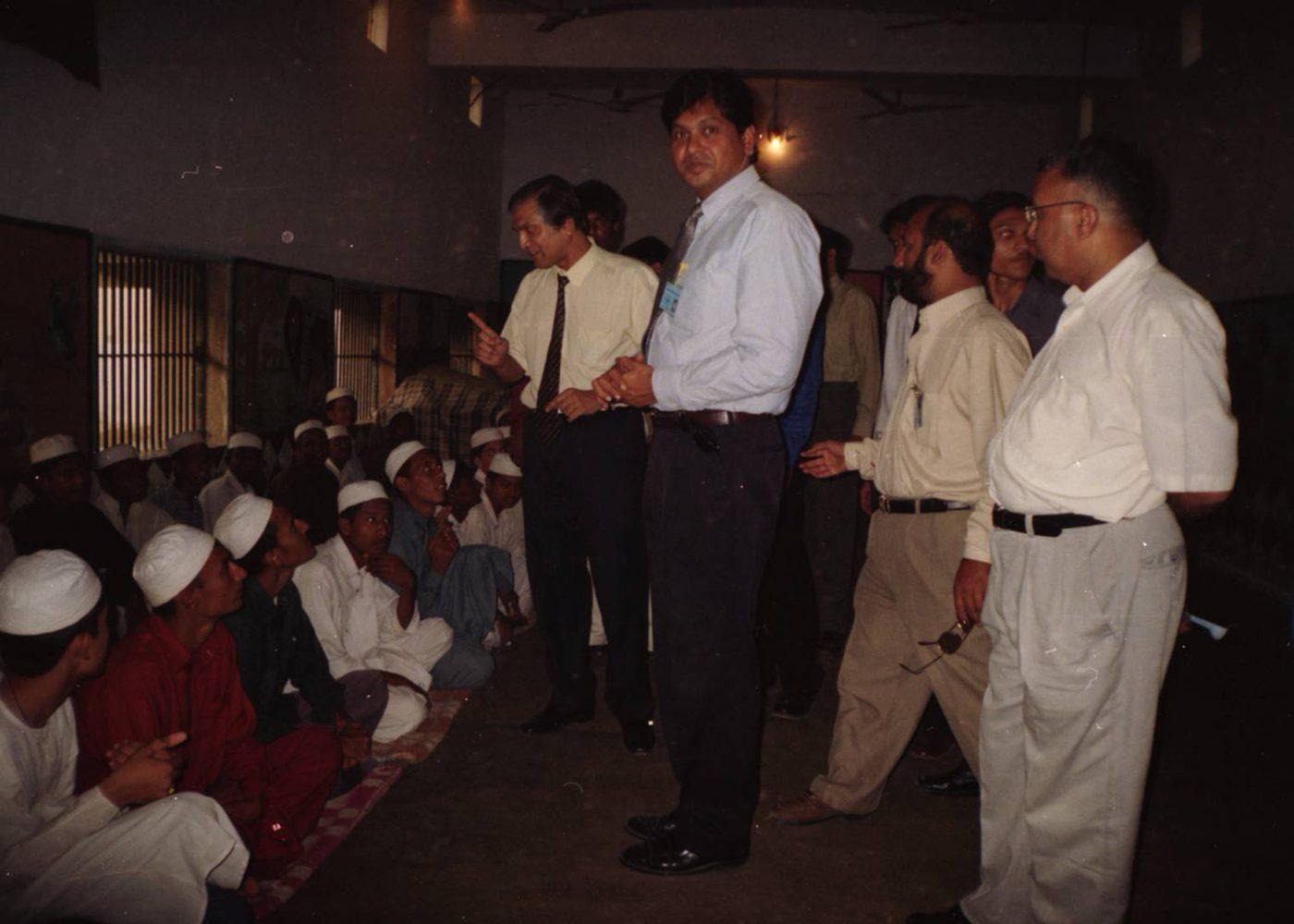
Inmates seated on the floor in conversation with members of the delegation, who stand in the aisle to speak with them.
The conversation moved in both directions. The boys asked about school, about work, about how a young man with a record can find a place in a world that is not always forgiving. The delegation spoke of skills, education and the possibility of returning to society with dignity. Few promises were made, and that too was deliberate. The team had no wish to add disappointment to disappointment.
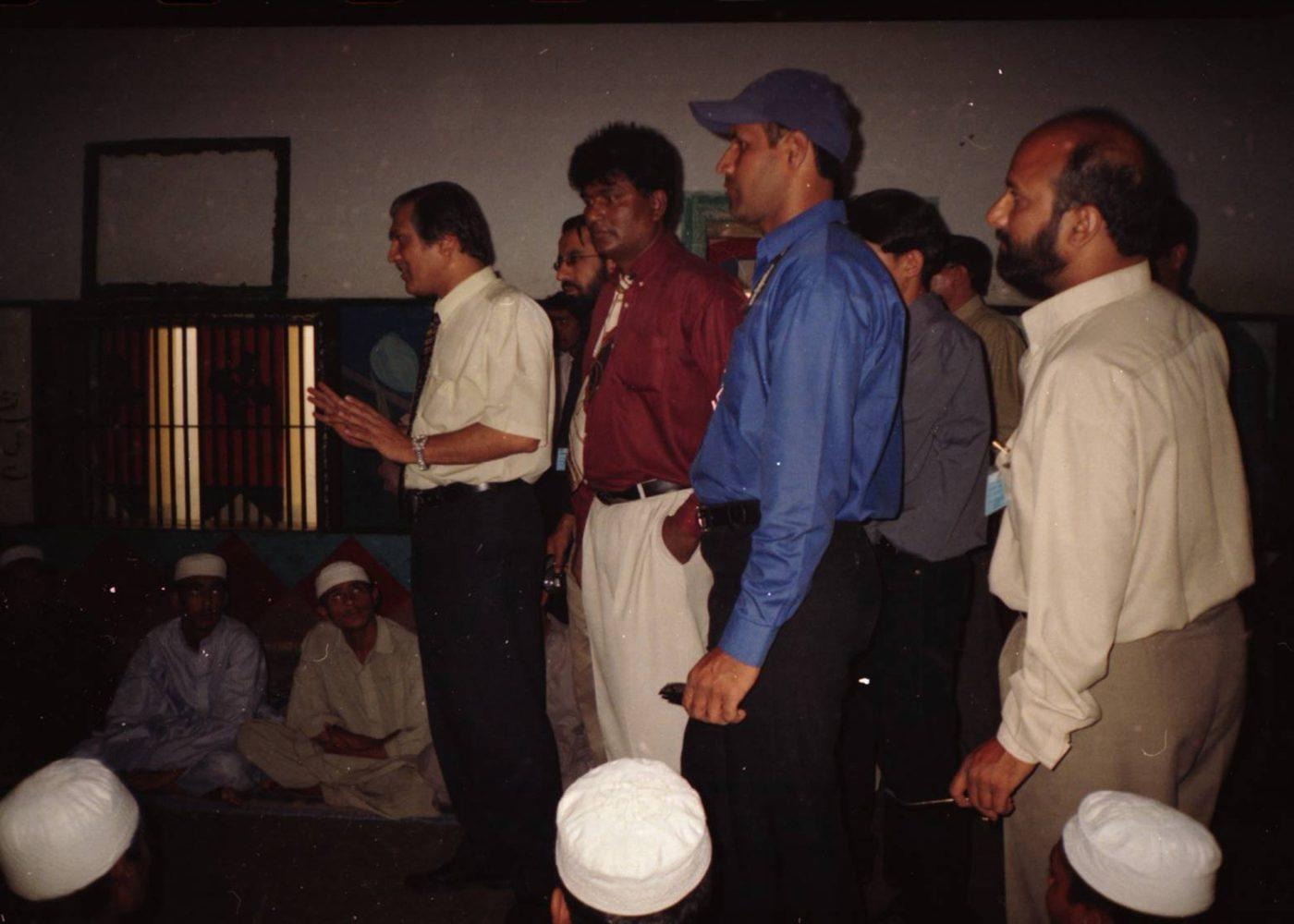
Delegation members and prison staff stand together at the front of the hall as young inmates sit close by.
Breaking the Fast Together
As the sun went down over Karachi, the hall settled into a different kind of quiet. The call to prayer, the passing of dates and water, the first sip after a long day: these are shared human experiences that cut across every wall. For a few minutes, the difference between a visitor and an inmate was less visible than the thing they held in common.
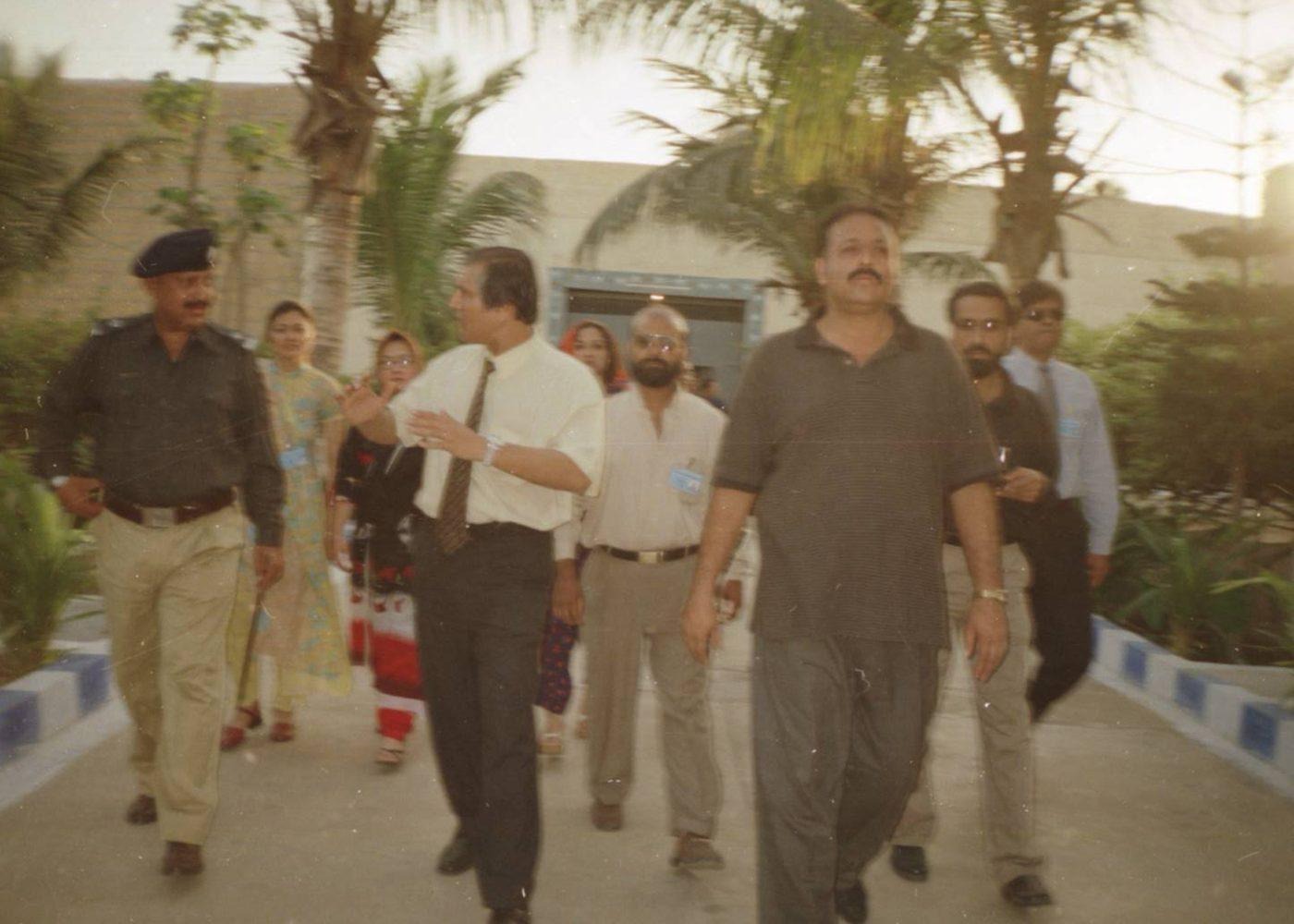
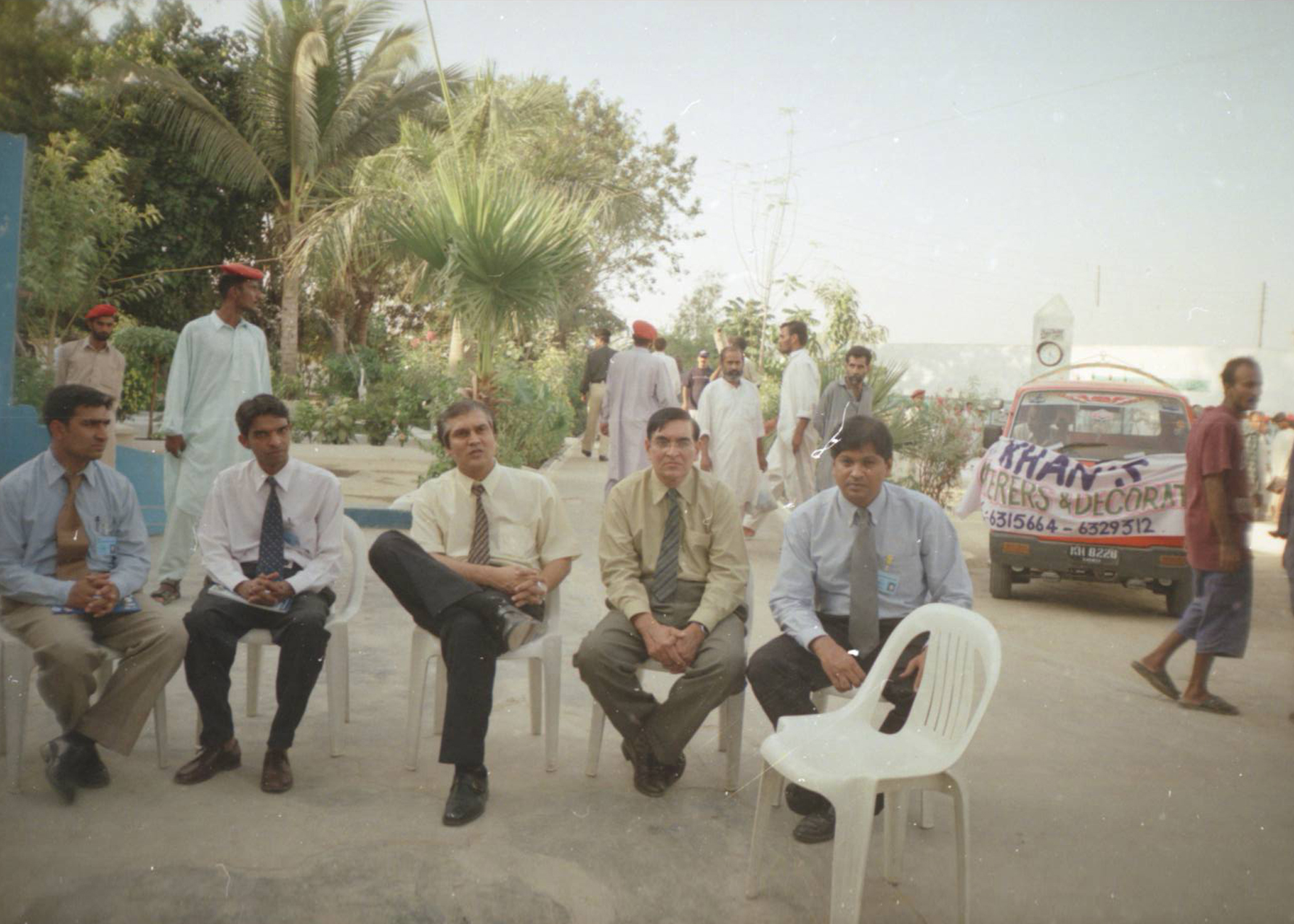
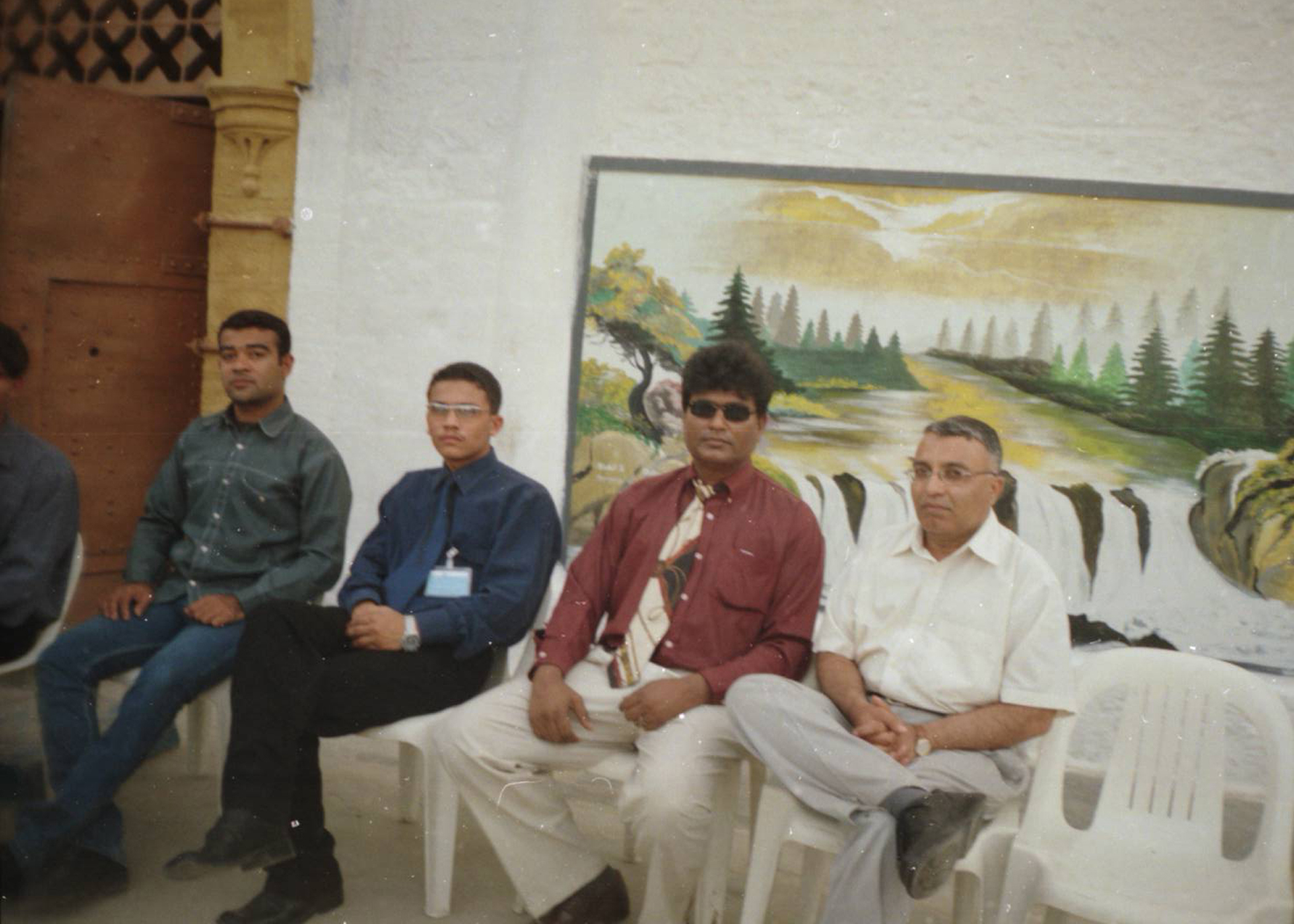
Delegation members wait in the prison courtyard in front of a large painted mural of a waterfall and forest.
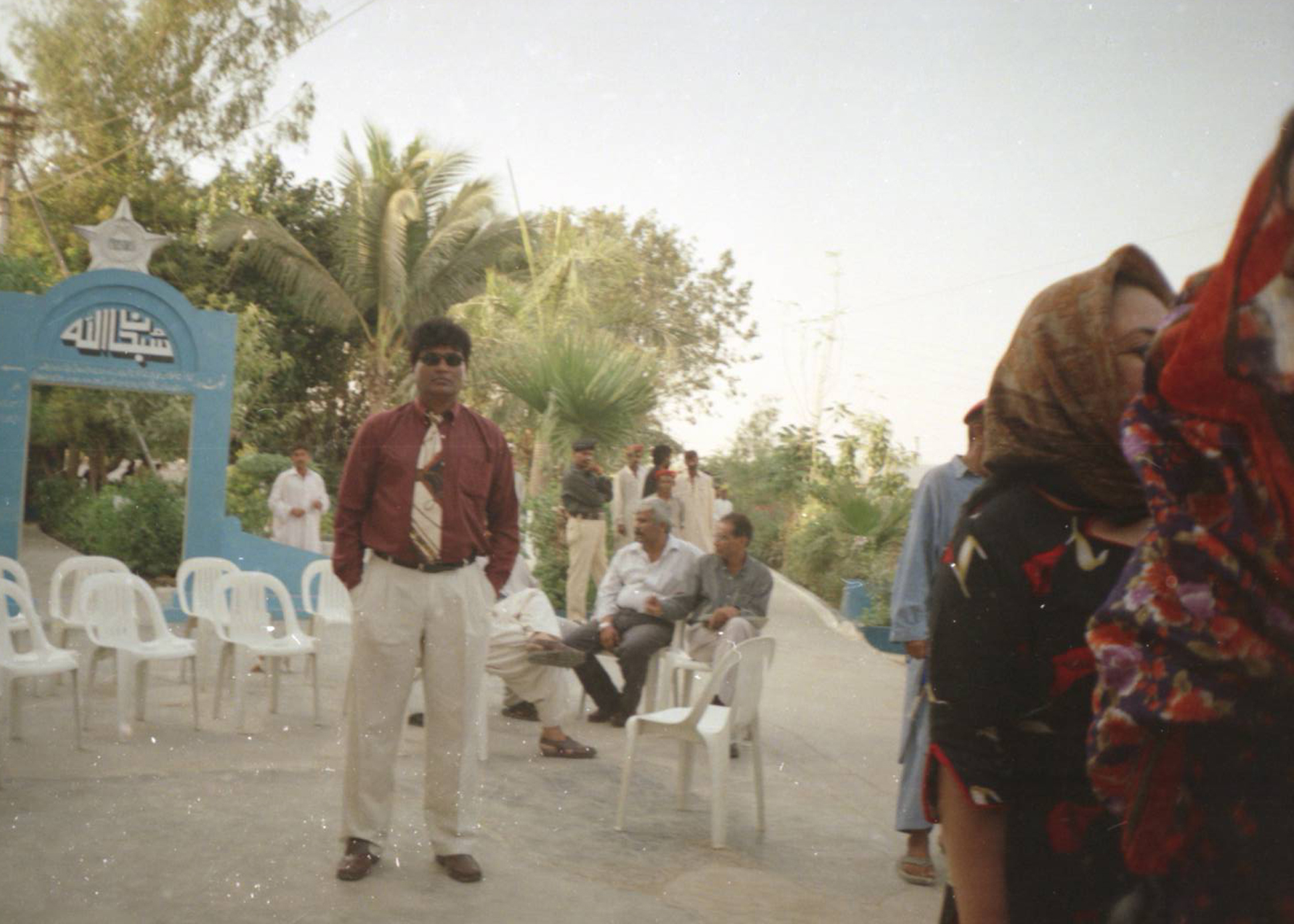
Outside, in the open courtyard, the rest of the delegation waited its turn, seated on white plastic chairs in front of another painted mural, a waterfall and a pine forest that seemed to belong to a completely different country. It was a strange and touching contrast: the calm of a painted landscape, and the very real restlessness of a place designed to hold people in.
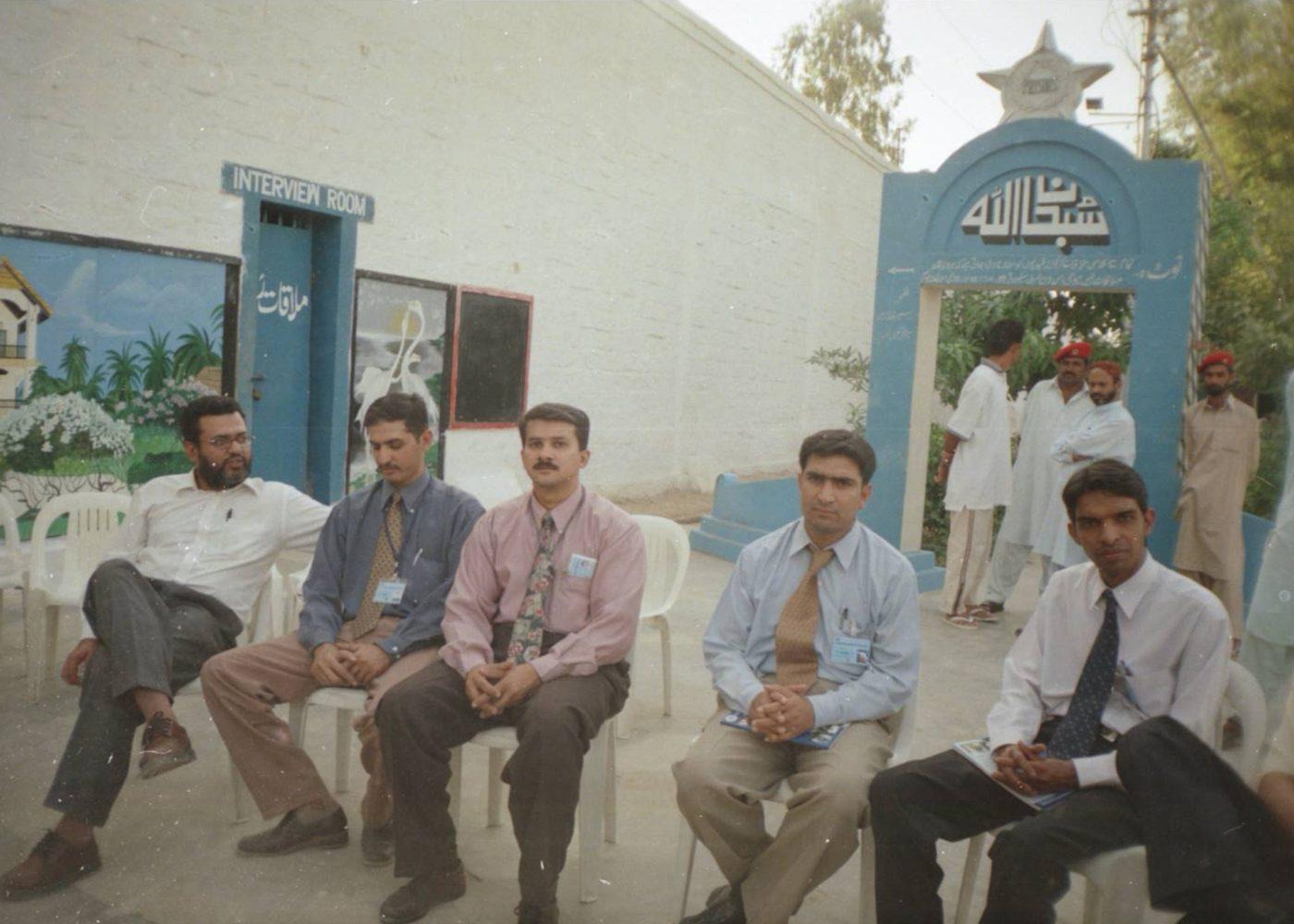
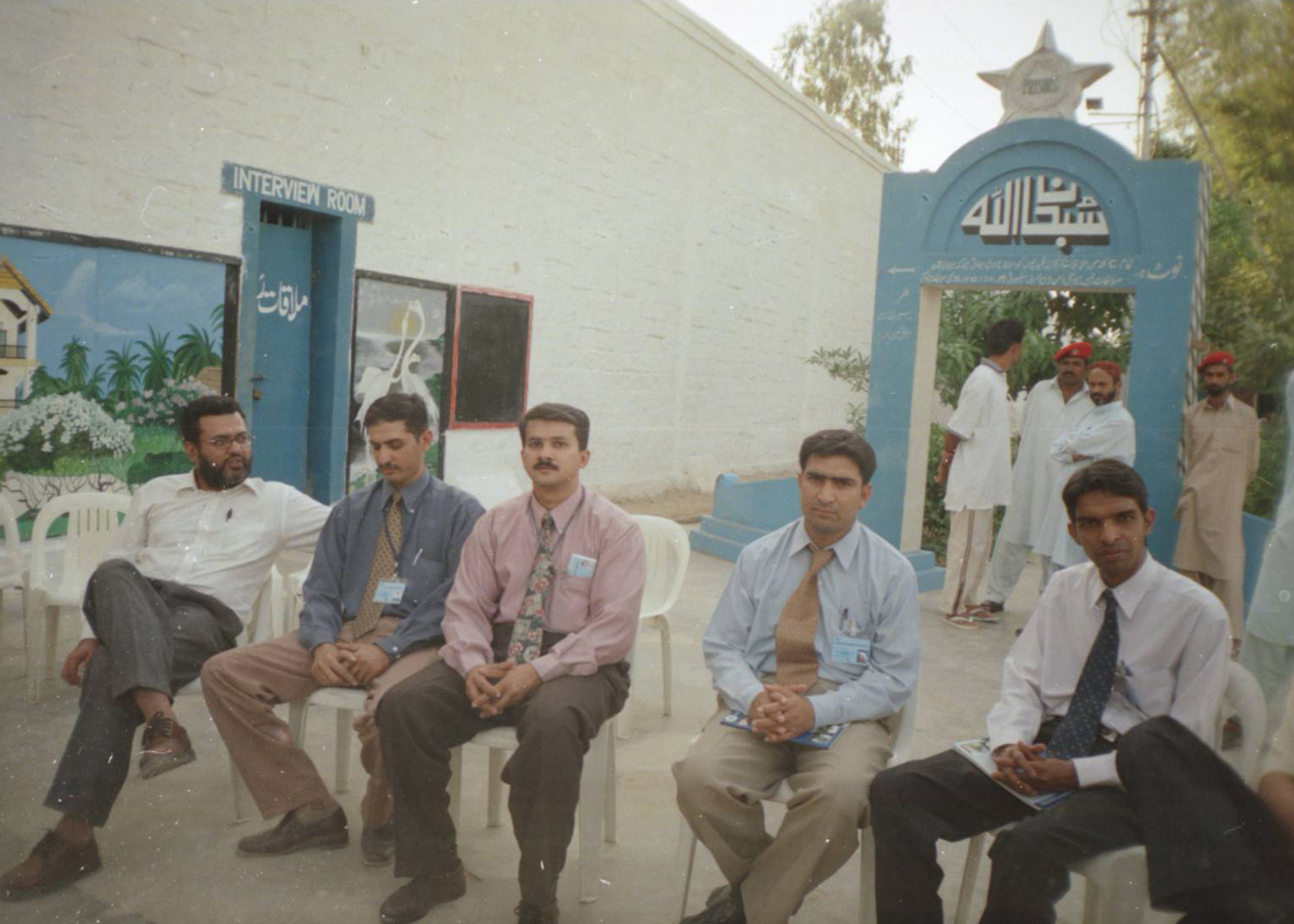
Members of the ICOHR team wait near the interview room and the blue entrance arch of the prison courtyard.
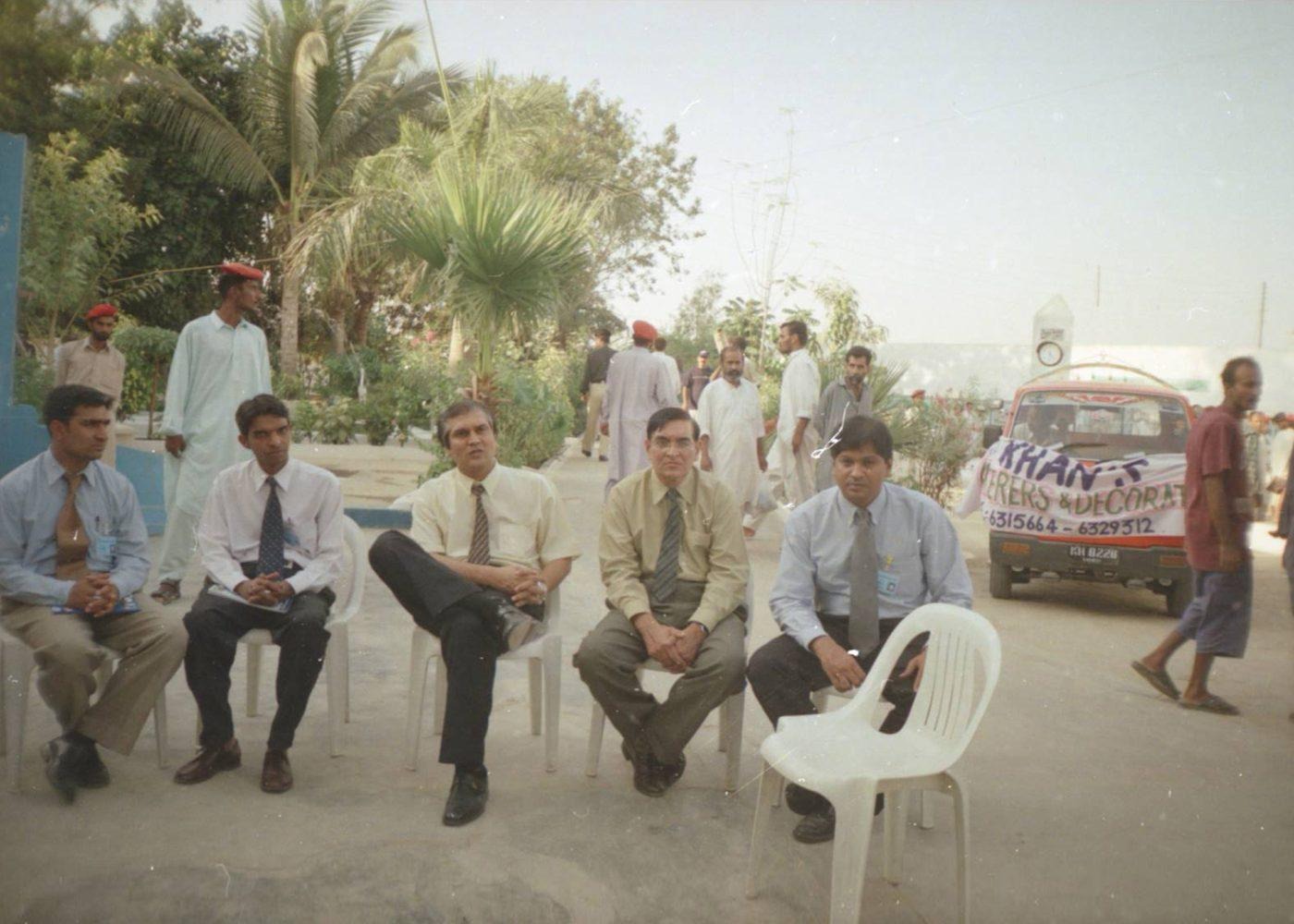
The delegation seated in the courtyard as the day’s programme unfolds.
Working With the System, Not Against It
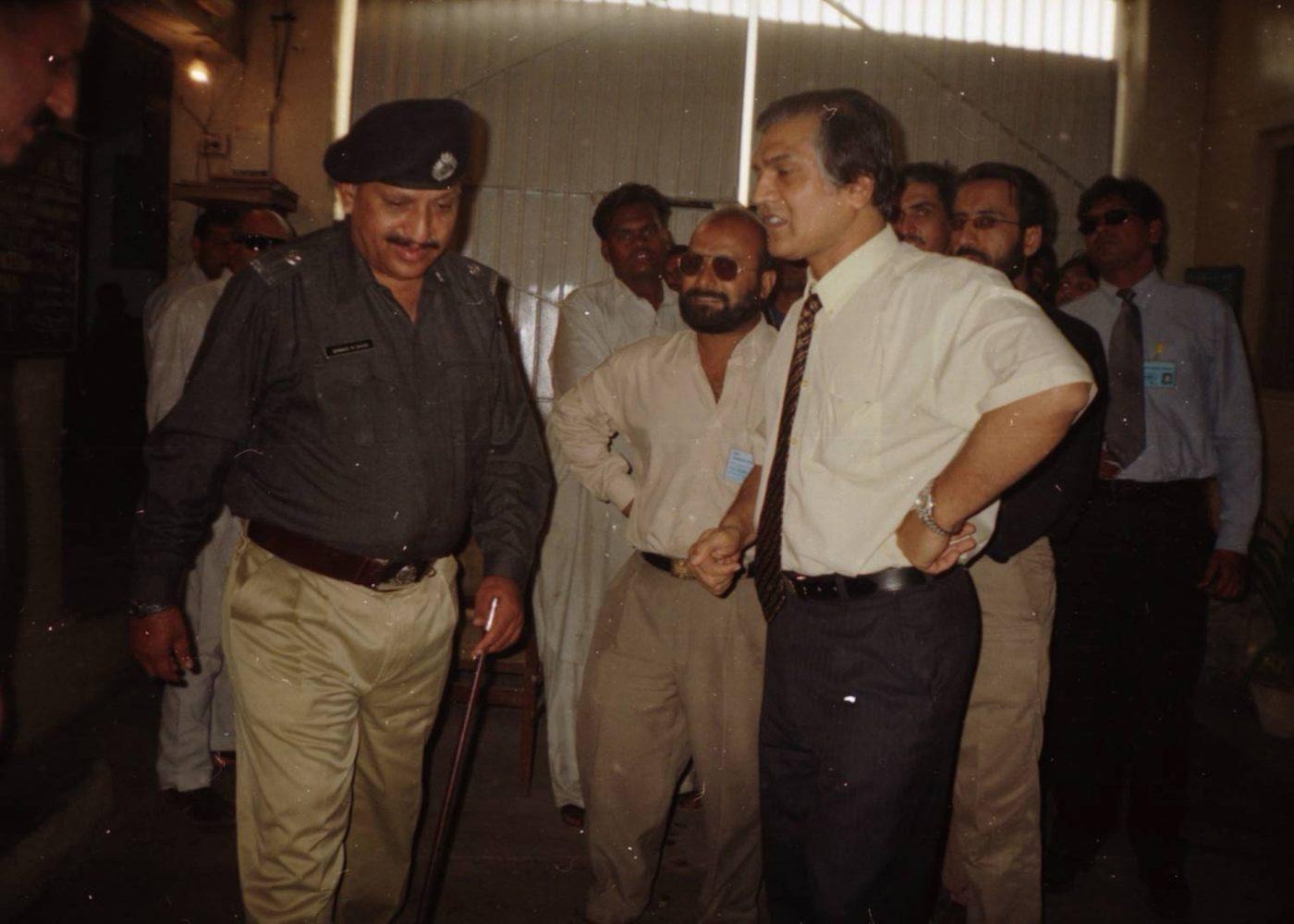
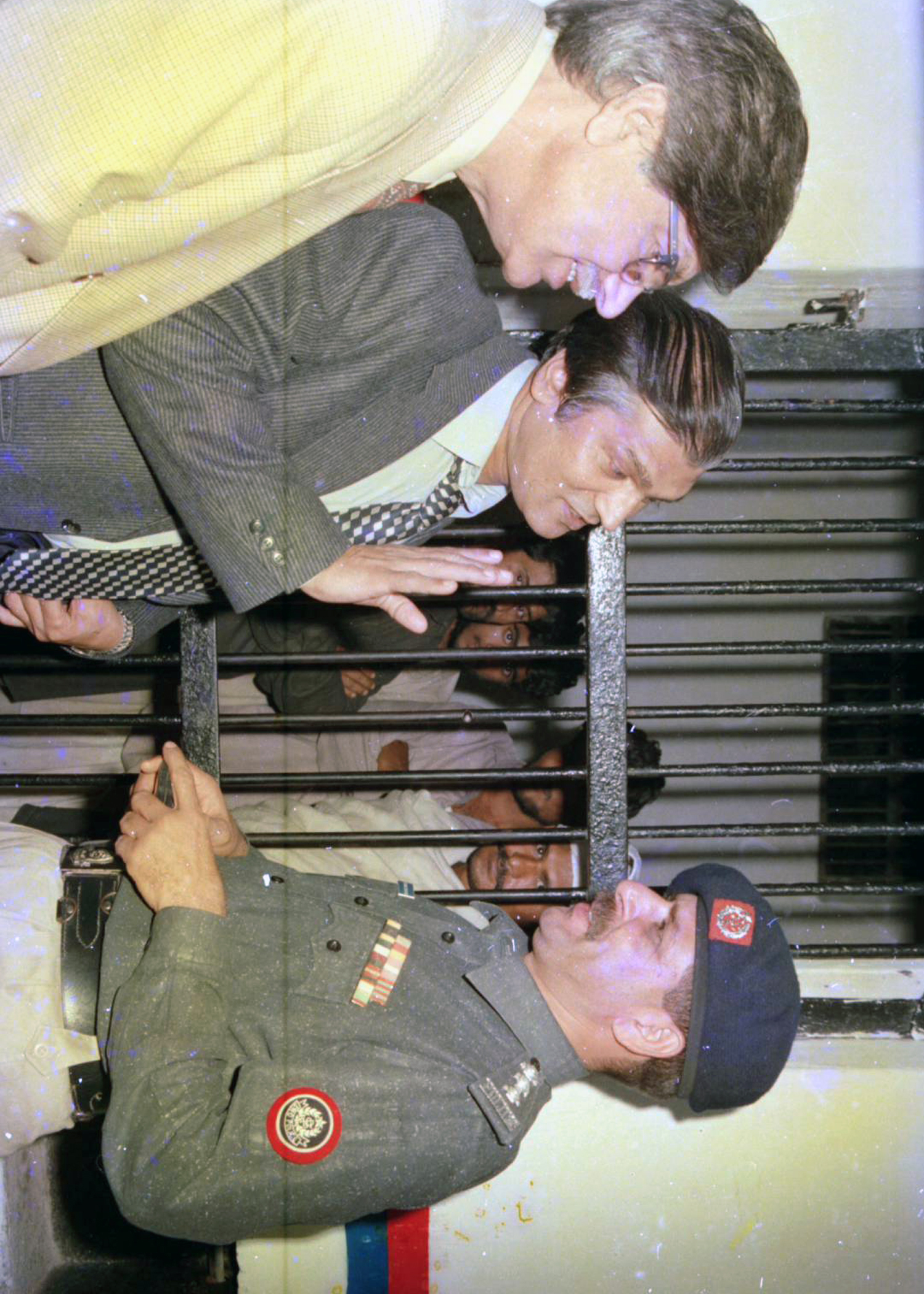
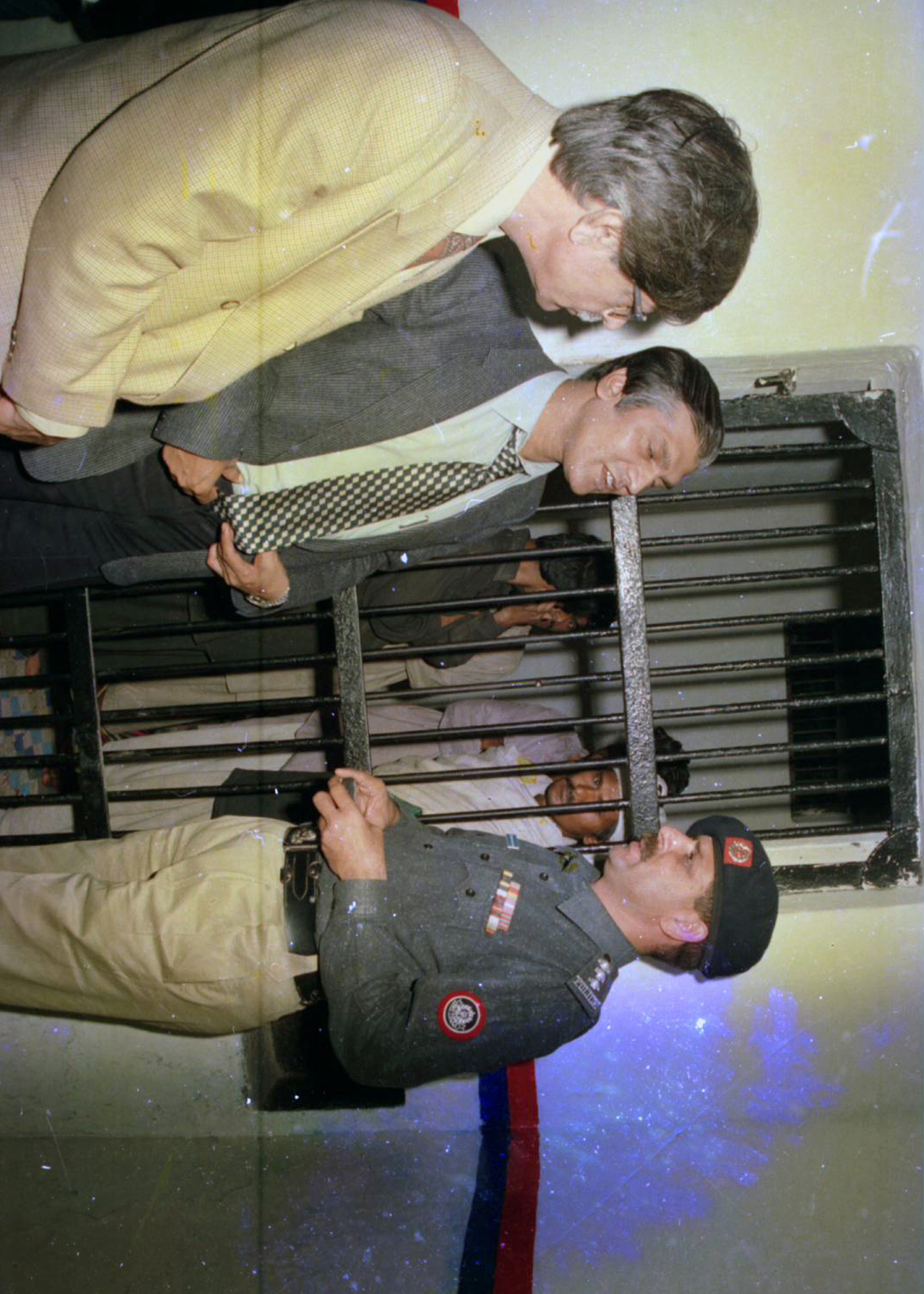
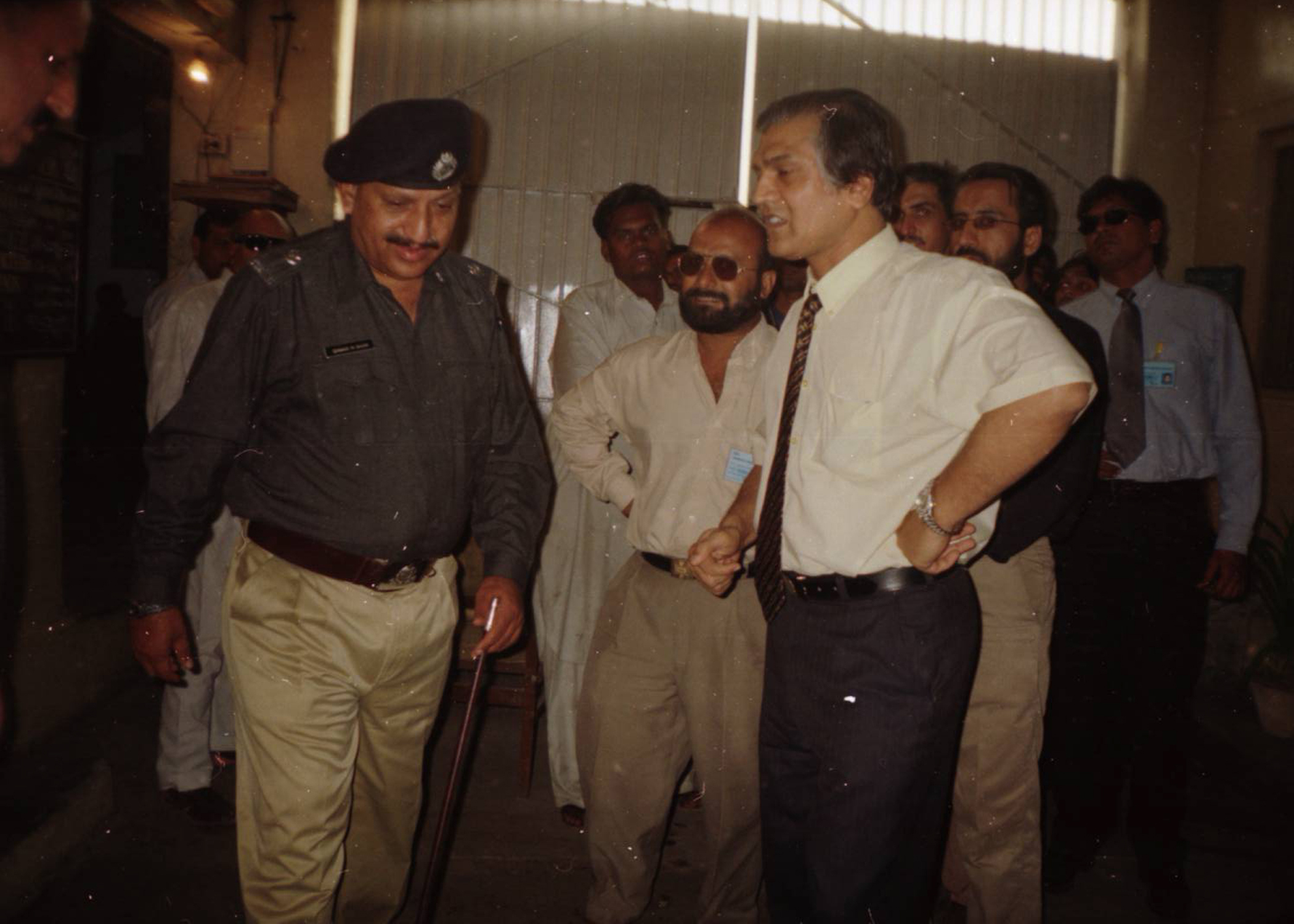
ICOHR CHAIRMAN MUHAMMAD ASLAM ELLAHI in conversation with a senior police officer inside the prison.
One of the quieter successes of the visit was the working relationship between the delegation and the prison administration. In a corridor near one of the inner gates, the lead speaker paused to speak with a senior police officer carrying a swagger stick, while colleagues waited behind them. Both men spoke earnestly. There was no drama in it, only two people from very different parts of the system working out how to make an unusual evening go smoothly.
That cooperation matters. Prison reform in Pakistan has too often been framed as a contest between activists and administrators. The iftar initiative suggested another model, in which civil society and the state share a plan, share a risk and share, to a degree, the credit.
“The administration was not a barrier. When the purpose was clear and the planning was serious, the staff met us more than halfway.”
ICOHR planning team
A Story That Travelled
News of the initiative did not stay inside the prison walls. Reporters from national newspapers and television channels followed the story, as did correspondents for international outlets covering South Asia. Coverage focused on the novelty of the project, the security context in which it took place and the human detail of the day: the iftar pots, the young faces in white caps, the women who came through the gate and left with a sense of having been seen.
Society responded as well. Volunteers offered help. Families of inmates wrote to express thanks. Community leaders and religious scholars described the initiative as consistent with the teachings of compassion and justice that define the holy month. Human rights forums, both in Pakistan and abroad, acknowledged the project as an example of practical, non confrontational advocacy that placed dignity at the centre of the conversation.
“This is what rights work looks like when it leaves the conference room. It is uncomfortable, it is risky, and it is deeply human.”
Human rights forum
“The pictures said more than the press release ever could.”
News reports
The Larger Frame
The visit sat comfortably within a framework that is older than any single project. Article 14 of Pakistan’s Constitution declares that the dignity of man is inviolable. The United Nations Standard Minimum Rules for the Treatment of Prisoners, widely known as the Nelson Mandela Rules, insist that prisoners be treated with the respect due to their inherent dignity as human beings. Pakistan’s own prison rules speak, in their way, to the same principle.
Principles, however, are only as strong as the people who carry them out. An iftar is not a reform. It does not change a sentence, reduce overcrowding or rewrite a law. What it does is remind everyone involved, the inmate, the guard, the administrator and the visitor, that the person on the other side of the wall is still a person. That reminder is where every serious reform begins.
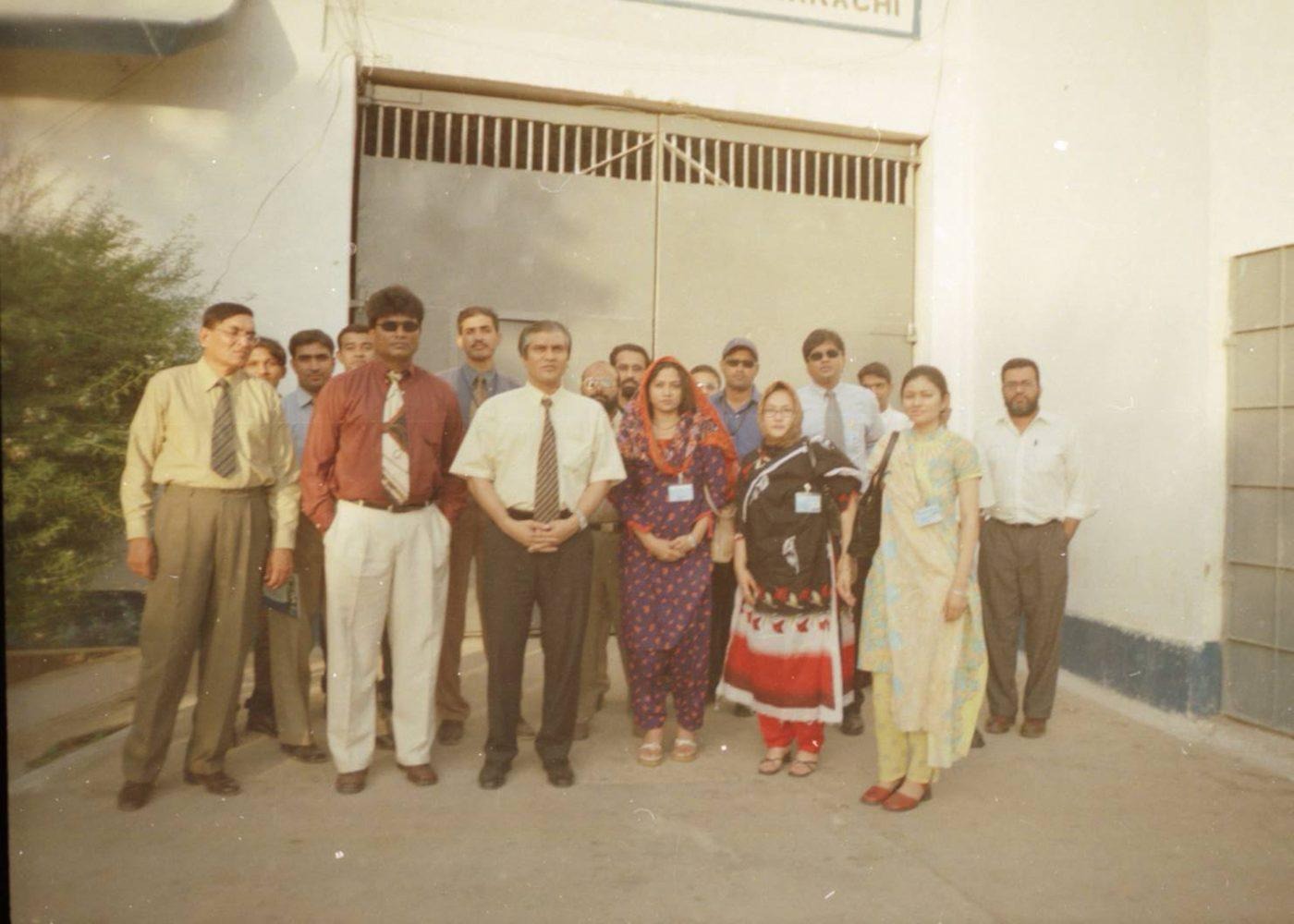
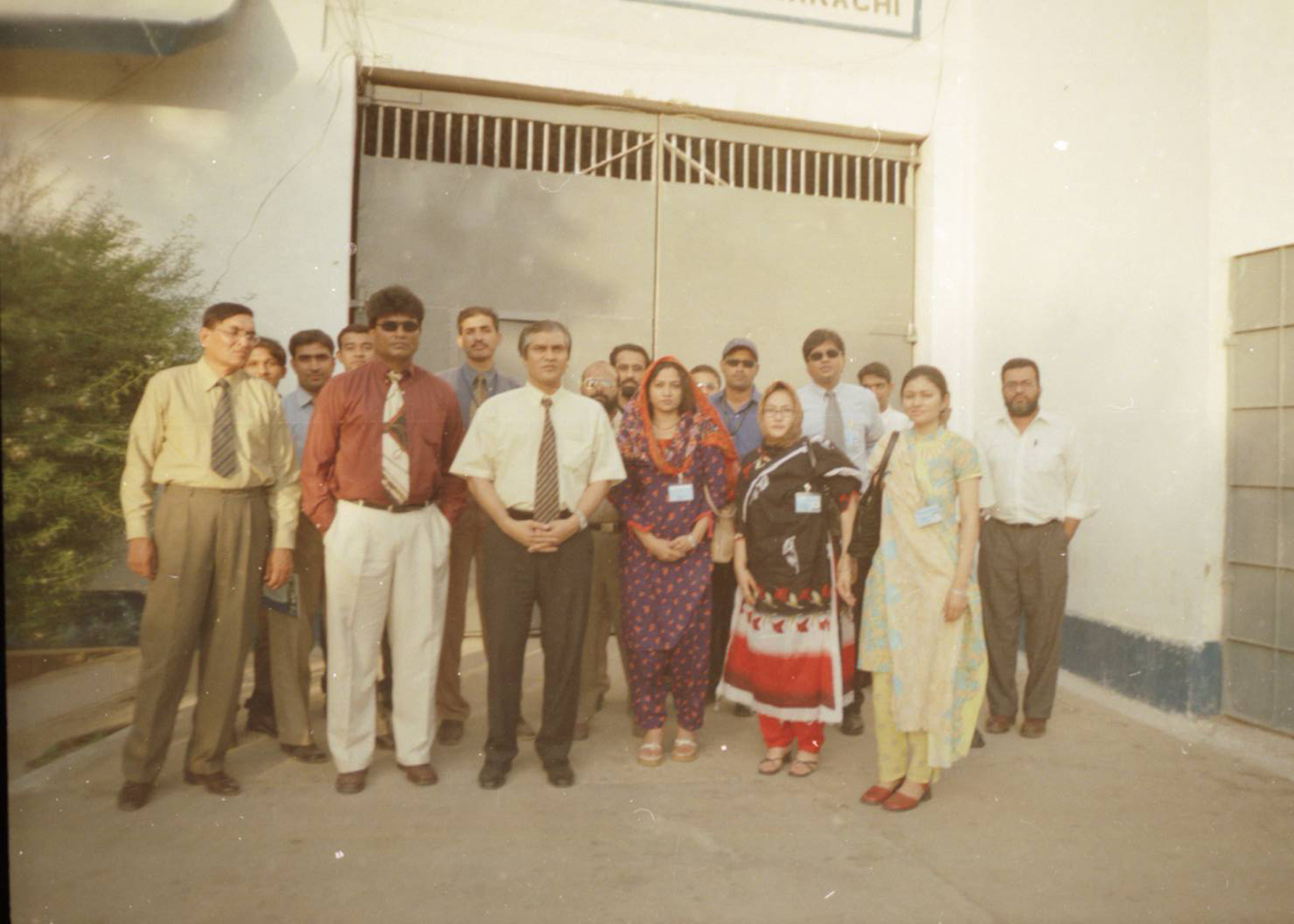
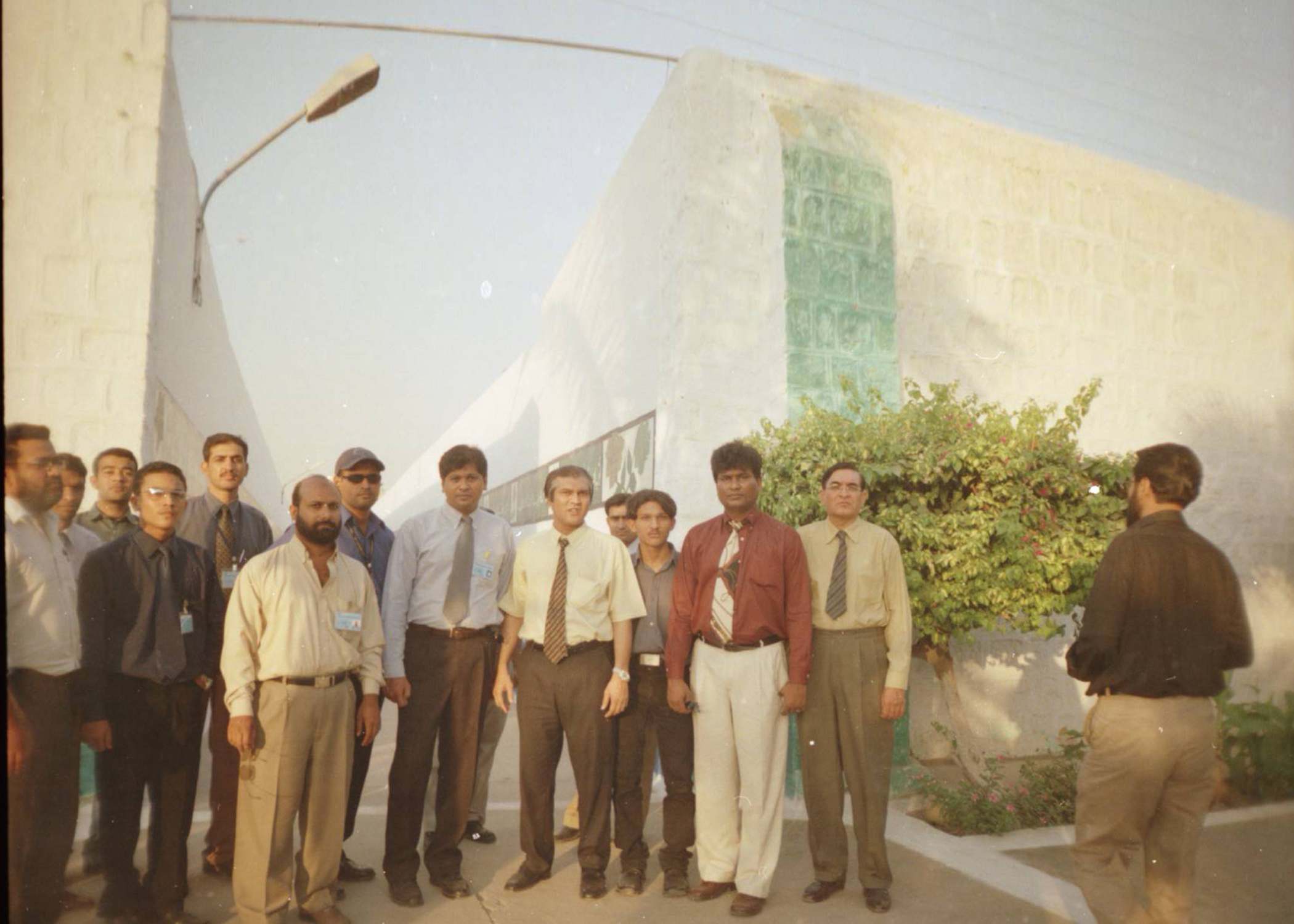
The full ICOHR delegation, including women members and volunteers, gathers for a group photograph outside the prison gate.
From Legacy to Impact
When the day ended, the vehicles left the way they came. The pots were empty, the chairs were folded, and the murals were quiet again in the last light. In the days that followed, the team did what serious organisations do: it reviewed what worked, recorded what did not and started thinking about how to make the next visit safer, larger, and more useful.
What the project leaves behind is not only a set of photographs or a stack of press clippings. It is a precedent. With some 10,000 inmates reached, it shows that a human rights body can enter one of the most sensitive environments in the country, work with the authorities, manage genuine danger and come out with something that matters to the people inside and to the public outside.
That is what ICOHR means when it speaks of moving from legacy to impact. A legacy is what an organization inherits. Impact is what it chooses to do with it.
ICOHR: From Legacy to Impact.

© 2026 International Commission On Human Rights. All rights reserved.
 DONATE