helpline:+92 21 99332615 | +92 21 99332617
International Commission on Human Rights
ENVIRONMENT · CLIMATE ACTION · THATTA, SINDH
Plant for the Plant
How the International Commission on Human Rights (ICOHR)
Is Sowing a Greener Future, One Sapling at a Time
ICOHR: From Legacy to Impact.
Field Report ICOHR | Ajlal Haider Malik | THATTA, SINDH
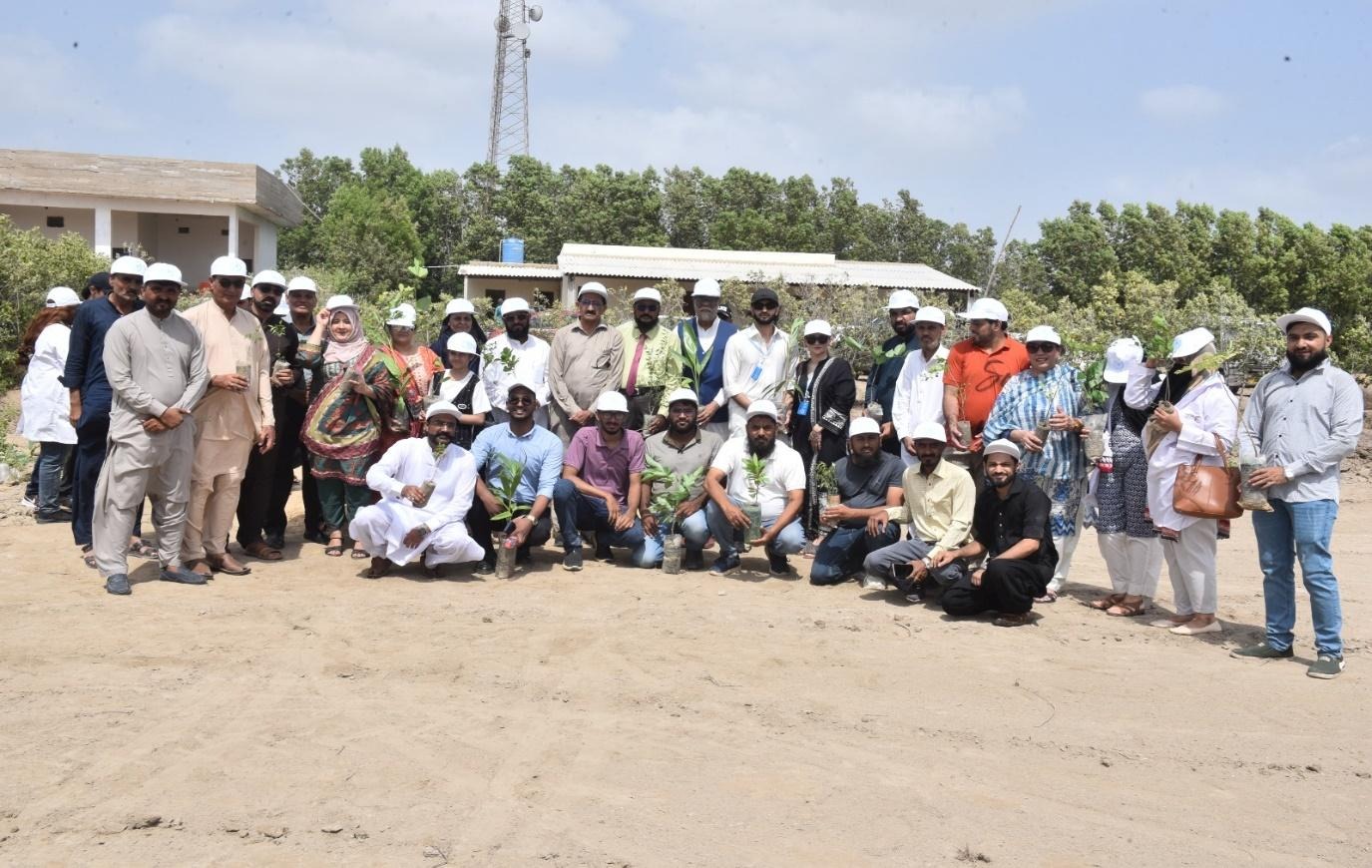
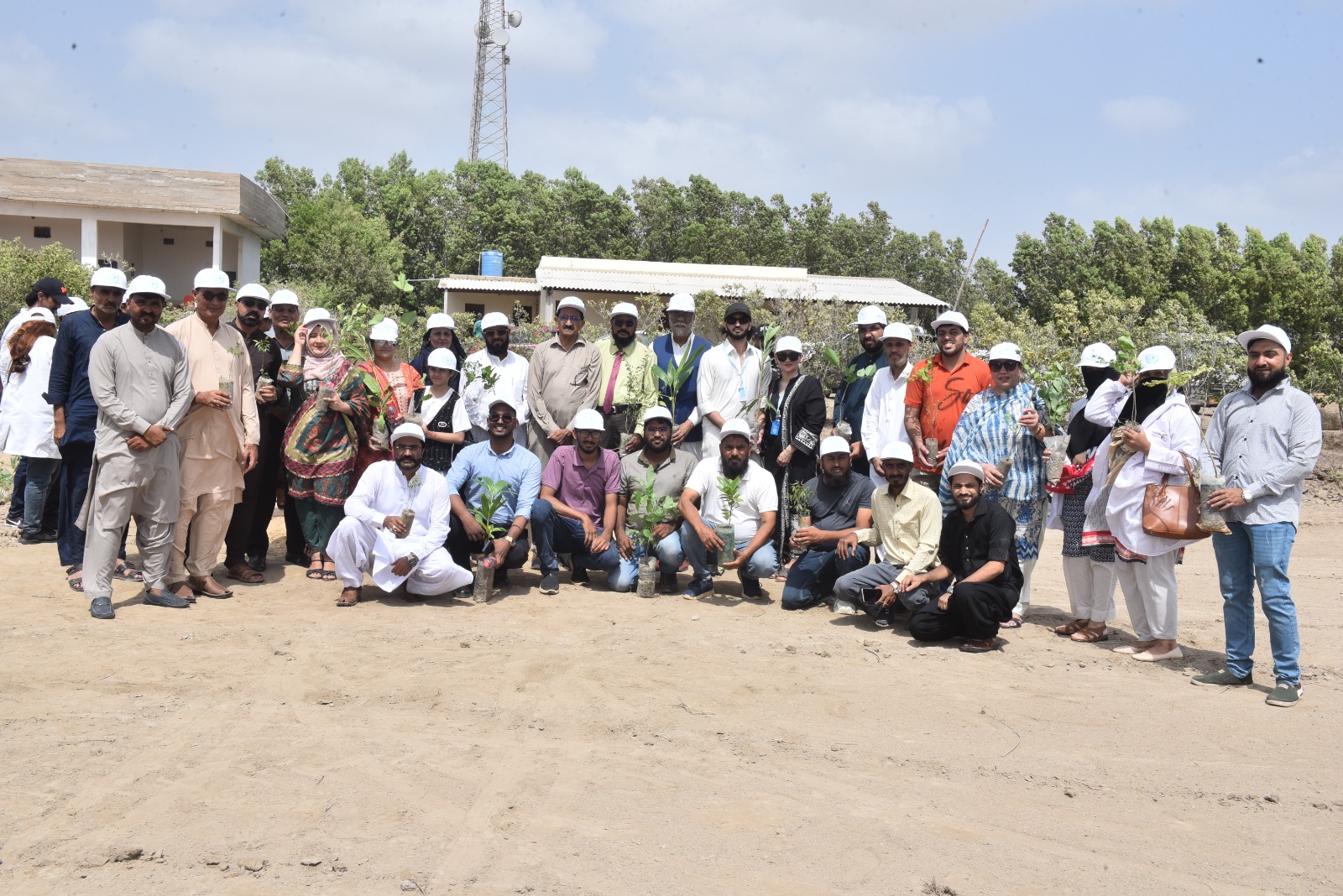
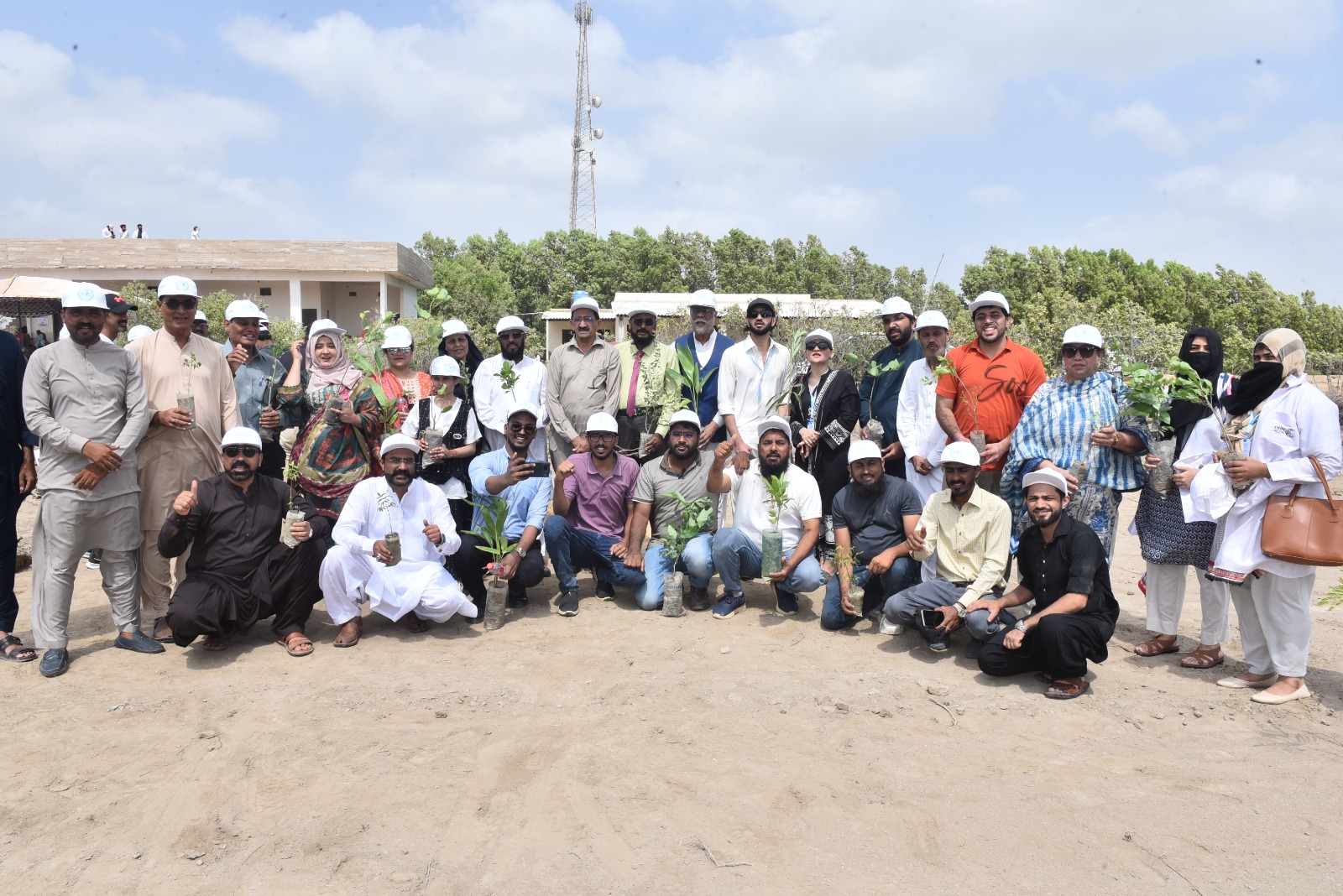
Volunteers and officials of the International Commission on Human Rights gather around a freshly planted sapling during the Plant for the Plant ceremony in Thatta, Sindh.
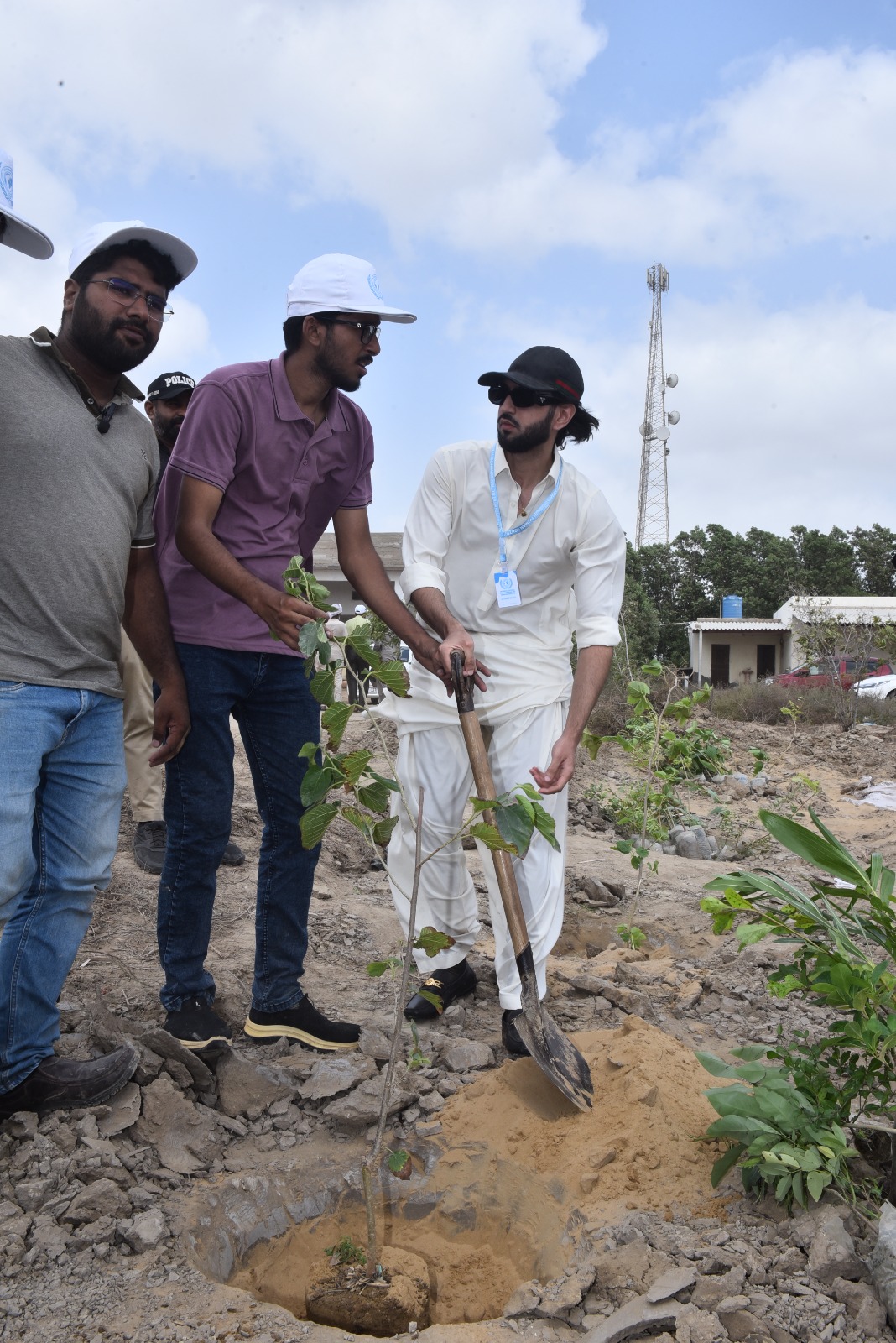
There is a particular kind of quiet that settles over a piece of reclaimed earth just before a tree goes into it. In Thatta, on a morning when the Sindh sun had already begun to press down on the coastal plain, that quiet was broken by the scrape of a spade, the laughter of volunteers passing saplings hand to hand, and the steady voice of a man who has spent decades speaking for the voiceless, now speaking for the trees as well. Muhammad Aslam Ellahi, Chairman of the International Commission on Human Rights, knelt in the sand alongside doctors, students, community elders and local police, and planted the first of what would become more than fifteen hundred trees in a single pilot campaign.
The event, titled Plant for the Plant, was not staged as a photo opportunity, though the cameras were certainly present. It was conceived, according to ICOHR organisers, as the opening chapter of what the Commission hopes will become one of the largest community driven reforestation movements in the country, a movement built not on government decree but on the willingness of ordinary citizens to put a shovel in the ground.
A Nation Losing Its Shade
Pakistan's environmental predicament has been documented in report after report, by domestic researchers and international bodies alike. Green cover has thinned across decades of urban expansion. Cities swelter under heat that arrives earlier each year and lingers longer. Air quality indices in major urban centres routinely climb into ranges that would trigger public health warnings elsewhere in the world. Water tables fall. Biodiversity retreats to ever smaller pockets of undisturbed land.
It is against this backdrop that ICOHR has chosen to frame tree plantation not as an environmental afterthought but as a human rights issue in its own right. The reasoning offered by the Commission is straightforward and, arguably, difficult to dispute. A community denied clean air, tolerable temperatures and a stable ecosystem is a community denied the basic conditions of a dignified life. Trees, in this framing, are not decoration. They are infrastructure for survival.
The Thatta Pilot: Fifteen Hundred Trees and Counting
Thatta was chosen as the initiative's starting point for reasons both practical and symbolic. The district carries a long and layered history, home to ancient necropolises and centuries of Sindhi civilisation, yet it also faces the familiar pressures of coastal erosion, salinity and dwindling vegetation that have come to define much of Sindh's rural landscape. For ICOHR's field teams, it offered an ideal testing ground, a place where the benefits of plantation could be measured against real and immediate need.
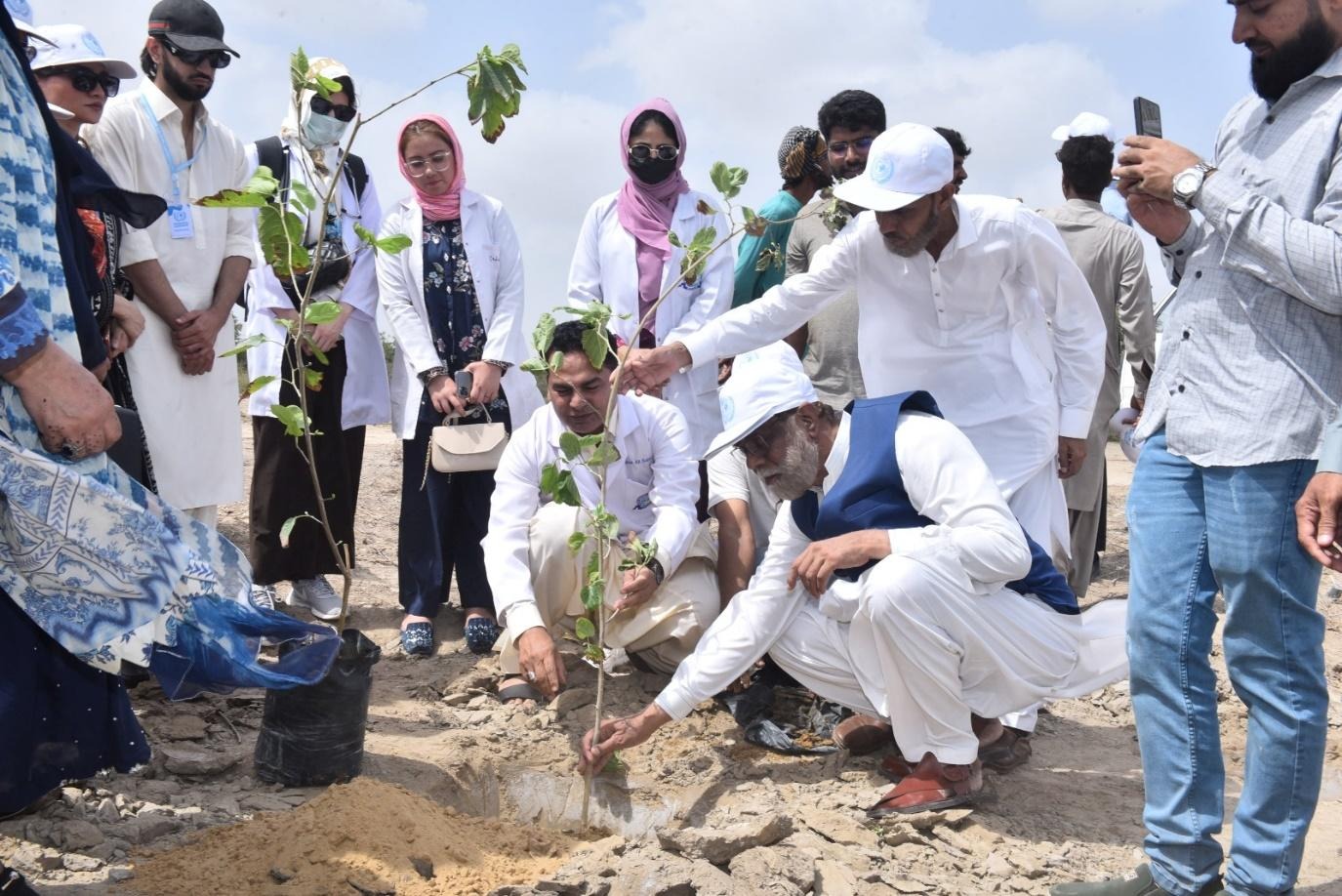
Volunteers, doctors and community members pose with saplings ahead of planting, one of many group formations that marked the day's proceedings.
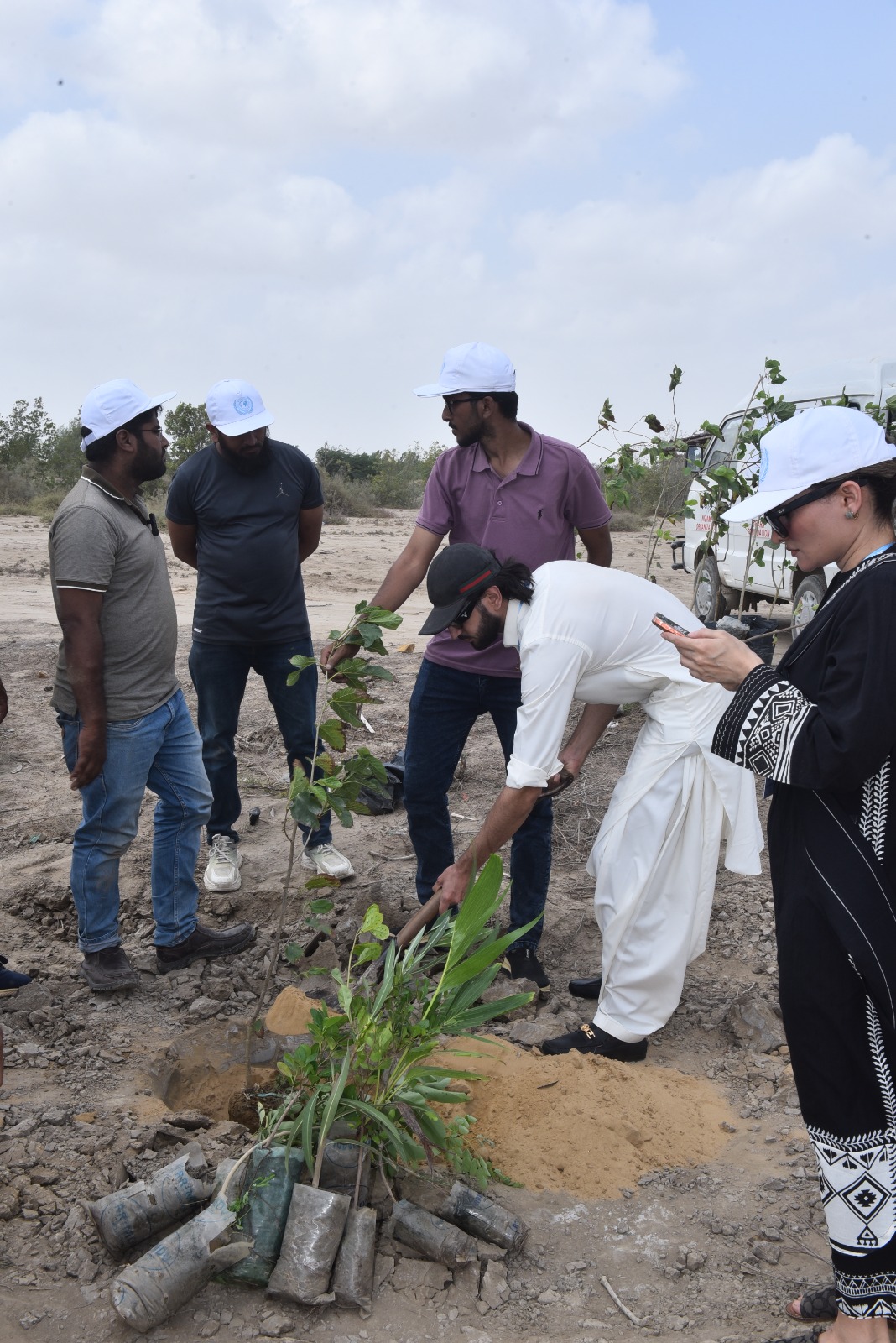
Over the course of the campaign, volunteers dug into rocky, sunbaked soil, carried water in bottles and cans to nourish newly placed roots, and worked alongside local residents who offered guidance on which patches of ground could sustain new growth. Saplings, many still wrapped in the black nursery bags in which they had travelled from local nurseries, were carried across uneven terrain by hand, sometimes by schoolchildren, sometimes by elders in traditional dress, sometimes by young professionals who had taken the day off work to be part of something they described, more than once, as larger than themselves.
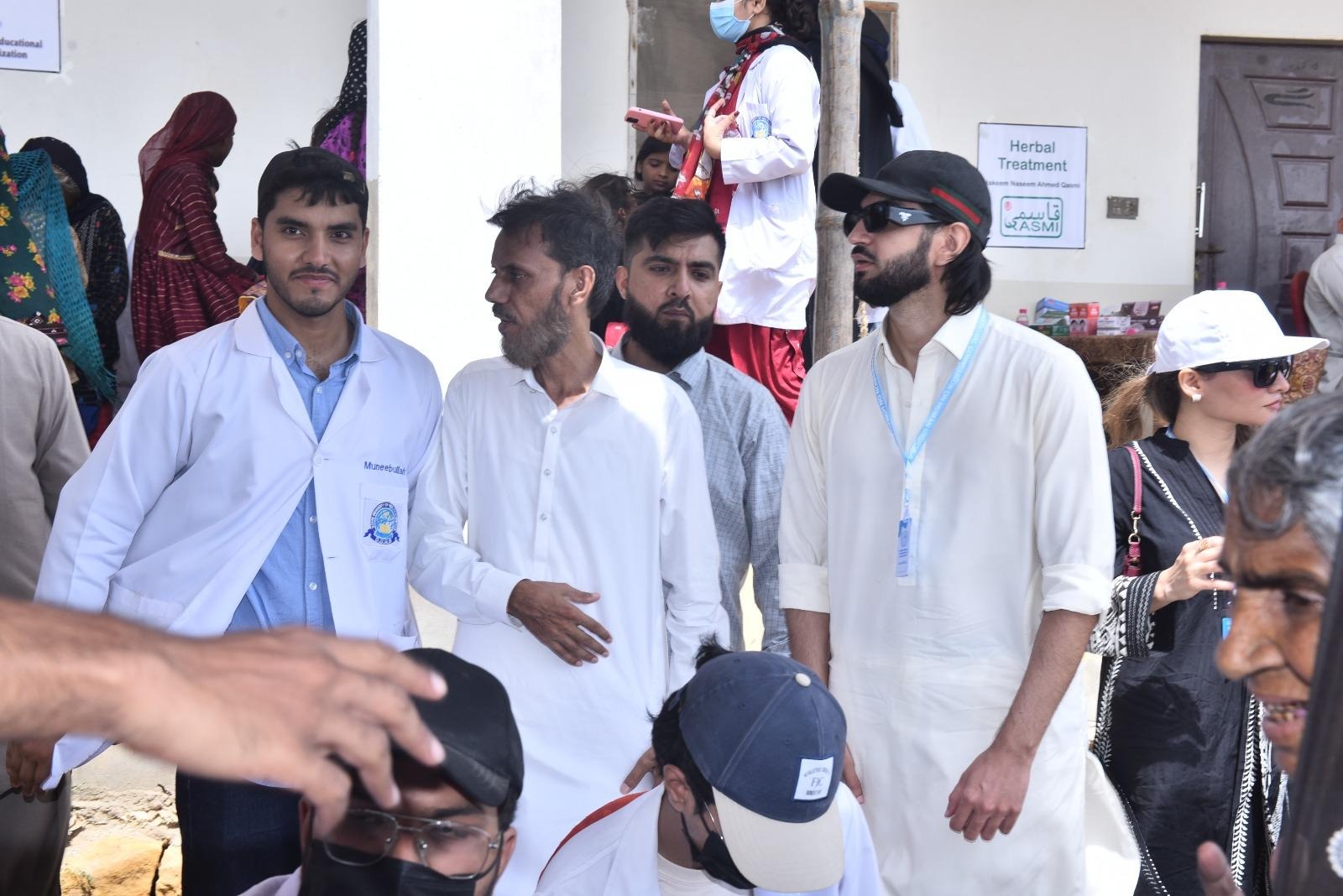
Medical volunteers in white coats, several bearing the insignia of local welfare hospitals, were a visible presence throughout, a reminder that ICOHR's activities in the region extend well beyond a single afternoon of plantation and into sustained community health and welfare work. Their participation lent the day an unusual texture, part environmental campaign, part community health outreach, part civic gathering.
Faces Behind the Saplings
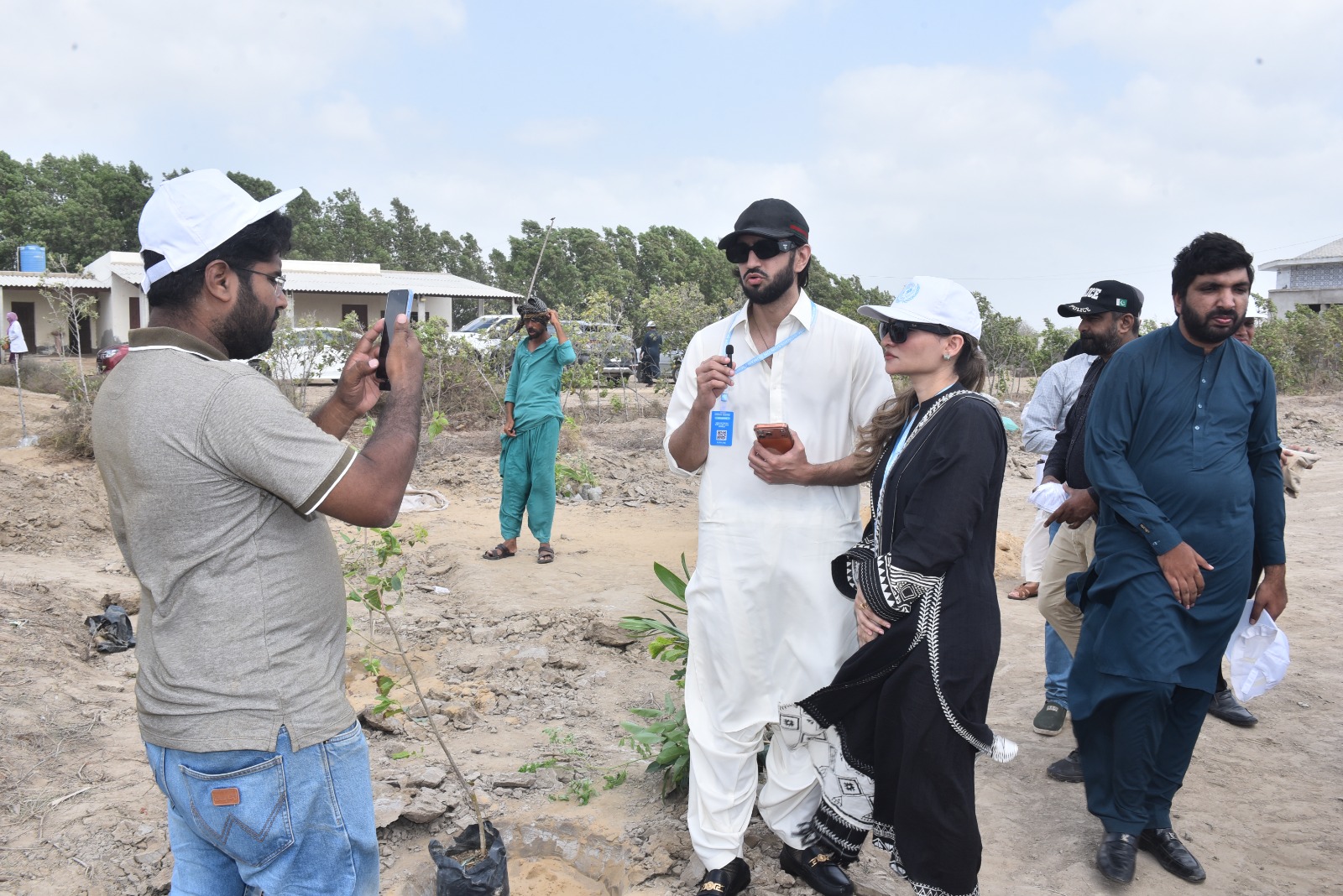
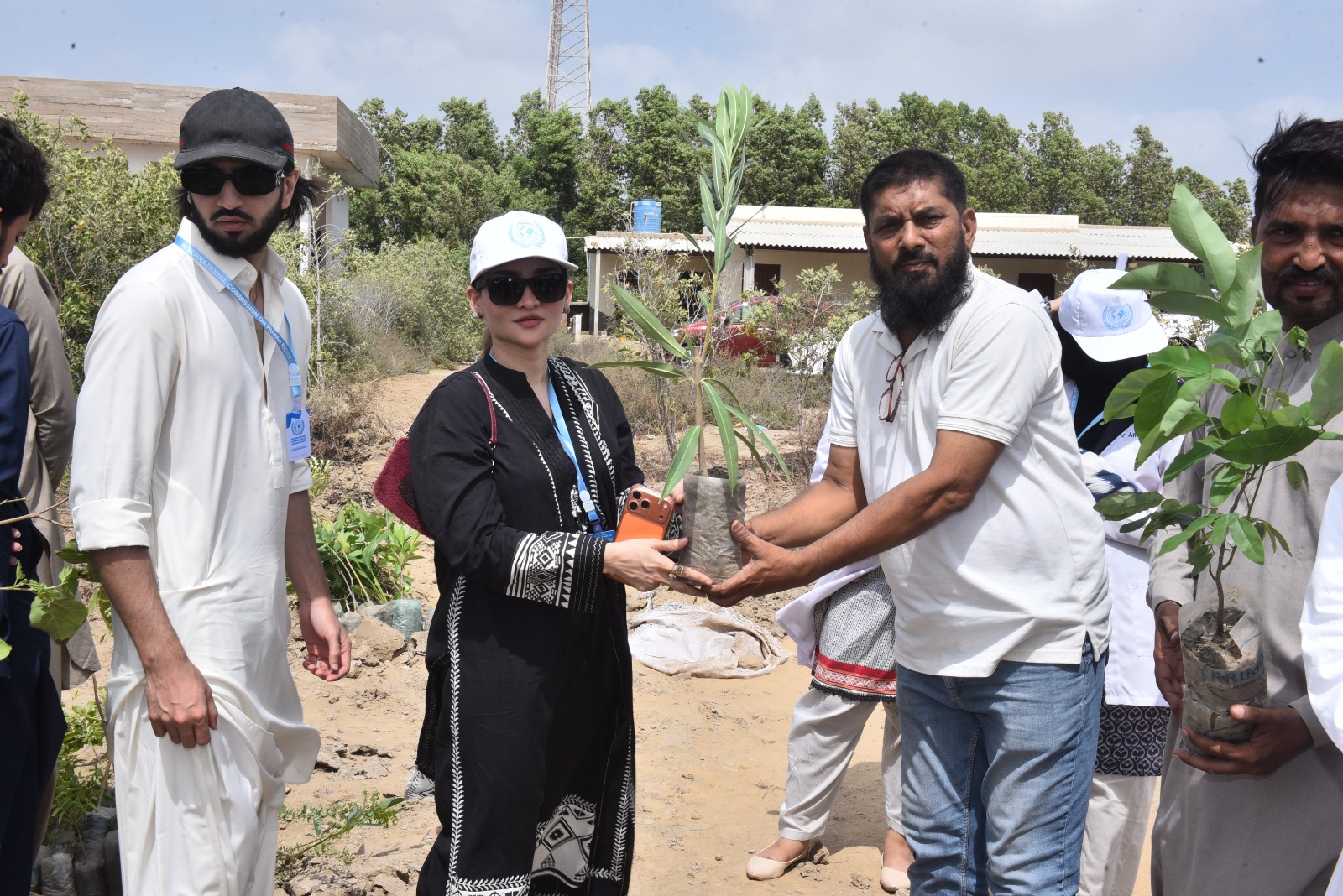
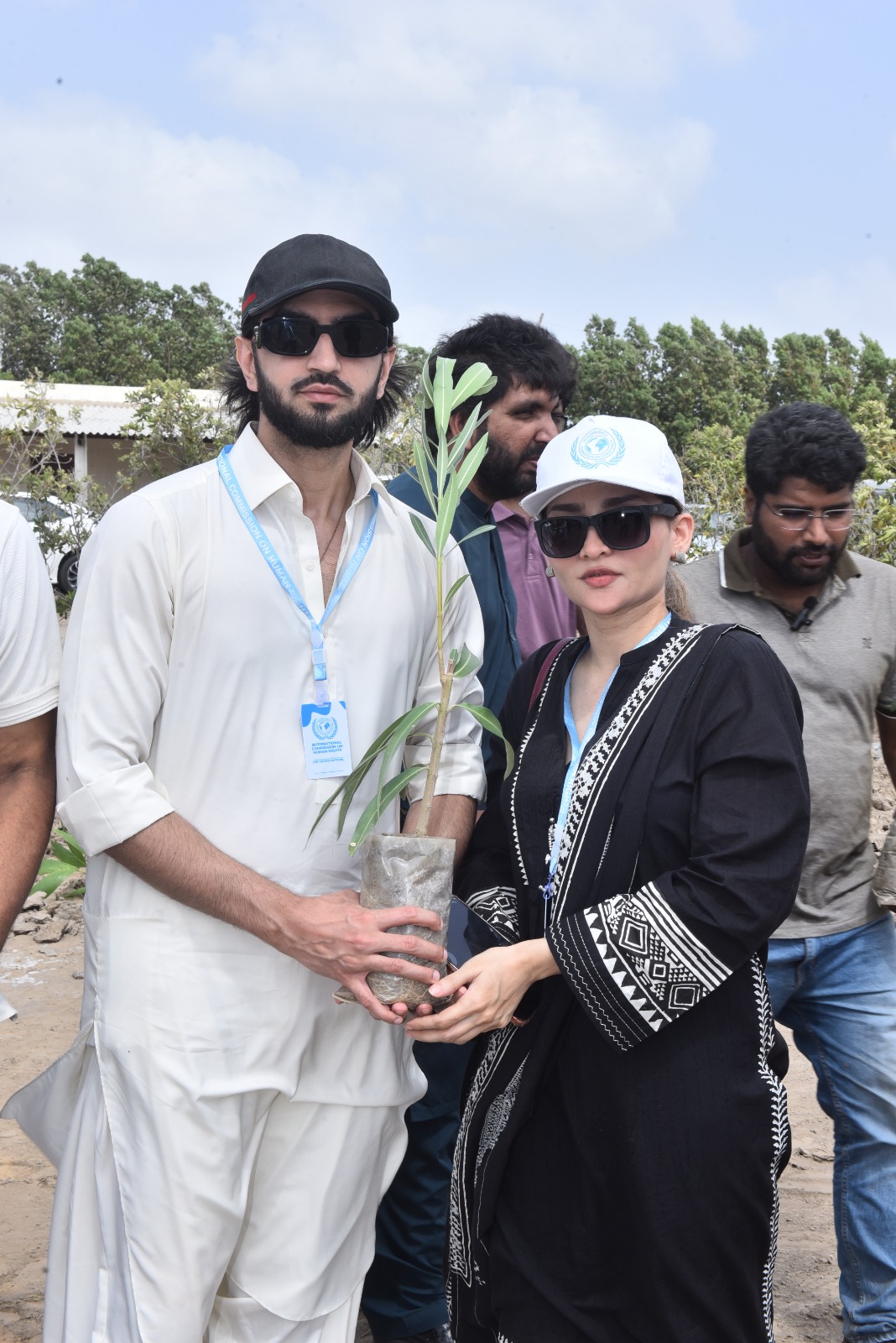
Among those present was Madam Yusra Ellahi, President of the International Commission on Human Rights, easily recognisable in a black shalwar qameez and the white United Nations style cap issued to every volunteer that morning. She moved steadily between planting sites throughout the day, exchanging saplings hand to hand with local farmers, pausing to speak with residents about the trees best suited to the region's brackish soil, and standing beside community elders as the first rows of green took hold in the sand.
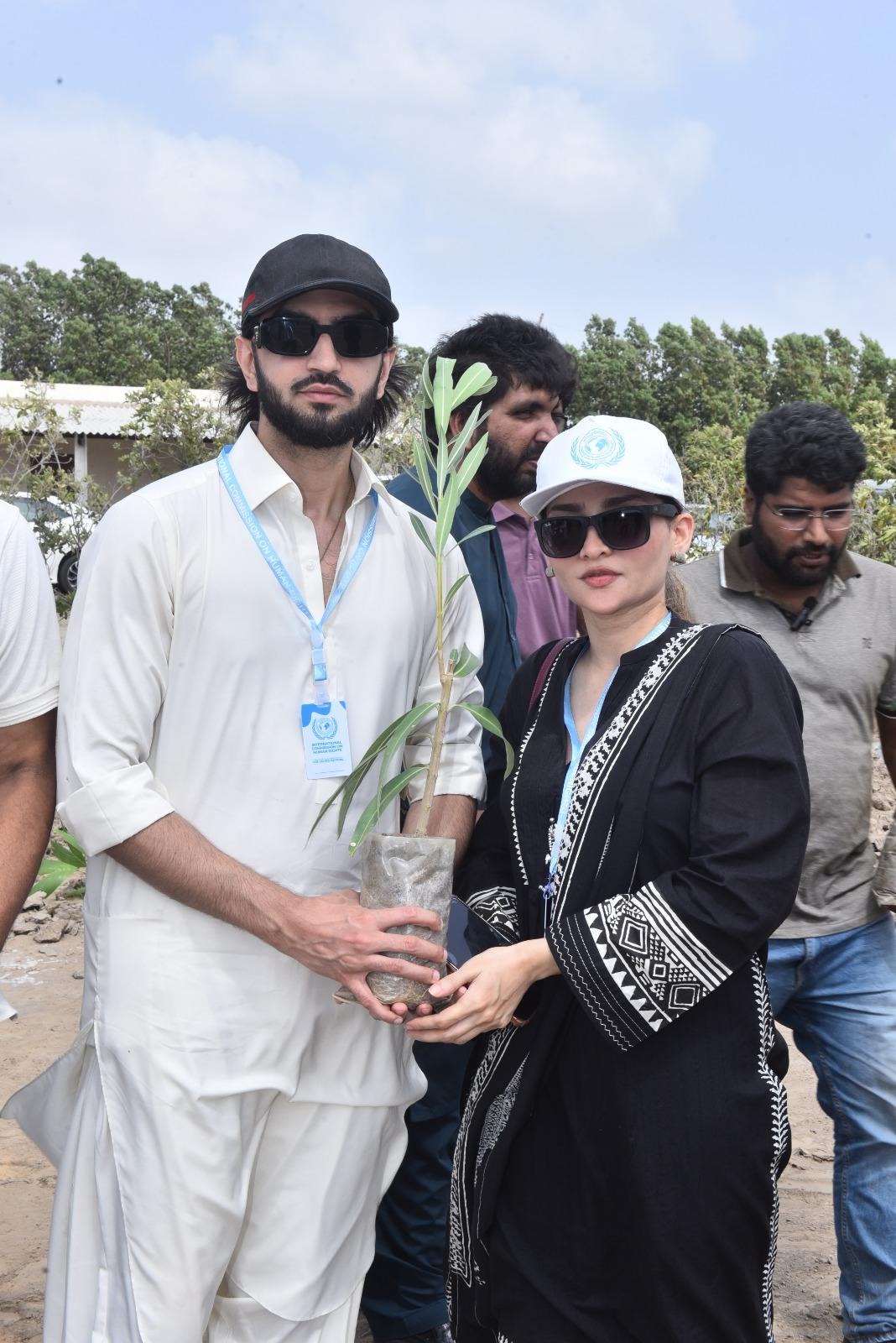
Madam Yusra Ellahi, President of ICOHR, receives a sapling from a young volunteer during the plantation drive.
Her presence, organisers said, was not ceremonial. Attendees described her taking a direct hand in coordinating logistics on the ground, from ensuring saplings reached the correct planting zones to checking in with the young volunteers who had travelled from Karachi to take part. It is this kind of hands on involvement, several volunteers noted afterward, that has come to define ICOHR's field culture more broadly, a leadership style measured less by speeches and more by whether the person giving instructions is also willing to kneel in the dirt.
A warm exchange between ICOHR volunteers and a local resident of Thatta, one of many handshakes that marked the community's welcome of the plantation drive.
Local residents, for their part, extended a welcome that several volunteers described as overwhelming in its warmth. Community elders offered guided tours of the area, pointed out which patches of ground had once supported orchards before decades of neglect and changing weather patterns thinned them out, and in several cases joined the plantation lines themselves, taking spades in hand alongside visitors from the city.
Not Just a Day of Planting
ICOHR has been careful to describe Plant for the Plant not as an event but as the opening phase of a structured, long term programme. The Commission's own project documentation outlines an approach built around five stages, plant, protect, monitor, grow and restore, a cycle intended to move plantation drives away from the one day photo op model that has drawn criticism in other national campaigns and toward something closer to genuine ecological stewardship.
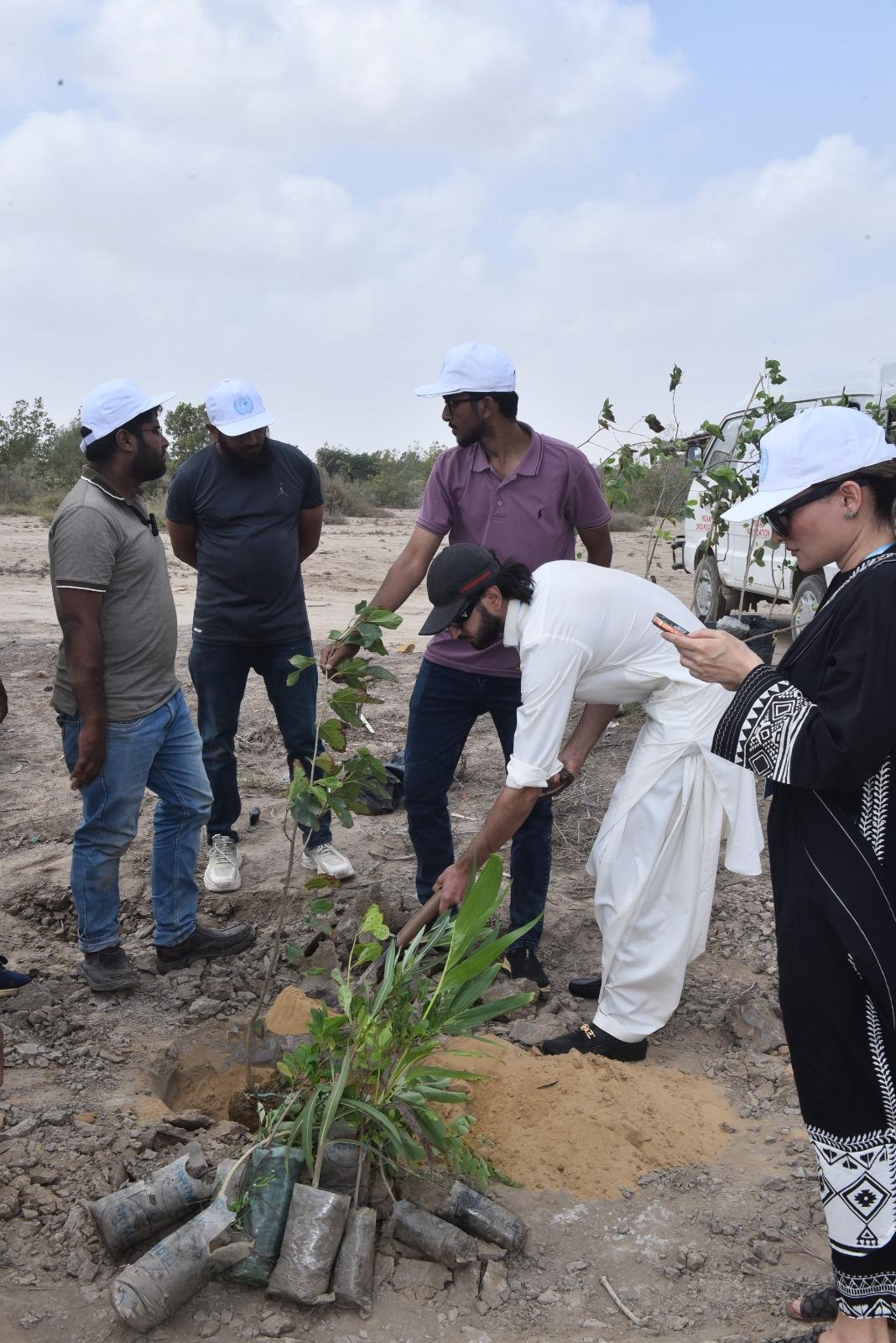
Two young volunteers’ water a newly planted sapling, part of the community tree guardian effort that ICOHR hopes will outlast the plantation event itself.
Central to that approach is what ICOHR calls its Community Tree Guardians initiative, under which local volunteers, often the same residents who host the plantation drives on their own land, take on responsibility for watering and protecting saplings in the months after volunteers have returned to their home cities. Organisers say they intend to build a simple digital mapping system to record plantation sites, species and survival rates over time, an approach inspired in part by international environmental movements such as Plant for the Planet, from which the Thatta campaign borrows both its structure and, more loosely, its name.
The Commission has also floated plans for a Plant a Tree at Your Home campaign encouraging citizens to plant in their own gardens and compounds, alongside outreach to schools and universities intended to draw young people into the wider environmental effort. Ambitious in scope, the plans nonetheless rest on the same premise that carried the Thatta pilot from concept to fifteen hundred trees in the ground, that environmental restoration works best when it is owned by the community it serves rather than delivered to it from outside.
A Ceremony Rooted in Community
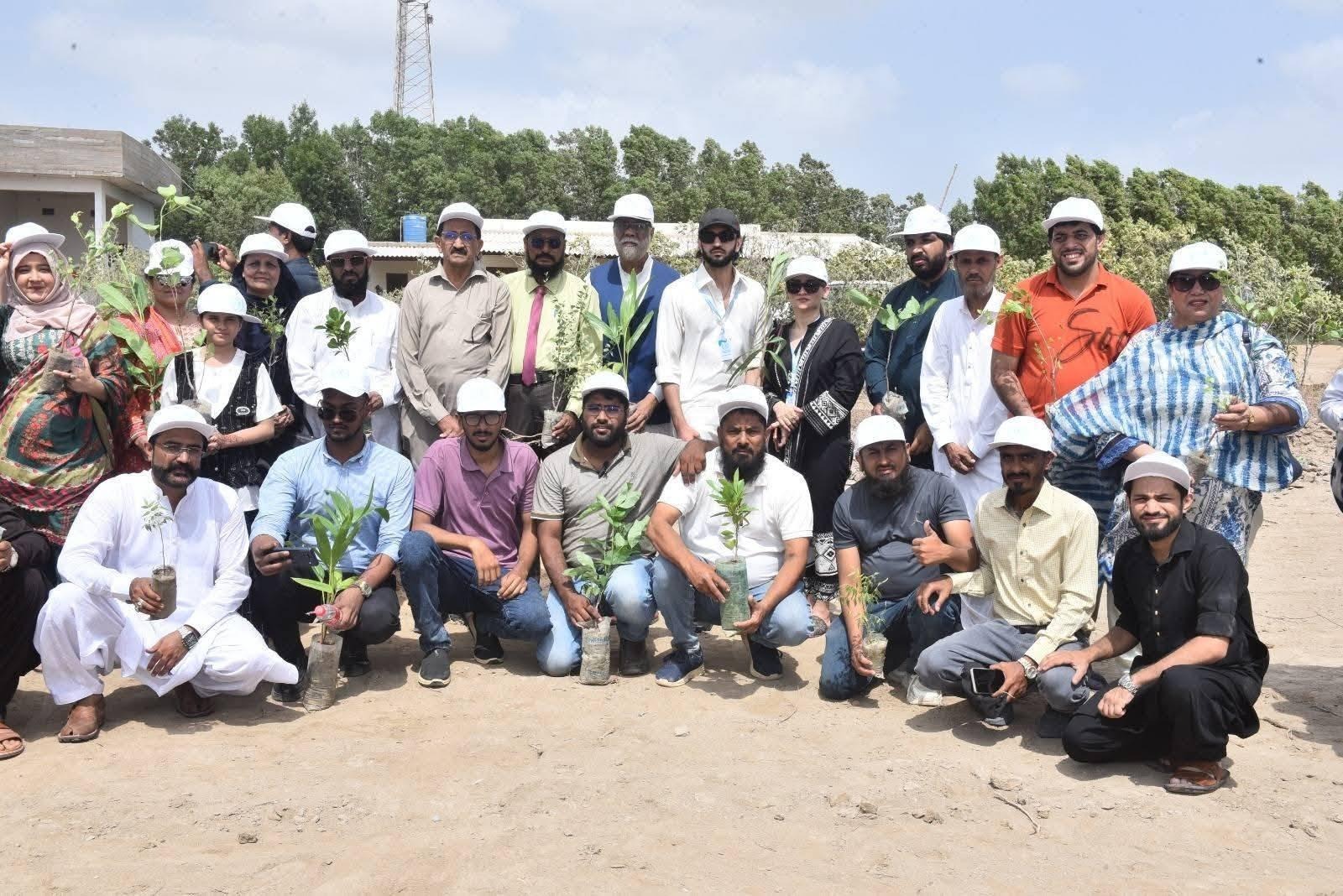
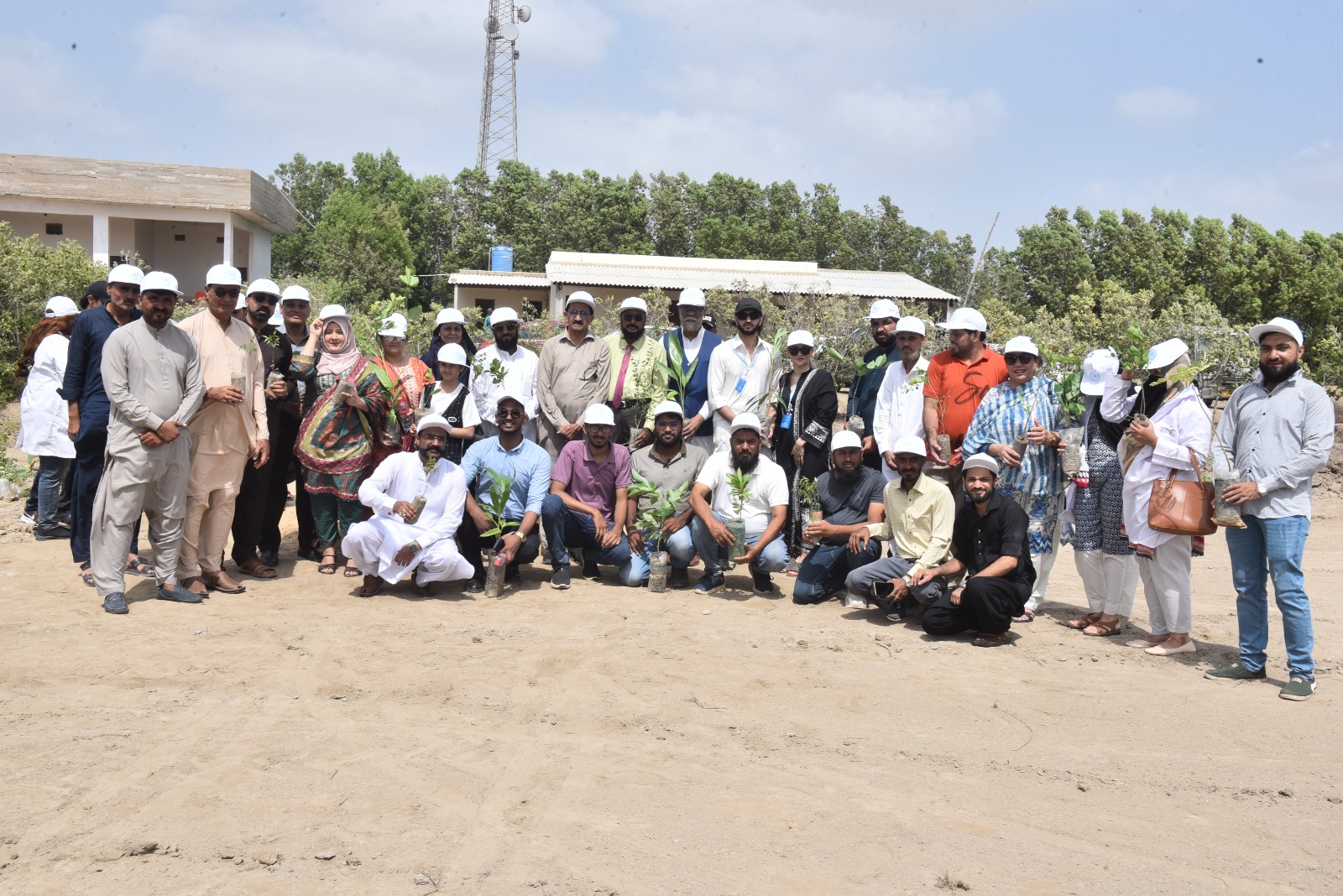
Volunteers, medical staff and community members gather for a group photograph beside the day's completed plantation plot.
By early afternoon, the loose rows of newly planted saplings had begun to take on the appearance of a young orchard, however modest. Volunteers gathered for a series of group photographs beneath a sky that had shifted from clear blue to a gathering haze of white cloud, a fitting backdrop for a project concerned, at its core, with the climate overhead. There was applause, there was tea shared from communal flasks, and there was the particular satisfaction that seems to accompany physical labour undertaken for a visible and lasting purpose.
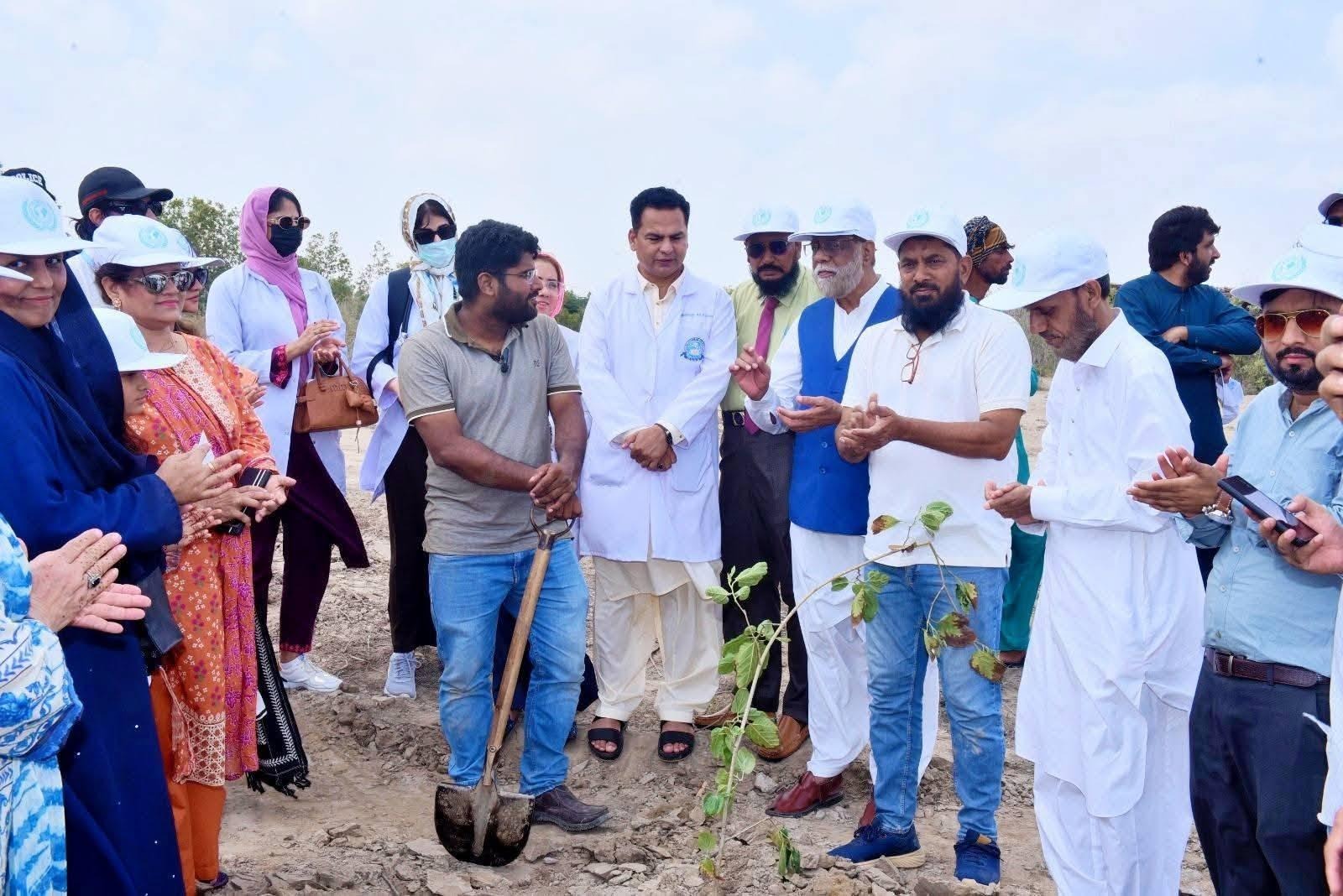
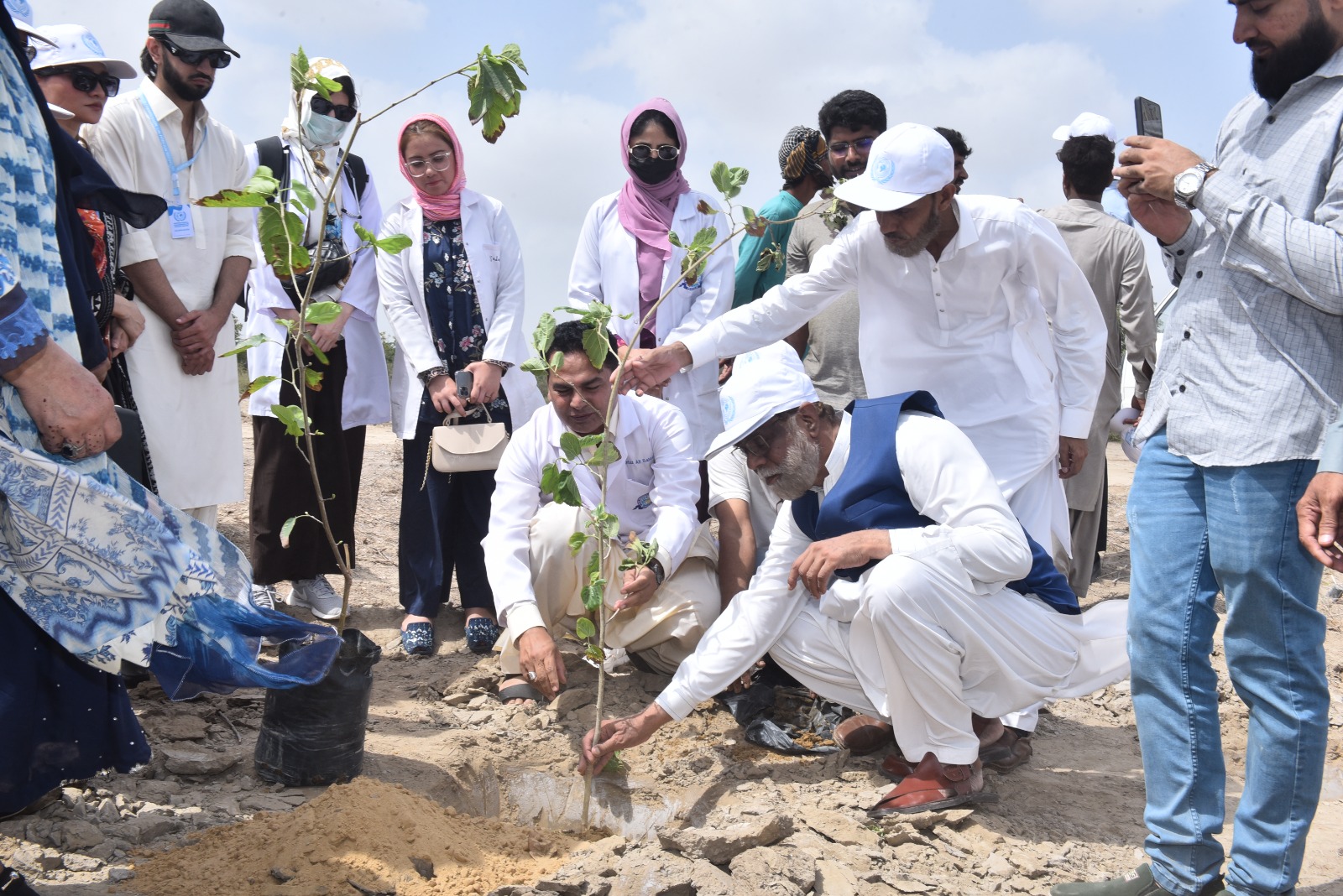
Chairman Nizami Health And Educational Welfare Organization Dr Syed Mehboob Hassan Nizami applauds as a sapling is set into the ground during the closing stages of the ceremony.
Local police, present for security throughout the day, were seen at several points assisting with logistics rather than merely observing from the perimeter, while officials from local welfare institutions used the occasion to discuss expanding herbal treatment and health awareness camps in tandem with future plantation visits, a pairing organisers said reflected ICOHR's broader belief that environmental and human welfare cannot be meaningfully separated.
Appreciation From Media, Society and Human Rights Forums
Word of the Thatta campaign travelled quickly beyond the immediate area. In the days following the event, ICOHR received messages of appreciation from local community councils, welfare associations and several regional media outlets who covered the plantation drive as an example of grassroots climate action carried out with minimal fanfare and maximum community involvement. Civil society figures in Karachi and Thatta alike were quoted describing the initiative as a welcome departure from token environmental gestures, noting in particular the Commission's insistence on community led maintenance rather than a single day of plantation followed by neglect.
International human rights observers who follow ICOHR's broader body of work, which spans advocacy on orphan welfare, cultural preservation and diplomatic engagement, were similarly positive, framing the plantation initiative as a natural extension of the Commission's human centred approach. Several noted that linking environmental restoration explicitly to human rights language, a right to clean air, a right to a liveable climate, represents a growing and increasingly credible trend within international rights advocacy, one that ICOHR appears to be embracing early and deliberately.
Toward a Billion Trees
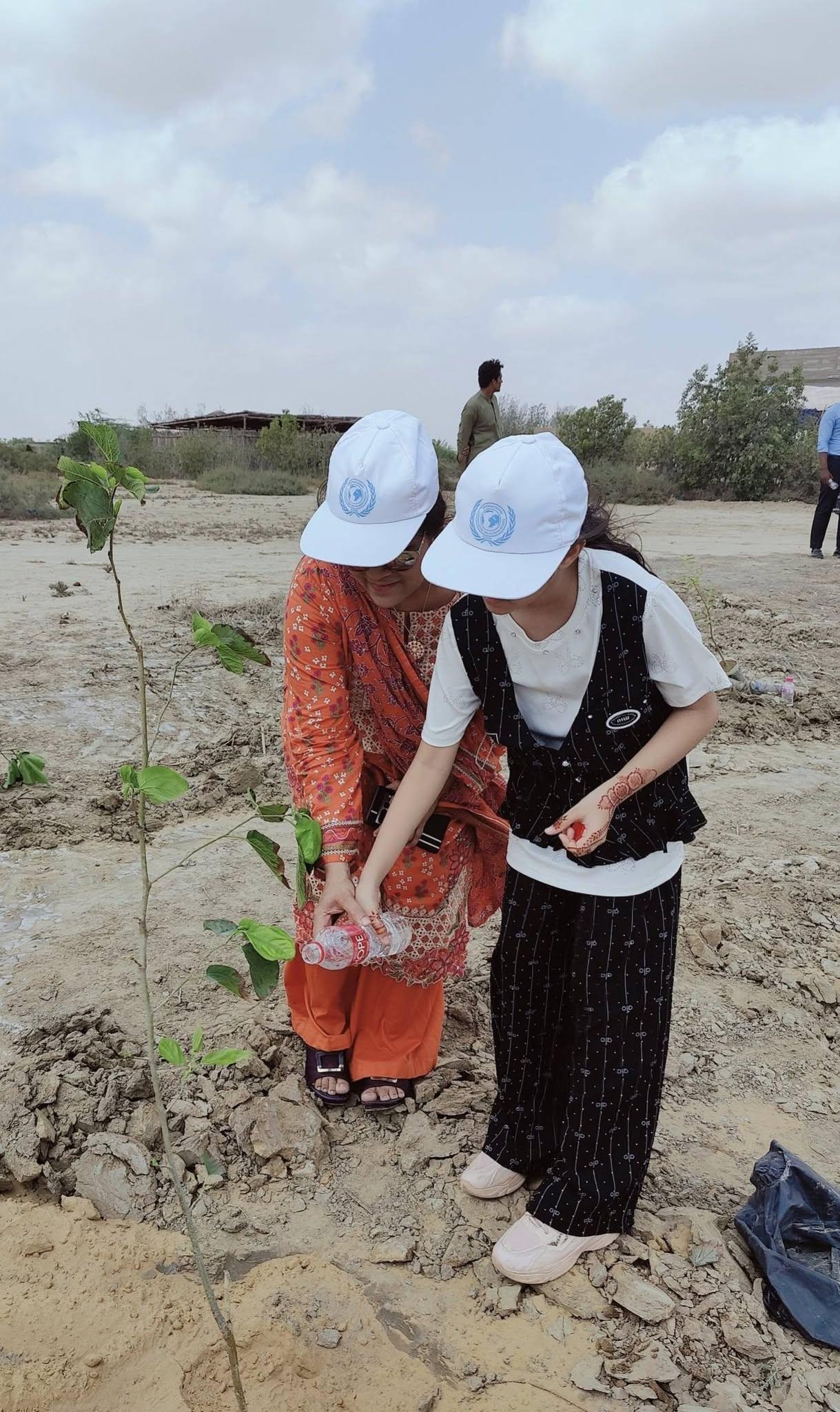
A sapling changes hands between a Thatta resident and an ICOHR volunteer, one small transaction repeated more than fifteen hundred times across the campaign.
ICOHR has not shied away from naming its long-term ambition in the boldest possible terms. The Commission speaks of a Billion Trees vision for Pakistan, a figure borrowed deliberately from the scale of the country's own past reforestation efforts, but reframed around a different measure of success. Organisers are careful to note that the objective is not simply to reach a large plantation number, but to build a culture in which planting and protecting trees becomes a shared and ordinary civic habit, as unremarkable and as essential as voting or paying one's utility bills.
The campaign's central slogan, delivered in both English and Urdu across its outreach material, captures that ambition with characteristic directness. Aap ke paas jagah hai, Ek darakht lagayein, the material reads, a simple invitation asking only that citizens identify whatever small patch of space they control, a garden, a rooftop, a stretch of footpath, and use it to plant something that will still be standing long after they are not.
What Comes Next
ICOHR has indicated that the Thatta pilot will be followed by an expansion into Karachi, before the initiative moves further afield to other districts of Sindh and, eventually, other provinces. The Commission intends to adapt its approach to local environmental conditions at each new site, working with regional agricultural expertise to select tree species suited to specific soil and climate profiles rather than applying a single template nationwide.
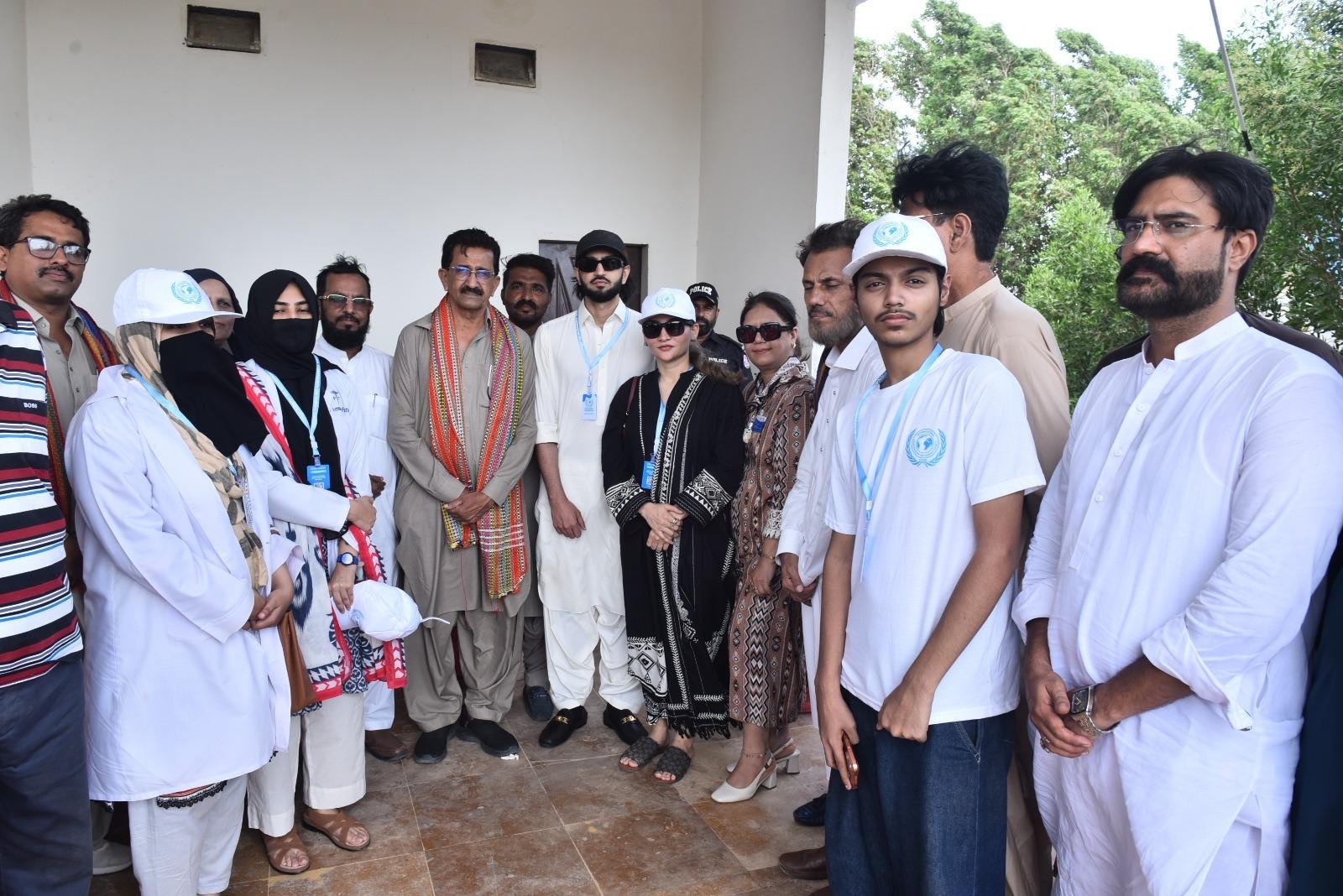
ICOHR volunteers, medical staff and local residents gather outside a community health facility during the Thatta visit, reflecting the Commission's combined environmental and welfare outreach.
For an organisation whose public identity has long rested on its advocacy work, its diplomatic outreach and its welfare projects for orphaned children, the entry into large scale environmental action marks a meaningful widening of its mission. Yet those close to the Commission describe the shift as less a departure than a natural continuation, the same conviction that has driven its human rights work for years, now extended to the ground beneath the communities it serves.
As the last of the Thatta saplings were watered and the volunteers began the long drive back toward Karachi, the newly planted rows stood modest against the vast, flat landscape, thin stalks of green against sand and stone. It will be years before their canopies offer real shade, longer still before their roots meaningfully anchor the soil around them. But for those who spent the day kneeling beside them, the significance was never only in the trees themselves. It was in the fact that fifteen hundred separate decisions, made by fifteen hundred separate hands, had been taken together, in one place, on one morning, in the belief that a greener Pakistan begins exactly where a person happens to be standing.
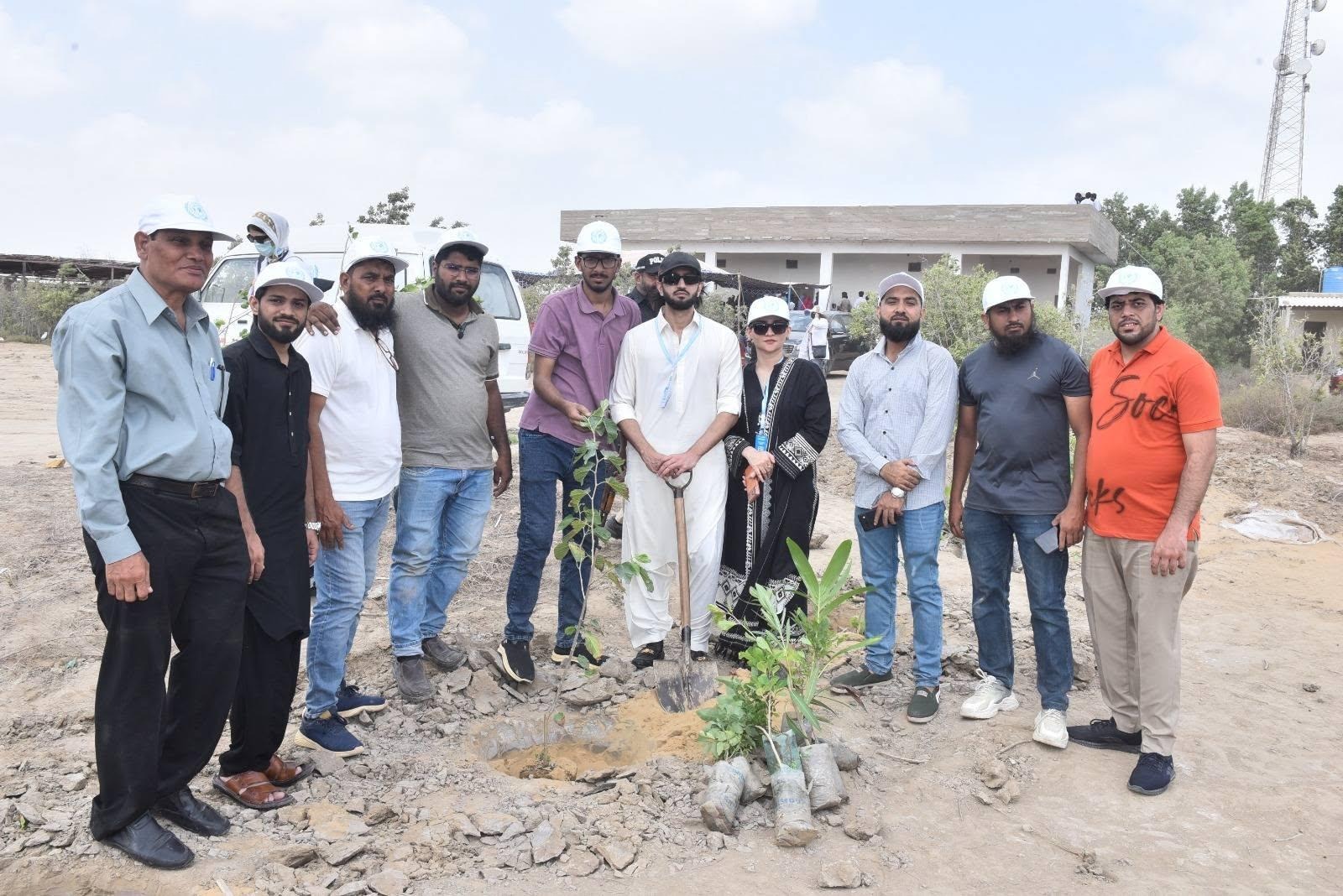
The volunteers, medical staff, community elders and officials of ICOHR's Thatta plantation drive, together at the close of a long and productive day.
ICOHR: From Legacy to Impact.
International Commission on Human Rights | Plant for the Plant | Thatta, Sindh
© 2026 International Commission On Human Rights. All rights reserved.
 DONATE