helpline:+92 21 99332615 | +92 21 99332617
International Commission on Human Rights
INTERNATIONAL COMMISSION ON HUMAN RIGHTS | FIELD FEATURE
Standing With the Displaced: How the International Commission on Human Rights Brought Dignity, Food, and Hope to Afghan Refugee Families
A field report from the refugee settlements of Pakistan on a humanitarian project that treated displaced people as neighbors first and beneficiaries second, 2004 to 2005
ICOHR: From Legacy to Impact
PAKISTAN: Night had already settled over the settlement when the first families began to gather. There were no speeches to announce the arrival of the visitors and no banners to tell the crowd who had come. Children pushed to the front to see what was happening, elders shifted on their haunches to make room, and somewhere in the dark a pot of food was being carried toward a line of people who had waited, quietly and patiently, for a meal. It was an ordinary scene in one sense. In another, it was the beginning of something the International Commission on Human Rights would later describe as the most meaningful work of its history.
Between 2004 and 2005, the Commission, known by its abbreviation ICOHR, carried out a sustained program of humanitarian outreach among Afghan refugee communities living in difficult circumstances across Pakistan. The work was never designed to be spectacular. It was designed to be present: to sit on the carpet with community elders, to listen before speaking, to put food into the hands of hungry children, to walk through muddy settlements where water is carried by donkey cart, and to stand at the bedside of the sick. What follows is an account of that effort, the people it reached, and the principles that guided it.

Children and elders gather around the ICOHR CHAIRMAN MUHAMMAD ASLAM ELLAHI during an evening visit to a refugee settlement.
A Displacement Measured in Decades
To understand why the project mattered, it helps to understand the scale of the story behind it. For more than two decades, Pakistan has hosted one of the largest refugee populations in the world. By the middle of the 2000s, humanitarian agencies estimated that roughly three million Afghans were living in the country, many of them born on Pakistani soil and some who had never seen the land their parents fled. Large communities settled in and around Karachi, Peshawar and Quetta, often on the margins of cities where services are thin and the future is uncertain.
Formal repatriation programmes were under way at the time, and the political conversation about the refugees was loud. Yet inside the settlements, the conversation was much quieter and far more practical. Families asked where the next meal would come from, whether a sick relative could be seen by a doctor, and whether their children would ever hold a school book. These were the questions that ICOHR set out to answer, not with slogans, but with presence.
“Policy is debated in conference rooms. Dignity is delivered on the ground, one family at a time. We went to the settlements because that is where the questions are being asked.”
ICOHR CHAIRMAN MUHAMMAD ASLAM ELLAHI
Nights of Listening and Feeding
The heart of the project unfolded after dark. Many of the most vulnerable people the team hoped to reach, day labourers, scrap collectors, street children and the elderly without family support, are simply not visible during working hours. They emerge in the evening, when the markets close and the shutters come down, and they sit along the pavements waiting for whatever help the night may bring.
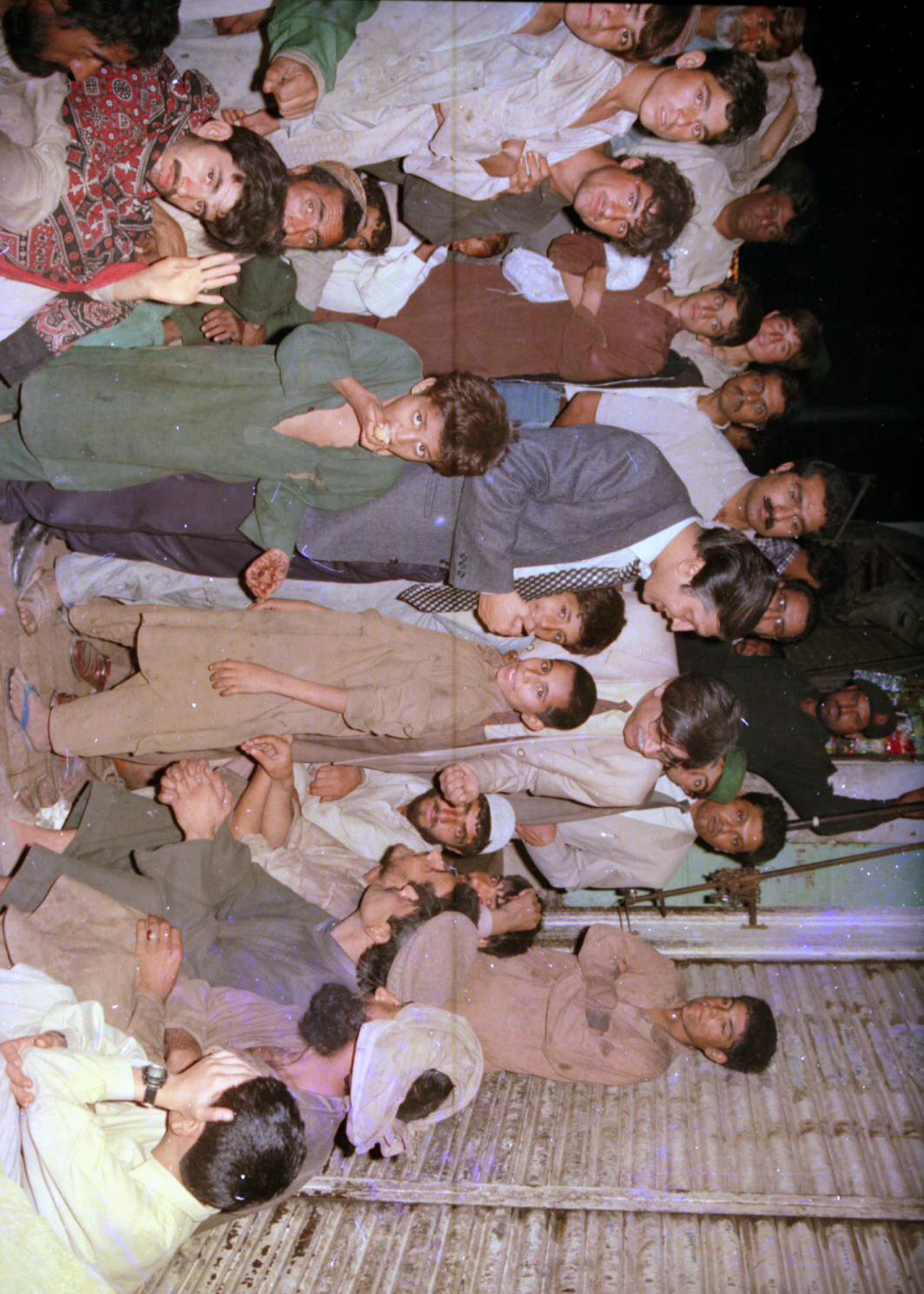
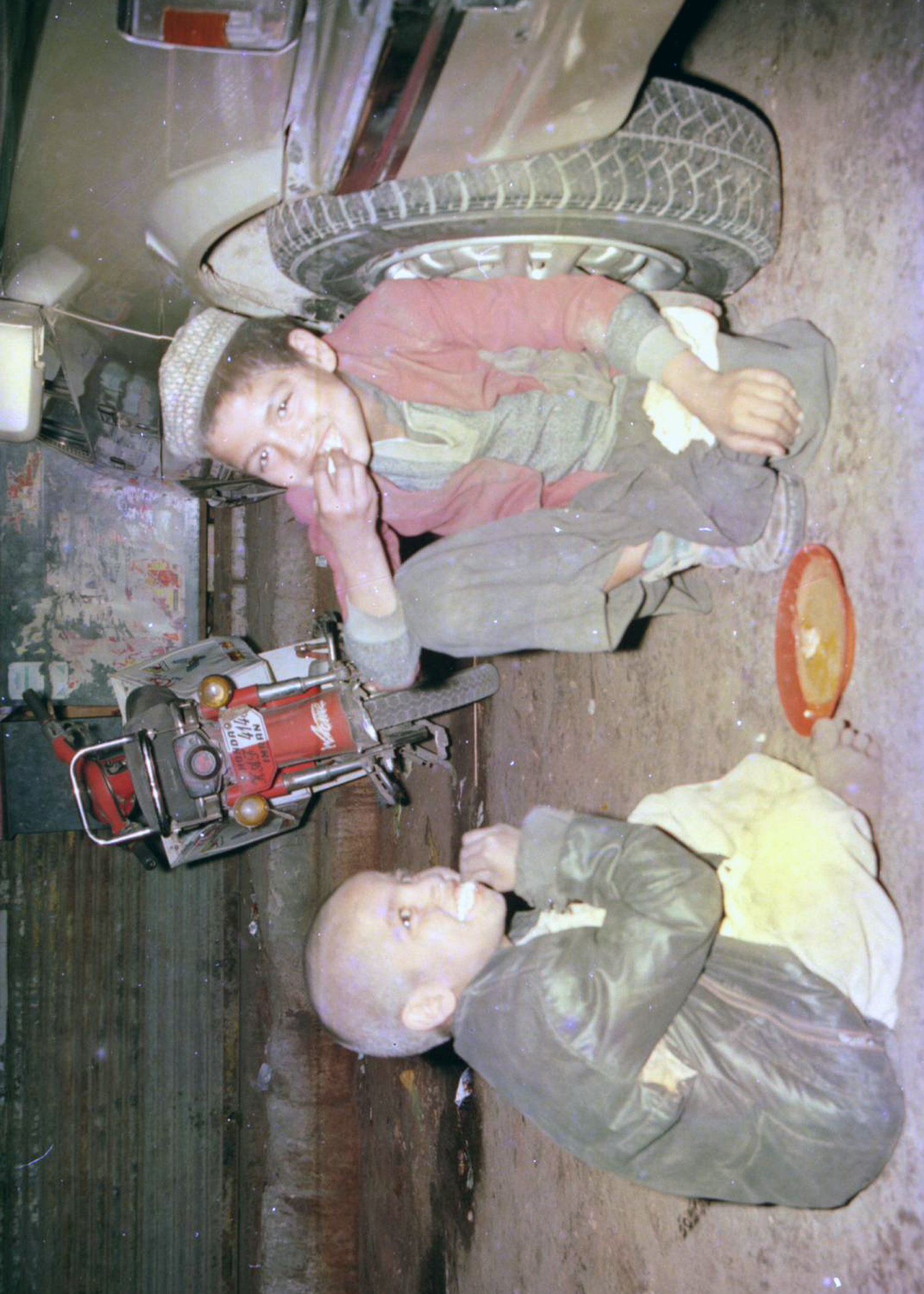
ICOHR volunteers arranged food distribution at these gathering points, working alongside local helpers and, where required, with the accompaniment of security personnel who ensured that large crowds remained orderly. The photographs from those evenings tell the story better than any summary can. Rows of men sit shoulder to shoulder on a narrow pavement. Boys stand up on tiptoe to catch sight of the team. A child bites into bread with an unguarded grin, while a companion beside him laughs into the camera. Nobody is asked for a card, a nationality document or a reason. They are simply asked whether they have eaten.

Men and boys wait along a pavement lane in the evening while volunteers move among them.

ICOHR CHAIRMAN MUHAMMAD ASLAM ELLAHI speaks with a young boy as neighbours look on during a night distribution.
There is a particular kind of respect in that approach, and it was deliberate. Members of the team crouched to speak with children at eye level. They asked the older men about their villages, their journeys and their work. In one exchange captured on film, a volunteer leans toward a boy who is chewing his food and shares a joke with him; the boy turns and smiles. Those few seconds, the organisers say, were worth more than any formal survey.
“I have been in this city for many years and people usually look past us. That night someone stopped and asked my name. Do you understand what that means to a man in my position?”
A refugee elder speaking to volunteers
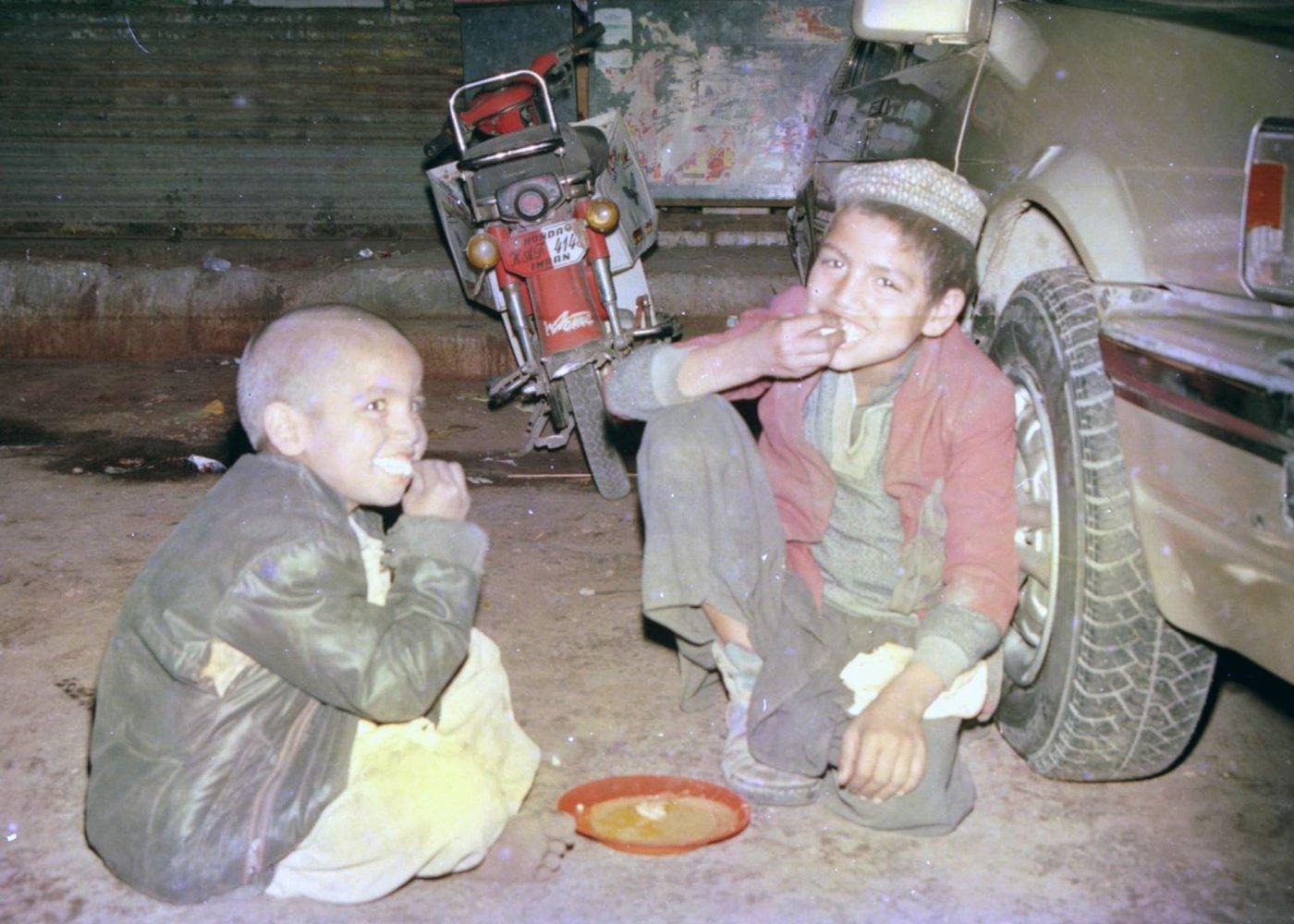
Two boys share a simple meal on the roadside, one of the many small moments recorded during the outreach.
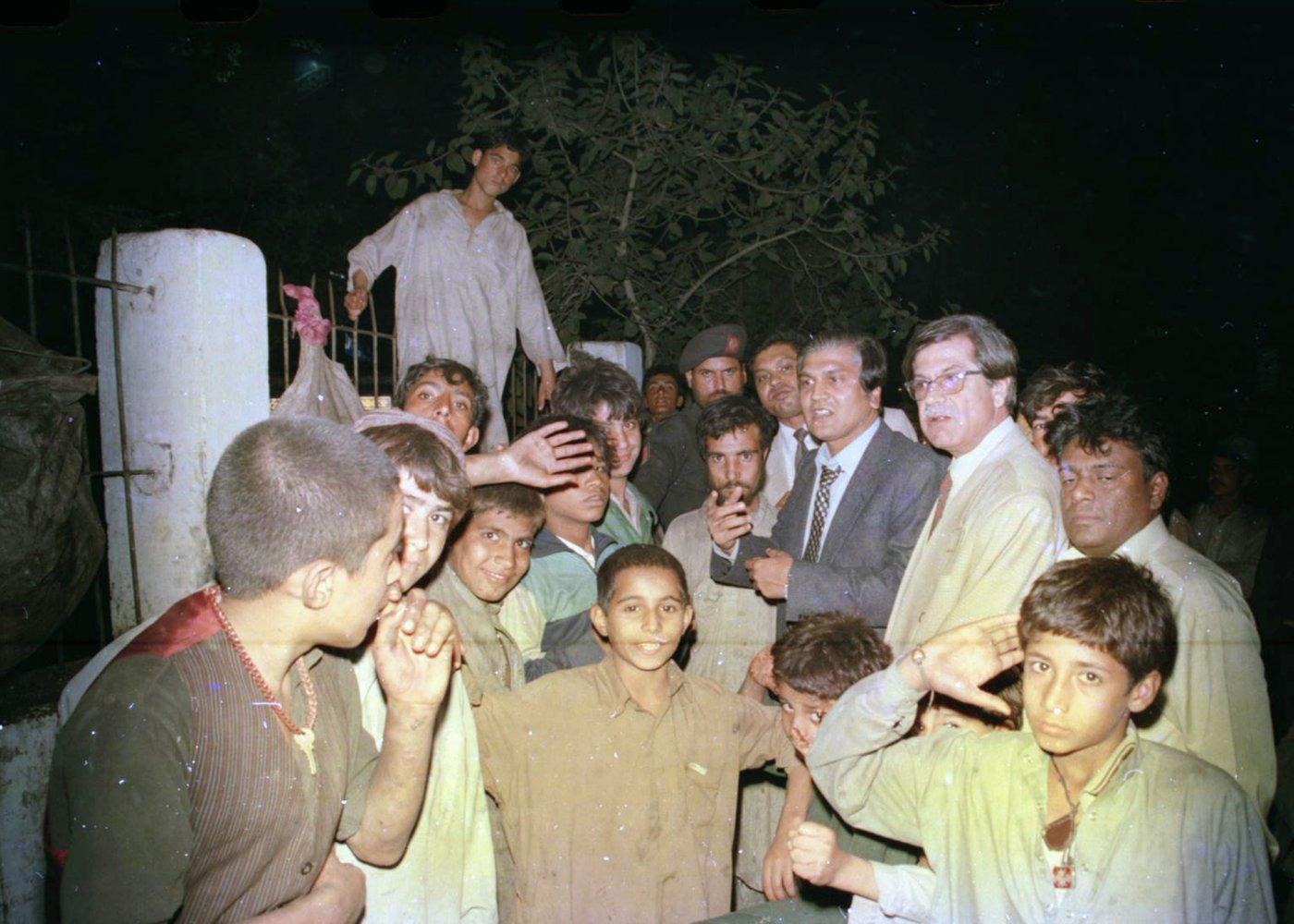
A large crowd of boys and young men gathers around the team near a park gate after nightfall.
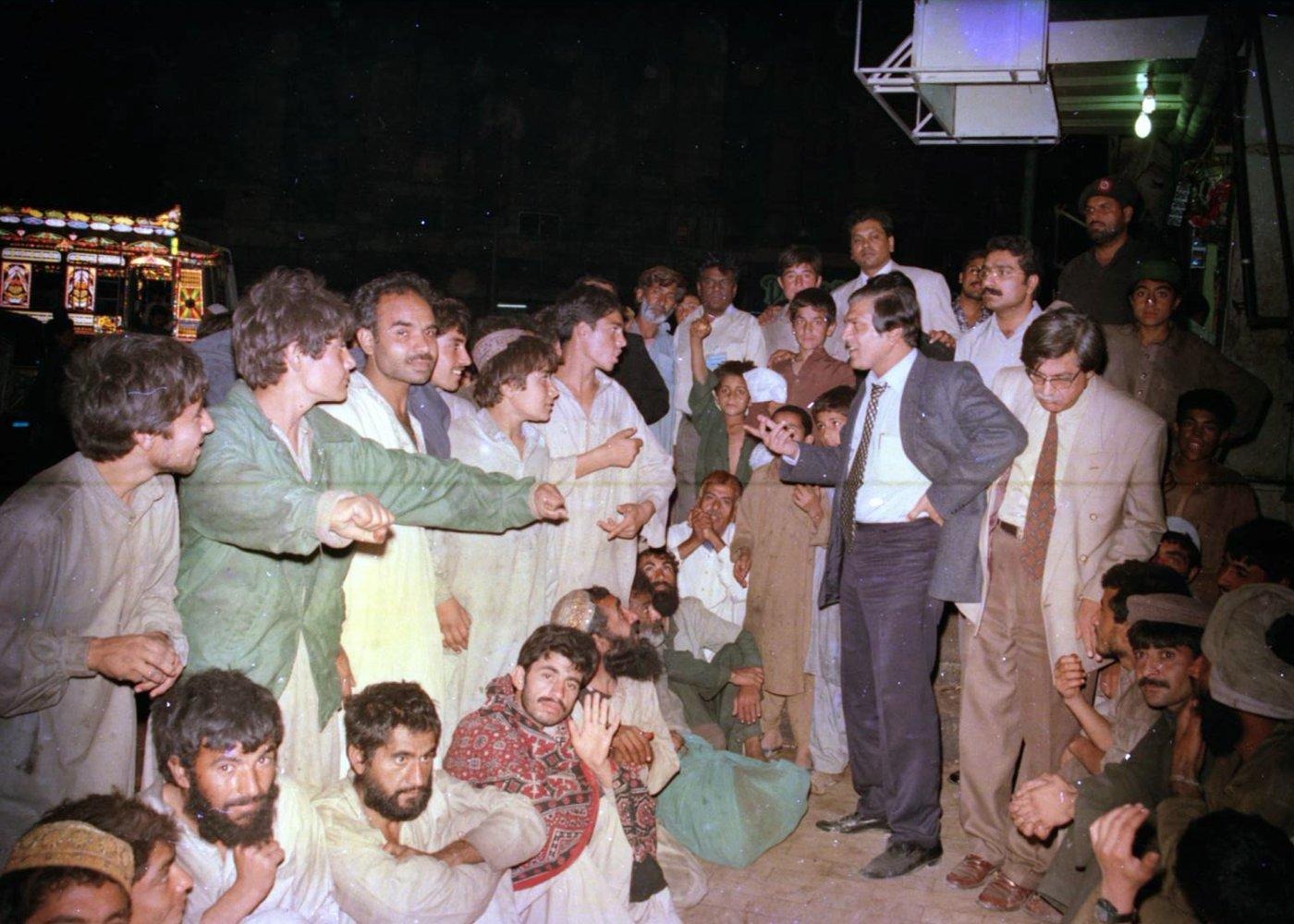
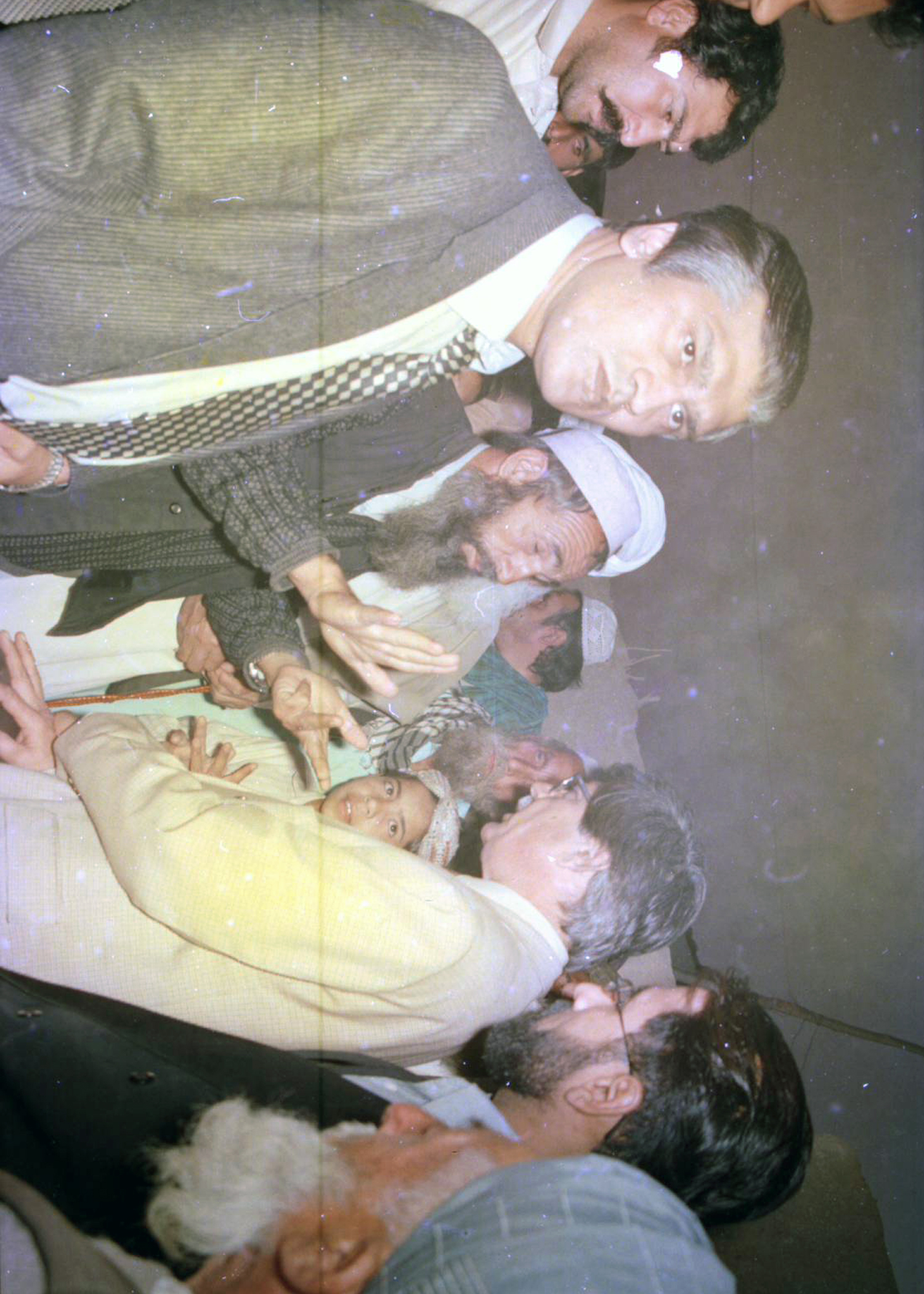
ICOHR CHAIRMAN MUHAMMAD ASLAM ELLAHI addresses a gathering of men and boys at a night distribution point.
Around the Carpet: Meetings with Community Elders
Relief without understanding can do quiet harm, and the ICOHR team knew it. For that reason, some of the most important hours of the project were not spent distributing anything at all. They were spent sitting cross legged on brightly patterned carpets in modest rooms, listening to community elders describe what their families actually needed.
The images from these gatherings are among the most striking of the entire collection. Men in turbans and traditional caps sit in a loose circle. Small glasses of tea rest on the carpet between them. A member of the ICOHR delegation leans forward to speak, one hand open, while a bearded elder replies with a raised finger and an animated look. A young team member takes notes on a slip of paper. There is disagreement in the room, and there is warmth as well, which is the mark of a real conversation.

ICOHR representatives meet community elders, seated together on a traditional woven carpet.

An elder makes his case while team members listen and record the concerns raised.
“They did not come with answers prepared in advance. They came with questions, and they wrote down what we said. In our tradition, that is the first sign of honour.”
A community elder, reflecting on the meeting
The issues raised were consistent from one settlement to the next: reliable access to clean water, basic healthcare, safe shelter, and schooling for children. They were not demands for luxury. They were requests for the conditions under which a family can live without fear.
The Children Who Stole the Show
If the elders provided the substance of the visits, the children provided the spirit. In one photograph, dozens of boys in dusty shalwar kameez and embroidered caps crowd into a single frame, some kneeling in the front row, others leaning over their friends, one waving with both arms in the air. A small girl in a red dress sits at the front corner, watching the camera with a shy half smile. Two men, one a member of the ICOHR team and one a local companion, crouch among them, visibly delighted to be outnumbered.
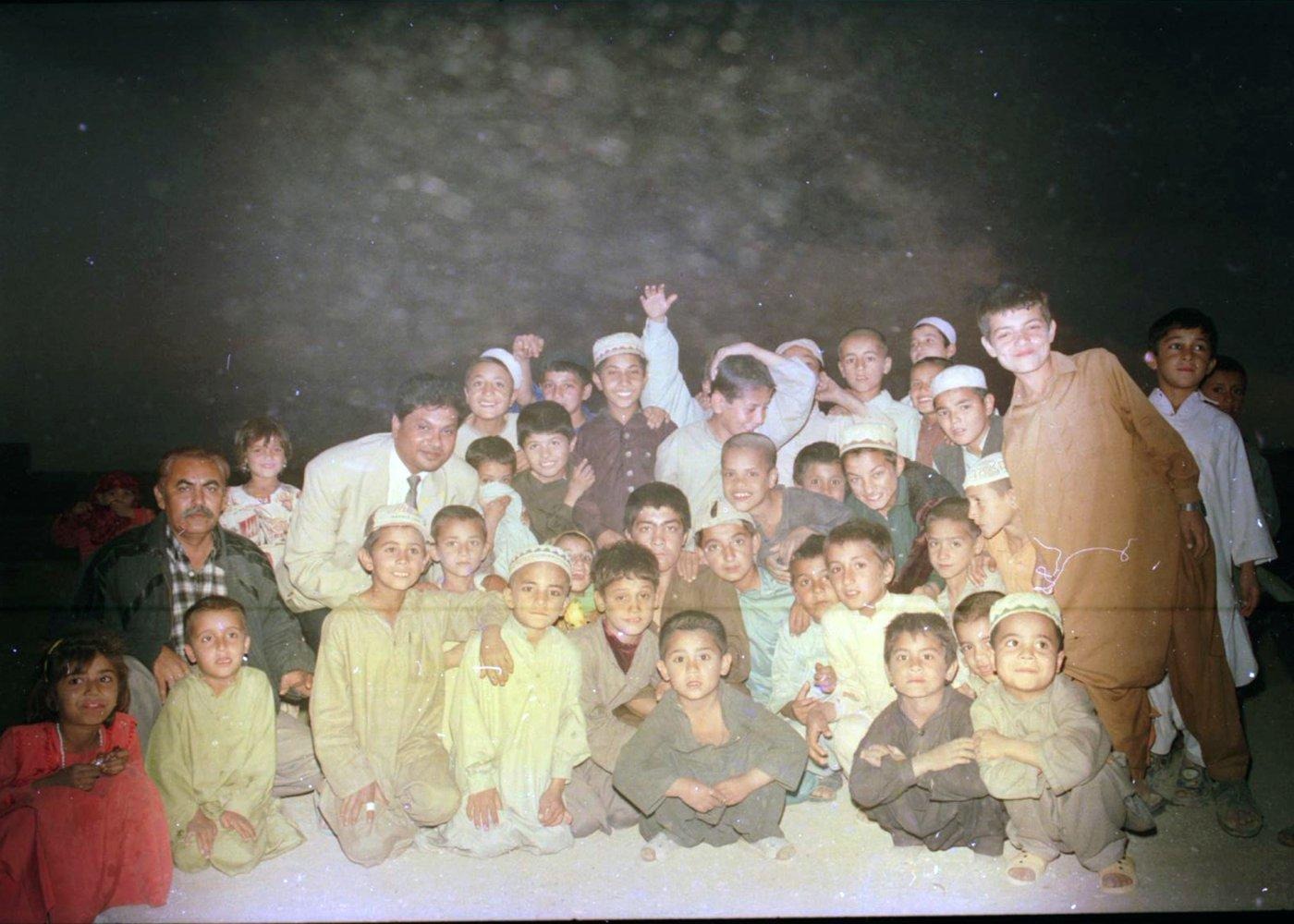
A group portrait with dozens of children, taken at the end of an evening visit.
In another image, two young girls stand side by side holding handmade toys, small spindles of raw cotton wound onto sticks and set spinning on a string. It is a game passed from older to younger children, made from nothing but cotton, thread and imagination. The girls are concentrating so hard that they barely notice the camera. It is a reminder that children in displacement do not stop being children. They simply find their play in whatever they are given.

Two girls show off handmade cotton spindle toys, a game passed down among children in the settlement.
“Every child in these pictures is an argument for patience and investment. Give them food, a classroom and a little safety, and they will surprise everyone, including themselves.”
An ICOHR volunteer
Water, Mud and the Edge of the City
The project also took the team to the outskirts, where roads give way to open ground and the sound of the city fades. Here, the daily labour of survival is on full display. Men and boys fill metal tanks and old cooking oil tins with water, load them onto donkey carts, and haul them across ground that turns to mud at the first hint of rain. A young boy in a pale shalwar kameez stands barefoot in the muck, looking straight at the lens with the calm seriousness of someone who has already carried too much for his age.
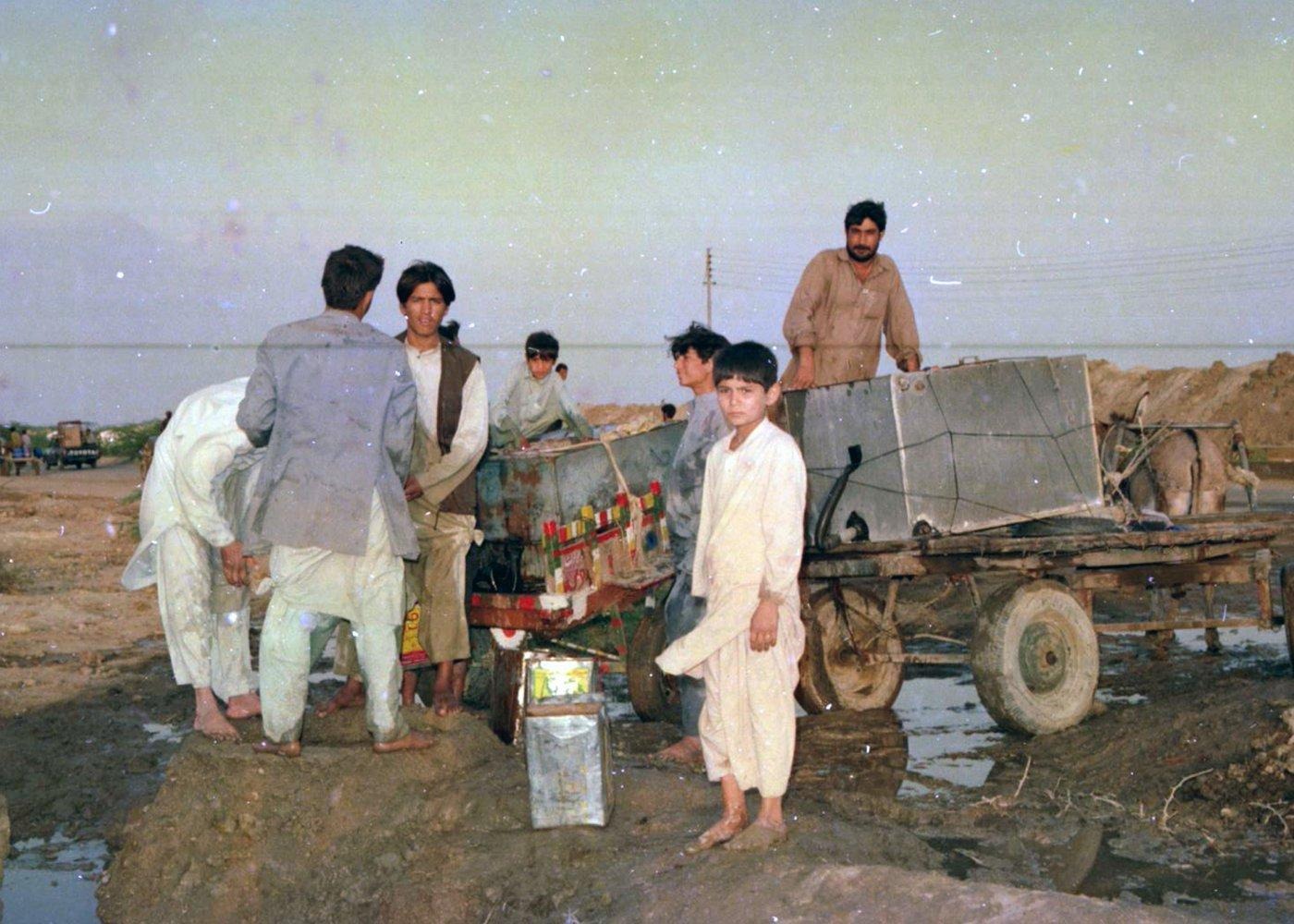
Residents fill tanks and tins from a water point, then load them onto a donkey cart.
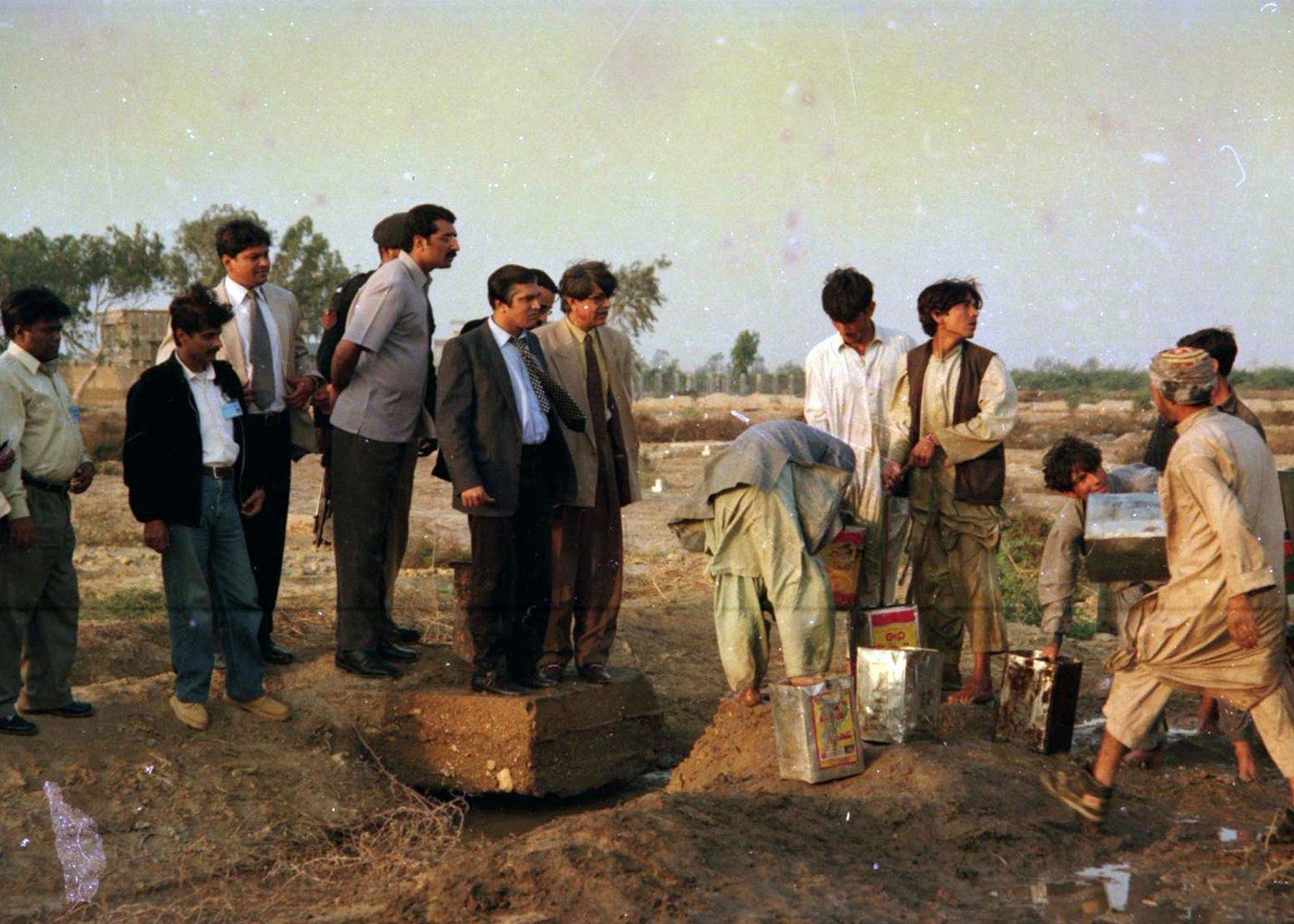
Chairman & Members of the ICOHR delegation observe the water point at first hand, accompanied by security personnel and local helpers.
ICOHR representatives walked the site, examined the arrangements for themselves, and spoke directly with residents about how far they travelled for water and how often supply failed. Their presence was noted by the community. In humanitarian work, being seen to look closely is itself a form of solidarity, because it tells people that their difficulties are worth witnessing.
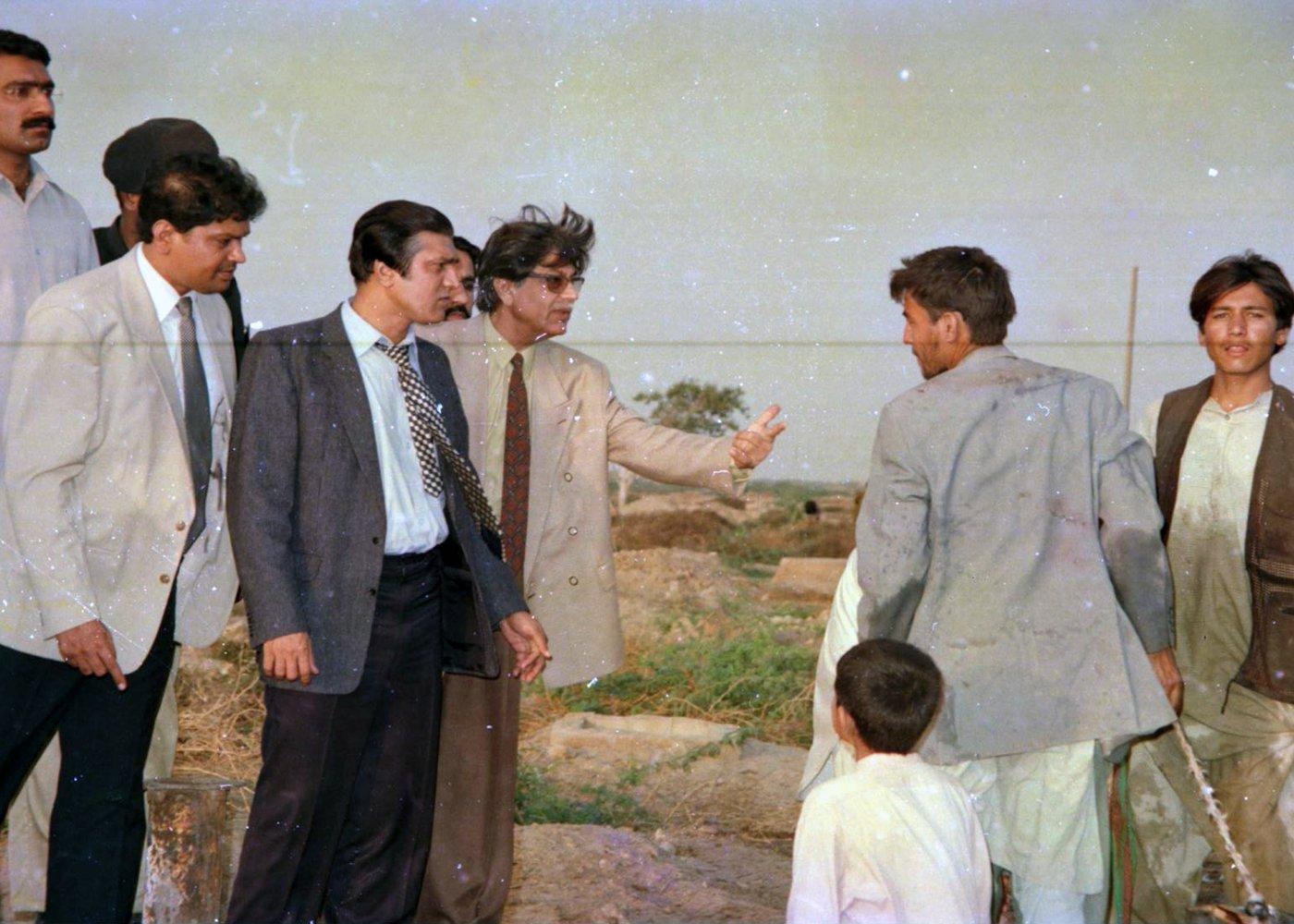
ICOHR representatives speak with residents at the edge of the settlement as the light begins to fade.

A dusk visit brings the team, community elders and children together in an open area.
The Person Behind the Statistic
Not every scene from the project is easy to look at, and ICOHR chose not to hide from that. One photograph shows a man sitting alone on a kerbside at night, clutching a bundle of cloth to his chest, one foot wrapped in rags against the cold ground. There are no crowds around him and no one is speaking. It is a stark portrait of how thin the line can be between hardship and abandonment.
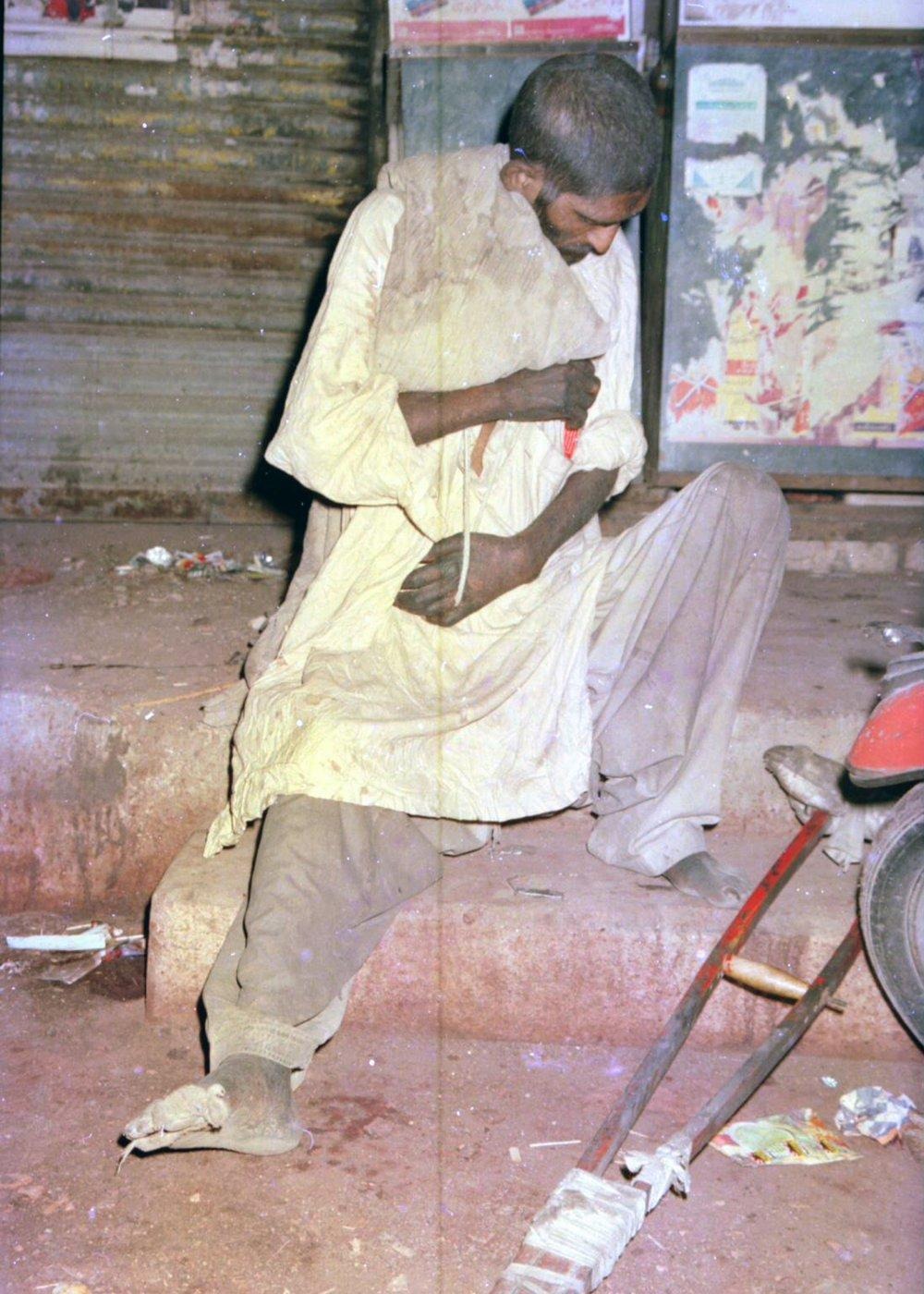
A man rests alone on a roadside kerb at night, one of the many vulnerable people the team encountered.
Another photograph was taken inside a public hospital ward. A patient lies under a checked blanket on a metal framed bed while members of the delegation stand around him, heads bowed, quietly taking in his condition. The room is plain and the paint is peeling. Yet the photograph does not feel like an inspection. It feels like a visit: the kind that a family member or a neighbour might make. That, organisers say, was precisely the intention.

ICOHR representatives visit a patient at a hospital during the outreach programme.
“A hospital corridor tells you more about a society than a policy paper ever will. We wanted to see what our refugee neighbours face when they fall ill, and to say plainly that they are not forgotten.”
ICOHR CHAIRMAN MUHAMMAD ASLAM ELLAHI
Recognition From Media, Society and Rights Forums
The project did not go unnoticed. As news of the outreach spread, it drew the attention of local and international media organisations, whose reporters and photographers documented the work and shared its stories with wider audiences. Coverage emphasised a feature that observers found unusual: that the programme was defined by direct engagement with communities rather than by ceremony.
Civil society groups and members of the wider community welcomed the effort as a practical demonstration of solidarity. Human rights forums, both within Pakistan and abroad, took note of the approach, in particular the insistence that assistance should be offered without regard to nationality, religion, colour, gender or social standing. Colleagues from allied organisations described the initiative as a model of how modest resources, thoughtfully deployed, can restore a measure of dignity to people who have been overlooked.
“What impressed us was the manner, not only the meals. Every person was treated as a guest. That is a standard many larger institutions struggle to meet.”
A civil society observer
Principles That Guided the Work
ICOHR describes its purpose in simple terms. Its mission is to protect and promote human dignity and fundamental human rights while supporting vulnerable and displaced communities through humanitarian action, awareness, equality and compassion, without discrimination based on nationality, religion, colour, gender or social status.
Its vision is a society where every human being is treated with dignity, equality, and respect, and where vulnerable people, refugees and communities in need can count on support, protection and opportunities to live with hope and security. The refugee project of 2004 and 2005 was an attempt to put that vision into practice in the plainest possible way.
Why It Still Matters
Two decades on, the questions raised in those settlements have not disappeared. Displaced people remain among the most exposed in any society, and the temptation to treat them as a statistic remains strong. What the project of 2004 and 2005 offers is not a final answer but a reminder of method: go to where people are, sit down, listen, feed the hungry, look at the water, visit the sick, and write down what you hear.
For ICOHR, the photographs that survive from those months are more than an archive. They are evidence that a small organisation with a clear conscience can, for a season, change the texture of a hard life for many people. They are also a challenge to the next generation of advocates to build on that legacy with the same humility.
“We did not solve displacement. No single organisation can. But we proved that no one has to face it unseen.”
ICOHR CHAIRMAN MUHAMMAD ASLAM ELLAHI
International Commission on Human Rights (ICOHR)
Muhammad Aslam Ellahi
Serving Humanity | Protecting Dignity | Promoting Human Rights
ICOHR: From Legacy to Impact







© 2026 International Commission On Human Rights. All rights reserved.
 DONATE